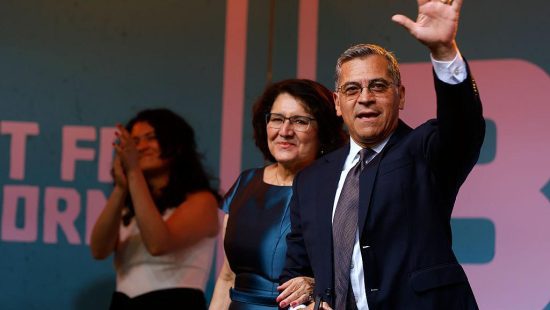
The California physician has built a career treating high-risk pregnancies and addressing health care disparities, while her husband, Xavier Becerra, pursued a career in law and government.
For decades, Xavier Becerra’s career has taken him from Sacramento to the highest levels of government. The son of a Mexican-born mother and a father who grew up in Tijuana, he became the first in his family to earn a four-year college degree. He went on to serve in Congress, as California’s attorney general and, from 2021 to 2025, as President Joe Biden’s secretary of health and human services.
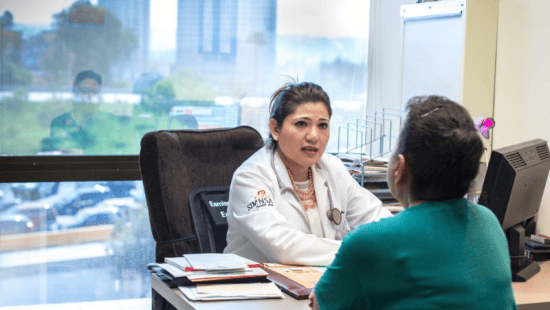
His wife, Dr. Carolina Reyes, followed a different professional path. A physician specializing in high-risk pregnancies, she has worked with women facing serious pregnancy-related health risks and has advocated for changes to help prevent maternal deaths.
Their careers intersect around health care, educational opportunity and public service. But Reyes’s work deserves attention on its own terms and not simply because she is married to a prominent politician, but because of her experience as a physician and her work addressing disparities in maternal health.
Becerra grew up in Sacramento in a working-class family. His mother, María Teresa, was born in Guadalajara, Mexico, and worked as a secretary. His father, Manuel, worked in agriculture and construction. Becerra was the first member of his family to graduate from a four-year college.
He earned an economics degree from Stanford University in 1980 and a law degree from Stanford Law School in 1984. It was at Stanford that he met Reyes, who went on to train as a physician.
Their backgrounds gave them some experiences in common, including the importance of education and the opportunities that professional training could open up. But their careers developed in different directions: Becerra entered law and politics, while Reyes pursued medicine.
They eventually raised three daughters while maintaining demanding professional lives.
Reyes specializes in maternal-fetal medicine, a field that cares for women whose pregnancies involve increased medical risks. She is a Harvard-trained physician who has practiced perinatology at UC Davis Medical Center, according to KFF Health News’ 2023 profile and interview.
Her work extends beyond treating individual patients. She has also focused on racial disparities in health care, preventable maternal deaths and the role hospitals and health systems can play in improving outcomes.
That interest began well before her medical career.
In the 2023 interview, Reyes recalled serving as student body president at Roosevelt High School in Fresno. During that time, she joined a school district task force working on desegregation. The experience showed her how public policy could shape where people lived, which schools they attended and whether they could access health care.
For Reyes, the connection between policy and health was real. Decisions made by institutions can affect people’s opportunities long before they become patients.
Her later work included serving on a California Department of Public Health panel that reviews maternal deaths and recommends improvements. She also chaired the board of the California Health Care Foundation, a nonprofit focused on improving health care access.
Those roles reflect a career that combines clinical medicine with efforts to address the conditions that affect patients’ health.
The connection between Reyes’s professional interests and Becerra’s government work became particularly visible when he became secretary of health and human services in 2021.
Becerra led a federal department responsible for major health programs, including Medicare and Medicaid. During his tenure, maternal health, reproductive health and access to medical care remained important issues in national policy debates.
Reyes approached maternal health from the perspective of a physician who works with high-risk pregnancies. In her 2023 interview, she described maternal deaths as unacceptable and emphasized that many are preventable. She also discussed the responsibility hospitals have to recognize warning signs, respond appropriately and examine where their systems may be failing women.
Her comments point to a practical question: What can health care providers do differently to keep more women alive?
That question matters because preventing pregnancy-related deaths involves more than identifying risk. It also requires timely treatment, effective communication among providers and systems that respond when a patient’s condition changes.
Becerra, meanwhile, supported extending Medicaid coverage for mothers to 12 months after childbirth. The policy was intended to help women maintain access to care during the postpartum period, when health needs can continue well beyond delivery.
The overlap between their work is clear, but the distinction matters, too. Reyes brought medical experience to maternal health questions, while Becerra worked on policy through his government role. The available reporting does not establish that she directed his decisions, and Reyes herself played down the suggestion that her husband needed her to convince him that maternal health deserved attention.
Their professional interests intersected, but each had a career and responsibilities of their own.
For California families, the issues they worked on remain relevant. Access to care, pregnancy-related complications and the ability to get appropriate treatment after childbirth are not simply questions for doctors or policymakers. They affect whether mothers can recover, care for their newborns and get help when health problems emerge.
We addressed a related questions in our reporting on California’s maternal mental-health screening system and the challenge of connecting mothers to treatment. That coverage explores a broader problem: identifying a health need is only the first step if patients still struggle to reach the care they need.
Reyes’s career offers a window into that challenge. Her work has connected the experience of treating patients with questions about how institutions can reduce preventable harm. Becerra’s career brought related questions into government and health policy.
Their paths have crossed in consequential ways. But Reyes’s professional record stands on its own.