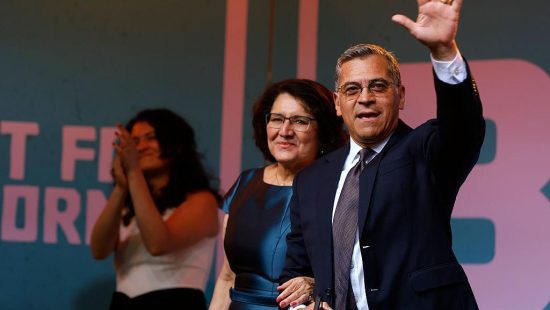
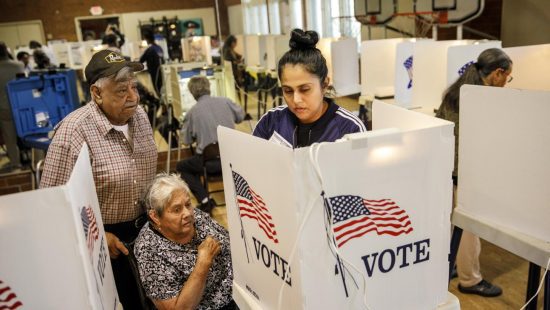
Parriva checks major claims from the September 30 California governor debate between Xavier Becerra and Steve Hilton against government data, official reports and the evidence behind each claim.
During the September 30 California governor debate, Xavier Becerra repeatedly accused Steve Hilton of using “alternative facts” and getting basic facts about California wrong.
Hilton fired back with a long list of claims about unemployment, taxes, immigration, gasoline prices, wildfire funding, water, education and homelessness.
Some of those claims are supported by government data. Some leave out important context. Others go beyond what the available evidence can establish.
That distinction matters.
A fact can be accurate while the conclusion drawn from it is not. A projection can be presented as though it were an established result. And a real problem can be used to support a causal explanation that the evidence does not actually prove.
Parriva has used the same approach in its earlier California governor election coverage and in its previous debate fact-checking: start with the claim, find the underlying evidence, then separate what the evidence establishes from what a candidate wants voters to conclude.
Here is what we found.
California unemployment: Is it really the highest?
HILTON’S CLAIM: California has the highest unemployment rate in America.
What the evidence shows: California’s unemployment rate was 5.1% in August 2026, according to the U.S. Bureau of Labor Statistics. Connecticut and Oregon also recorded 5.1%, while Washington, D.C., was higher at 5.7%.
So California was tied for the highest rate among states, but not highest when the District of Columbia is included.
What the evidence does not show: The unemployment number by itself does not establish that California taxes or Democratic policies caused the unemployment rate.
Bottom line: The underlying statistic was substantially accurate, but the wording needed context.
Poverty: California is high, but “highest” is not supported
HILTON’S CLAIM: California has the highest poverty rate.
What the evidence shows: The Census Bureau’s 2023–2025 Supplemental Poverty Measure puts Louisiana at 19.0% and California at 17.8%. Both are among the highest state rates.
California’s unusually high housing costs are one reason the Supplemental Poverty Measure can produce a very different picture from the traditional poverty measure.
What the evidence does not show: The current data do not support saying California has the nation’s highest poverty rate.
Bottom line: The claim is misleading as stated.
The 9.3% California tax claim
HILTON’S CLAIM: Californians earning around $70,000 face a 9.3% state income-tax rate.
California’s published tax schedule places the 9.3% marginal bracket above $72,724 for single filers. For married couples filing jointly, the threshold is higher. The California Franchise Tax Board’s published 2025 tax schedule shows the 9.3% bracket beginning at $72,724 for single or married-filing-separately taxpayers.
That does not mean someone earning $72,725 pays 9.3% on every dollar of income. California uses a graduated tax system.
The currently published FTB material available for this analysis does not establish a new 2026 threshold. In fact, the 2026 estimated-tax instructions tell taxpayers to use their 2025 California return as a guide for 2026 estimated-tax calculations.
What the evidence shows: The 9.3% marginal rate and $72,724 single-filer threshold are real.
What the evidence does not show: It does not mean a person earning around $70,000 pays 9.3% of all income in state income tax.
Bottom line: The underlying rate is real, but the claim needs marginal-rate and tax-year context.
Would Hilton’s tax plan give millionaires a 40% tax cut?
BECERRA’S CLAIM: Hilton’s proposal would give millionaires and billionaires a 40% tax cut.
Hilton proposed eliminating the state income tax on the first $150,000 of income and applying an 8% rate above that. His proposal was stated during the debate.
California’s top individual marginal rate is 13.3%. A reduction from 13.3% to 8% is roughly a 40% reduction in the marginal rate.
But that is different from saying every millionaire would see their total California tax bill fall 40%.
What the evidence shows: Becerra’s 40% figure can be derived from comparing the current top marginal rate with Hilton’s proposed 8% rate.
What the evidence does not show: It does not establish a 40% reduction in every wealthy taxpayer’s total tax liability.
Bottom line: Supported as a marginal-rate comparison; misleading if understood as a total-tax reduction.
The $11,000 household savings claim
HILTON’S CLAIM: His tax plan would save a typical California household about $11,000.
The exact figure varied during the debate and in Hilton’s campaign messaging; Hilton cited an estimate of roughly $11,000 in annual savings.
That figure is a campaign estimate based on proposed tax changes.
What the evidence shows: Hilton has proposed the tax changes and his campaign has promoted an estimated savings figure.
What the evidence does not show: An $11,000 savings amount is not an observed outcome. It depends on assumptions about income, filing status, deductions and how the proposal would ultimately be written.
Bottom line: This is a projection, not an established fact.
The 479,000 migrant children claim
HILTON’S CLAIM: Roughly 479,000 unaccompanied migrant children came through the system while Becerra was HHS secretary, amid failures in vetting and follow-up.
What the evidence shows: HHS said approximately 479,000 unaccompanied children were referred to the Office of Refugee Resettlement from 2021 through 2024. HHS also said certain sponsor-vetting policies were relaxed and documented fraud, unsafe placements and cases involving abuse.
An HHS inspector general investigation had already identified significant gaps. In its sample, 16% of children’s case files lacked documentation of one or more required sponsor safety checks, while 19% of children released with pending FBI fingerprint or state child-abuse registry checks lacked updated results in their files.
What the evidence does not show: The 479,000 figure does not mean 479,000 children were lost, trafficked or harmed. Nor does the evidence establish that Becerra personally directed individual placements.
Bottom line: The underlying scale and documented safety problems are real. Some of Hilton’s broader conclusions go beyond the evidence.
“Thousands sent directly to traffickers” and “hundreds of thousands missing”
These were among Hilton’s strongest allegations.
The evidence documents fraud, unsafe placements, abuse and failures in follow-up. The HHS review includes individual cases involving serious abuse and other safety failures.
But there is an important evidentiary gap.
A child who cannot be reached during a follow-up call is not automatically a missing child. And documented cases of trafficking or abuse do not establish that “thousands” of children were deliberately sent directly to traffickers.
Bottom line: Serious system failures are documented. The larger numerical claims are not established by the evidence reviewed.
Did Becerra’s HHS “fraud unit” disappear?
HILTON’S CLAIM: Becerra dismantled an HHS fraud operation and hundreds of billions of dollars were lost as a result.
Federal health-care fraud enforcement continued during Becerra’s tenure, including major investigations and prosecutions.
What the evidence shows: Fraud was a significant federal problem.
What the evidence does not show: The evidence reviewed does not establish that Becerra dismantled federal fraud enforcement or that hundreds of billions of dollars were lost because of him.
Bottom line: The causal claim is not established.
Vaccines and measles
HILTON’S CLAIM: Becerra forced children to be vaccinated.
Federal health agencies recommended COVID-19 vaccination for children after authorization, but that is not the same thing as a universal federal mandate requiring every child to receive the vaccine. School vaccination requirements are generally governed by state and local rules.
BECERRA’S CLAIM: Children are dying of measles and the country is seeing thousands of cases.
Here the evidence is considerably clearer.
The CDC’s measles data reported 3,659 confirmed U.S. measles cases as of September 24, 2026, along with 40 outbreaks. The figures are preliminary.
So “thousands” is accurate.
Becerra’s additional comparison to measles levels “not seen since the 1960s,” however, needs more precision because the raw number of cases in the early 1960s was vastly higher.
Bottom line: The current measles outbreak is real and has reached thousands of confirmed cases. The historical comparison requires qualification.
Why is California gasoline more expensive?
HILTON’S CLAIM: California gas costs about $2 more per gallon than the rest of the country because of Democratic policies.
There is a real price gap, but the explanation is more complicated.
The California Energy Commission’s explanation of gasoline prices identifies multiple contributors, including crude-oil costs, refinery operations, distribution, marketing, profits, California’s isolated fuel market, the state’s special gasoline blend, environmental programs and taxes.
And there is an important piece of evidence that deserves attention: the Energy Commission’s Division of Petroleum Market Oversight found that California had an average $0.41-per-gallon “mystery gasoline surcharge” from 2015 through 2024, above taxes, fees and environmental-program costs. The agency said higher gross gasoline-industry margins made up the largest share of the surcharge and identified market power as a growing concern.
The CEC’s broader gasoline analysis also shows that California’s price difference cannot be explained by taxes alone.
What the evidence shows: California’s taxes and environmental policies contribute to gasoline costs. Refinery economics, market structure, industry margins and the state’s isolated fuel market also matter.
What the evidence does not show: The evidence does not support reducing the entire price difference to a single cause or political party.
Bottom line: Hilton identifies real cost drivers, but his single-cause explanation is not established.
Wildfire money: $2.5 billion is not the same as $30 billion
BECERRA’S CLAIM: The federal government was withholding roughly $30 billion in wildfire funding and linked the dispute to election-related demands.
HILTON’S RESPONSE: Newsom had promised $2.5 billion.
Those figures refer to different funding questions.
California did receive and appropriate billions in state wildfire response and recovery funding following the Los Angeles fires. The state has described a $2.5 billion state wildfire relief package among its recovery efforts.
At the same time, Becerra was referring during the debate to a much larger federal funding dispute involving disaster recovery for communities including Pacific Palisades and Altadena.
What the evidence shows: California has received major state and federal wildfire assistance, and disputes over federal funding are real.
What the evidence does not show: The evidence reviewed does not establish the entire $30 billion figure as a single withheld pot of money or prove that all of it was withheld specifically because of election-law changes.
Bottom line: There is a real funding dispute, but the debate compressed several different funding streams into simple political claims.
Water: “I won the case”
Becerra referred to winning a water case against the Trump administration.
His record as California attorney general includes litigation challenging federal changes to California water-export rules.
During the debate, Becerra specifically pointed to his litigation record, saying California had prevailed in a dispute involving federal water policy.
But calling a preliminary injunction or interim court victory simply “winning the case” can make a legal proceeding sound more final than it is.
What the evidence shows: California secured important court relief in disputes over federal water policy.
What the evidence does not show: An interim ruling necessarily means the entire litigation was finally resolved in California’s favor.
Bottom line: The claim requires legal context rather than a simple yes-or-no label.
Education: below average, but by how much?
HILTON’S CLAIM: California’s schools are below the national average.
That depends on the measurement.
On the 2024 National Assessment of Educational Progress, California fourth-graders scored 212 in reading compared with 214 nationally. The difference was not statistically significant. The National Assessment of Educational Progress California profile provides the state-by-state comparison.
California fourth-grade math scores were also below the national average.
What the evidence shows: California has scores below the national average on some standardized measures.
What the evidence does not show: A two-point reading difference that is not statistically significant does not establish that California’s schools are categorically “the worst” or that a particular governor caused the difference.
Bottom line: California has some below-average measures, but the significance depends on the test, grade and statistic being discussed.
Homelessness: “the worst”
California has the nation’s largest homeless population in raw numbers.
But “worst homelessness” is not a defined statistical measure.
It could mean total population, rate per capita, unsheltered homelessness, growth, housing affordability or another measure.
The debate itself illustrates the problem: Hilton used “worst homelessness” as a broad political description rather than identifying a specific measure.
What the evidence shows: California has an exceptionally large homelessness problem.
What the evidence does not show: A claim that California has “the worst” homelessness cannot be properly tested without defining what “worst” means.
Bottom line: The underlying problem is real. The comparative label is undefined.
What the debate actually shows
The most useful lesson from this debate is not that one candidate had facts and the other did not.
It is that political arguments often move through four different stages:
FACT → CONTEXT → CAUSATION → POLITICAL CONCLUSION
The first stage can be true while the last stage remains unproven.
California really did have a 5.1% unemployment rate. That does not prove taxes caused it.
California really does have unusually high gasoline prices. That does not prove one party caused the entire difference.
Approximately 479,000 unaccompanied children were referred to ORR between 2021 and 2024. That does not mean 479,000 children disappeared.
California’s 9.3% tax bracket is real. That does not mean a person pays 9.3% on every dollar earned.
And the United States really has recorded thousands of measles cases in 2026. That does not make every historical comparison made during the debate accurate.
This is the same distinction Parriva examined in its earlier Los Angeles mayoral debate Reality Check: candidates can begin with real numbers and still ask voters to draw conclusions that the underlying evidence does not establish.
What the evidence cannot tell us
The evidence can test whether a number is accurate, whether a proposal contains a particular provision, whether an agency documented a failure, and whether a court issued a particular ruling.
It is much harder to establish from a single statistic whether a politician’s policy caused an economic outcome.
That requires a different level of evidence.
A responsible fact-check therefore has to distinguish among a fact, an interpretation, a causal claim, a prediction and an opinion.
That distinction is especially important in a governor’s race because nearly every major policy question involves multiple variables.
A candidate can point to a real statistic and still be wrong about why it happened.
Another candidate can correctly challenge the conclusion while overstating his or her own counterclaim.
That is why Parriva’s job is not to decide which candidate’s political argument readers should accept.
It is to identify where the evidence begins and where it ends.
The Parriva verdict
The evidence does not support a simple “Becerra = facts, Hilton = alternative facts” framing.
It also does not support the reverse.
Both candidates made claims with factual foundations. Both also made statements that became misleading when numbers were stripped of context, when projections were presented like established outcomes, or when a real problem was turned into a single-cause political explanation.
Hilton was on solid ground when pointing to California’s high unemployment rate, high poverty under the Supplemental Poverty Measure, high gasoline prices and documented problems in the federal system for unaccompanied children.
But several of his strongest conclusions went beyond what those facts establish.
Becerra was on solid ground when challenging some of Hilton’s numerical and causal claims, including the distinction between a marginal tax-rate reduction and a total tax cut.
But Becerra also used broad language such as “alternative facts” and “made-up facts” that did not accurately describe every underlying claim Hilton made.
The better conclusion is narrower:
The debate contained real facts, real problems, incomplete context and unsupported causal claims from both sides.
That is what the evidence allows us to say.
What Parriva could verify and what it could not
This review began with a larger inventory of claims from the debate.
After reviewing government data, official reports, agency records and the candidates’ own statements, Parriva found strong evidence supporting major claims involving:
- California’s elevated unemployment rate;
- California’s high Supplemental Poverty Measure;
- the structure of California’s marginal income-tax rates;
- the scale of unaccompanied-child referrals;
- documented gaps in sponsor screening and follow-up;
- the nation’s current measles outbreak;
- California’s gasoline-price premium;
- the Energy Commission’s “mystery gasoline surcharge” findings;
- California’s wildfire funding efforts;
- California’s water litigation;
- standardized education measurements; and
- the state’s unusually large homelessness population.
Several stronger claims could not be established as stated, including:
- that California has the highest poverty rate;
- that taxes alone caused California’s unemployment;
- that Hilton’s household tax savings will actually total roughly $11,000;
- that hundreds of thousands of migrant children are missing;
- that thousands were directly sent to traffickers;
- that Becerra dismantled federal health-care fraud enforcement;
- that hundreds of billions were lost because of Becerra;
- that California’s entire gasoline-price gap is caused by Democratic policies; and
- that the full $30 billion wildfire figure was withheld specifically because of election-law disputes.
That is not a weakness in the fact check.
It is the point of the fact check.
A responsible newsroom should be willing to say:
We could not establish that claim.
when the evidence does not support a stronger conclusion.
Numbers matter.
But so do definitions, dates, denominators, methodology, causation and context.
Parriva’s fact-checking standard
Parriva treats a claim as Supported when available evidence supports the claim as stated.
Supported with Context means the underlying claim is substantially correct but requires an important qualification.
Misleading means the statement contains a factual foundation but creates a materially inaccurate impression because of wording, timeframe, denominator, methodology or missing context.
Not Established means Parriva could not find sufficient reliable evidence to substantiate the claim as stated. It does not necessarily mean the claim is false.
Interpretation, Prediction or Opinion applies when a statement is primarily a political, policy or causal judgment that cannot be resolved solely through factual verification.
Primary government records are prioritized wherever available. Campaign materials are used to establish candidate positions but are not automatically treated as independent verification.
Because public data can change, this fact check is date-specific.
If credible new evidence materially changes a finding, Parriva will update the article and identify the material change.
The full debate transcript is available through CNN’s September 30 California governor debate transcript.
The debate is over. The evidence is where the real fact-check begins.