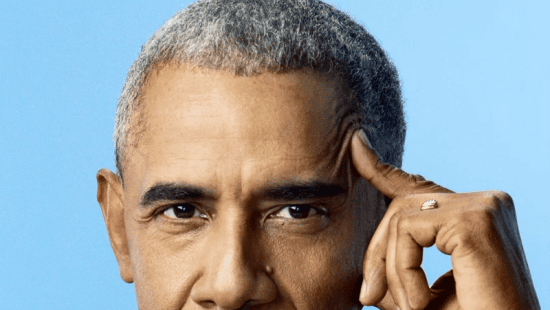
Jose Osuna Tisnado, 20, is running for Perris City Council, where he hopes to represent District 3. Known as “Warehouse Man,” a nickname inspired by a poem he wrote in high school criticizing industrial development, he has made warehouses, air quality, and the cost of living central to his campaign.
Four candidates ages 18 to 20 are running for mayor, city council and school board in Southern California. Their campaigns offer a closer look at young people entering local politics—and the limits of what four races can tell us about a broader shift.
At ages 18, 19 and 20, four candidates are running for school board, city council and mayor in Southern California. Their campaigns raise a bigger question: Are younger people moving from political frustration into the institutions they want to change?
National data show younger generations are running for office, but they do not establish whether young people are winning more local seats. These four campaigns offer a close-up look at why some are making the leap.
Brandon Macias, 20, says his path began at 14, when he helped develop a proposal for new water fountains at Giano Intermediate School in West Covina. The project reportedly cost $20,000, and his proposal later helped inspire improvements across the Rowland Unified School District.
Now a politics major at Occidental College and a teacher’s aide, Macias is running for the district’s school board. His campaign focuses on education and public services for working-class families. His story illustrates one route into politics: a school-based project that introduced him to how public decisions are made. His campaign website identifies him as a 2026 candidate for the board.
Jose Osuna-Tisnado, 20, is running for Perris City Council District 3. He uses the nickname “Warehouse Man,” inspired by a high school poem criticizing industrial development. His campaign focuses on warehouse growth, air quality and the cost of living.
Osuna-Tisnado argues that development should not come at the expense of residents’ health or their ability to afford life in Perris. His candidacy puts a younger voice into a longstanding local debate over how to balance economic development with neighborhood concerns.
Sophia Castillo, 19, is seeking a seat on the Colton Joint Unified School District board. A 2025 Bloomington High School graduate, she is training as a court reporter and working as a makeup artist.
Castillo’s priorities include student representation, internships, workforce skills and the use of artificial intelligence in education. She argues that recent graduates bring firsthand knowledge of schools to decisions that affect students. Her campaign raises a practical question: What perspectives might school boards gain by including people who have recently experienced the system they oversee?
Rylee Joseph Peak, 18, is running for mayor of Moreno Valley. Before becoming eligible to vote, he joined the city’s parks, community services and trails commission at age 13. Now a student at the University of California, Riverside, he wants to expand green spaces, increase youth representation on public bodies and build community trust.
Peak’s candidacy challenges the idea that age alone determines political experience. His years on a local commission gave him an early view of public service; the mayoral race will test whether voters are ready to give him a larger role. The City of Moreno Valley’s 2026 election page lists him among the mayoral candidates.
A wider trend or four individual campaigns?
There is evidence that younger generations are entering electoral politics. Future Caucus’s 2024 report counted 241 Gen Z and Millennial candidates on the general-election ballot for Congress, including 21 Gen Z candidates. The number of Millennial congressional candidates rose 79% from 2020.
But congressional races are not local elections. Those figures do not show how many young people are running for city councils or school boards in California, much less how many are winning.
Voting data also complicate the picture. Tufts University’s Center for Information and Research on Civic Learning and Engagement estimated that 47% of eligible Americans ages 18 to 29 voted in the 2024 presidential election. That was below the estimated 50% in 2020, but above 39% in 2016. Among 18- and 19-year-olds, estimated turnout in 2024 was 41%.
These figures describe voting, not candidacies. Young people’s participation at the ballot box can fluctuate even as some decide to run for office.
Social media may offer aspiring candidates another way to build networks and reach voters. Sarah Angevine, an associate professor of political science at Whittier College, told the Daily News that access to social media has changed the routes available to people with political ambitions. But visibility online does not guarantee votes or policy influence.
For more context, read how Gen Z’s political interests and media habits intersect with electoral politics. That coverage provides related context, but does not by itself establish whether more young people are winning local office.
To determine whether these campaigns reflect a broader change, California needs a systematic count of young candidates in local elections, compared with previous election cycles. That analysis should distinguish school board and city council races from state and federal contests, then track how many candidates win.
It would also help answer whether younger officeholders are changing policy or simply adding new voices to existing institutions.
For now, these four candidates show different ways young people are entering public life: through school activism, concerns about development, recent experience as students and years of service on a city commission.
Their campaigns do not yet prove that Gen Z is taking power in greater numbers. They do show young people seeking a direct role in decisions that will shape their communities long after this election.