New RAND research shows Santa Monica’s economic decline is deeper than the city’s debate over crime and homelessness and offers a broader lesson about what small businesses across Los Angeles are facing.
Santa Monica’s small-business problems are real.
The harder question is why.
A new RAND analysis of Santa Monica’s economy gives us a useful case study for a much bigger Los Angeles question: when small businesses lose customers, what is actually driving them away?
The answer is rarely just one thing.
RAND found that inflation-adjusted taxable sales in Santa Monica fell 32.8% between 2015 and 2025. Clothing and accessory sales fell about 75%, while food-service sales dropped nearly 24%.
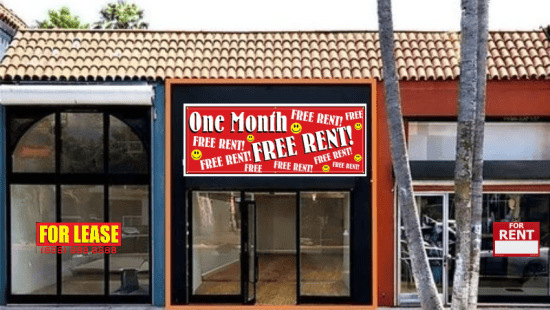
More than 11% of the city’s retail space was vacant this year, with roughly 45% of that vacant space concentrated around Third Street Promenade and Santa Monica Place.
That is not just a perception problem.
It is an economic one.
But the report also complicates one of the most common explanations for Santa Monica’s decline: crime and homelessness.
RAND found that homelessness remained relatively stable overall and declined modestly in 2026. Crime remains a concern, particularly downtown, but 71% of robberies and half of aggravated assaults occurred in just 5% of the city’s area, overwhelmingly downtown.
That does not mean public safety is irrelevant to businesses.
It means the data does not support turning crime or homelessness into the explanation for everything that has gone wrong.
And that has revlevance far beyond Santa Monica.
Across Los Angeles, small businesses are dealing with different combinations of problems.
Some are losing customers.
Some are dealing with higher labor, insurance, rent and supply costs.
Some cannot easily get the financing they need.
Others are dealing with shocks that have little to do with a traditional economic downturn.
For Latino businesses, immigration enforcement has become part of that story.
A September study from UCLA’s Latino Policy and Politics Institute found 46,000 fewer business visits and an estimated $3.16 million in accumulated losses around nine enforcement sites during the first two weeks after enforcement activity.
Among the 75 Latino entrepreneurs surveyed, 59% reported sales falling by more than 50%, while 68% said they temporarily closed or reduced their hours. Nearly 95% reported ongoing financial stress nearly a year later. The researchers note that the survey was not a random sample and should not be treated as representative of every Latino-owned business in Los Angeles County.
That is a very different business shock from what is happening on the Third Street Promenade.
But both produce the same basic problem:
Customers stop showing up.
The Owner Sees the Problem Differently
That is why the experience of individual business owners matters.
Santa Monica chef Raphael Lunetta recently described a restaurant business hit by one disruption after another: COVID, the actors and writers strikes, the 2025 fires, immigration enforcement and rising costs.
His answer was not simply to wait for things to get better. He talked about protecting his employees, staying connected to customers and finding ways to give people a reason to come back.
Read Parriva’s reporting on Latino and immigrant-owned businesses.
Santa Monica business operator AJ Sacher sees another part of the picture. He has argued that poor upkeep, public safety concerns and the way crime and homelessness are perceived can change how customers feel about spending time downtown.
Both experiences can be true.
Public safety and the condition of a commercial street can matter to a business without explaining every reason sales have fallen.
That is where the RAND report is useful. It helps separate what the evidence shows from what it does not.
Latino L.A. Shows Another Side of the Story
Parriva has been documenting these pressures from the perspective of Latino entrepreneurs.
South Central entrepreneur Josue Calderón lost a business during the pandemic and rebuilt. Today he owns two businesses in the community.
His story is not that South Central has no problems. He openly talks about fear of robbery and the challenges around him.
But he also refuses to write off the neighborhood.
He stayed.
He rebuilt.
And he kept investing in the place he calls home.
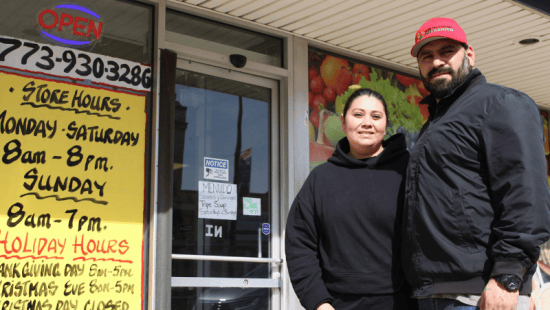
Rosa López Lorenzo, owner of Chapos Tacos in South Los Angeles, experienced a different kind of shock. She told Parriva that immigration raids changed customer behavior. People became afraid to go out, and traffic fell.
Her response was to adjust prices, build relationships with new customers and keep looking for ways to bring people through the door.
Read Rosa López Lorenzo’s story.
These stories point to an important distinction:
A struggling business is not necessarily a dying community.
And a vacant storefront does not necessarily mean entrepreneurship has disappeared.
The Santa Monica debate is valuable precisely because it does not give us an easy answer.
Businesses need customers.
They need safe, well-kept streets.
They need affordable capital.
They need workers.
They need rules they can understand and plan around.
And they need enough breathing room to survive the next shock.
Los Angeles also needs to recognize that these pressures are not distributed equally.
The problems facing a restaurant near Third Street Promenade are not identical to those facing a taco shop in South L.A. or a small business in East L.A.
But there is a common thread.
When the customer disappears, the owner has to absorb the loss.
Sometimes the reason is crime.
Sometimes it is fear.
Sometimes it is inflation.
Sometimes it is changing consumer habits.
Sometimes it is several of those things at once.
And sometimes, as Santa Monica’s data suggests, the story is bigger than the explanation that has become easiest to repeat.
That is the real lesson from the RAND report.
Los Angeles does not have one small-business crisis. It has several.
The challenge is figuring out which problem a business is actually facing before deciding what the solution should be.
For the person behind the counter, the person cooking the food or the person paying the rent, that distinction is not academic.
It can determine whether the doors close or stay open.