“It’s a tragedy what happened. Boyle Heights has been ignored for a long time. Elected officials need to understand that the community demands their presence. We need to have discussions and establish policies that address the problems facing the city, but in this specific case, Boyle Heights.”
For Sara Hernández, the agenda she has built is so personal and so focused on the needs of the State Senate District 26 community that she calls it the “Mom Agenda.”
She laughs when I insist on the originality of the idea the moment I hear it.
She laughs when I tell her that her campaign videos reveal a natural talent for connecting with people.
And she laughs because she remains upbeat as she enters the final days of the campaign for the November 3 general election.
“I call it the Mom Agenda because I visualize the city where I want my son to grow up, the same city I want for the entire community. It includes all the issues we are facing and the feedback I have heard from the community,” Hernández says.
Hernández won the primary election by a wide margin.
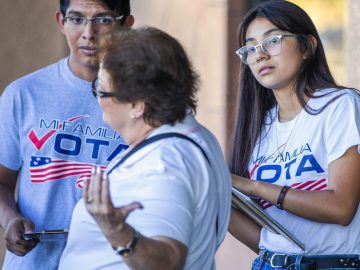
“We have gone door to door, talked to residents and made ourselves known. We have knocked on around 35,000 doors. The goal is to keep our campaign with the people, with those who live in the district and are going to vote,” she says optimistically.
In the primary election, Sara Hernández emerged as the clear frontrunner, receiving 54,799 votes, or 31.2% of the total, followed by Sarah Rascón with 34,158 votes, or 19.4%. Wendy Carrillo and Maebe Pudlo did not advance to the general election. Hernández finished 20,641 votes ahead of Rascón.
Hernández enters the general election after finishing first in the primary. But there is a different dynamic in the race against Rascón. Wendy Carrillo, Maebe Pudlo and current State Senator María Elena Durazo have endorsed Rascón, creating a different calculation when looking beyond the primary numbers.
“I guess it has to be determined,” Hernández responds confidently, seemingly at ease with the ground her campaign has covered.
“I have never seen an election where voters who supported candidates who lost automatically voted for the candidate those candidates endorsed in the general election. Maybe with Barack Obama, but that’s about it. I believe those voters who chose other candidates in the first round will choose the candidate they believe is best prepared. And that is the main point of my campaign. We have been making the case, building the narrative and demonstrating why they should vote for us,” Hernández says.
“Additionally, an analysis of the primary results shows that we won by a wide margin in Latino areas. That challenges the assumption that because voters supported one candidate, they will automatically vote for another candidate. It doesn’t work that way.”
Hernández has also sought to put the DSA Los Angeles recommendation of Rascón in perspective, saying that only about 20% of the organization’s members voted for the recommendation. DSA Los Angeles lists Rascón as “Recommended,” rather than “Endorsed,” in its 2026 general election voter guide.
“This means there isn’t really a bloc that has endorsed a single candidate. It doesn’t mean they are all going to vote for her,” Hernández says.
“I have been doing this for many years. I have worked through my organization, looking for opportunities for them. Young people are the ones suffering the most. It is impossible to buy a house or establish yourself in a city with so few opportunities for them. We need to change that.”
Sara Hernández enters the November general election with a campaign built around her “Mom Agenda,” housing, child care, public transportation, youth opportunities and a more connected approach to government.
Her Path
Sara Hernández grew up in an environment, a city and a political circle that shaped her life. Salinas, her birthplace, is rooted in a region that fostered one of the most important Latino labor movements in the United States. The fight for farmworkers’ rights is lived, breathed and fought for there, not only in California but across the country.
“My parents dedicated their work and time to that cause. The idea of social justice was always present at home. It’s what I lived, what I saw in the streets and what I experienced growing up,” she told Parriva in a previous interview.
“I’ve always been interested in education. As a student, I knew it was a tool to move forward in life. Later, I realized that by working in education, we could offer Latino youth opportunities they don’t always have access to,” she says.
Looking back, she reflects on how those early experiences shaped her values.
“Salinas was often compared to the Deep South because of the discrimination and struggle. Most of us were Mexican farmworkers with a rich history of resilience.”
Hernández has sought to reflect those principles in her political agenda, shaped over years of experience in different spaces. She learned early that the world is vast and full of perspectives worth understanding.
Driven by curiosity and a passion for education, she eventually left Salinas and attended Duke University, where she gained a new understanding of her identity as a Latina and Mexican American.
“That experience was eye-opening. It pushed me out of my comfort zone and exposed me to very different environments. It was one of the best experiences of my life,” she says.
Her path led her to Los Angeles, where she worked with underserved youth and helped found Helping Young People Excel, guiding teenagers toward their dreams. After earning her law degree, she was ready to fully enter politics.
She worked with former Councilmember José Huizar and later ran for California’s 34th Congressional District, a race won by Jimmy Gomez.
“I had always been around politics and decided to take my chance, but I wasn’t ready at the time. That campaign taught me valuable lessons. Running for office is the final step. You first have to build relationships, coalitions, and support. It’s difficult, but you have to try your hardest. I’ve always been committed to policies grounded in real-life experiences, which is why I’m running again. This time, I’m ready,” she told Parriva.
Making the Case
“Why am I the best candidate? That’s the question I bring to my campaign. People need to know me, to hear me. They should know that I’m a progressive candidate and that I have the experience needed to serve in Sacramento.
“I have always been alongside the community, fighting on different fronts, in the streets, in the courtroom, and alongside young Latinos, including DACA recipients.
“Los Angeles residents need answers. The affordability problem is serious. Housing is a serious issue. Jobs are at risk because of the possible departure of the entertainment industry. Public services are also under pressure.
“I’m not just saying these things. I have lived them. I’m not a candidate who speaks from a world she has never experienced. I have been doing this long before becoming a candidate.
“Being a state senator does not mean being isolated from the communities you represent. I always say that we are in the public service world. That is what I want to do when I get to Sacramento: connect the different structures of state government so we can actually reach communities.
“We cannot leave these problems isolated.”
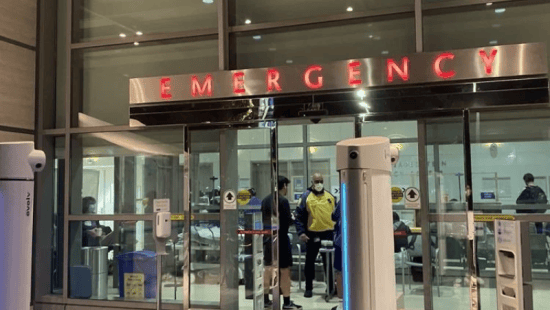
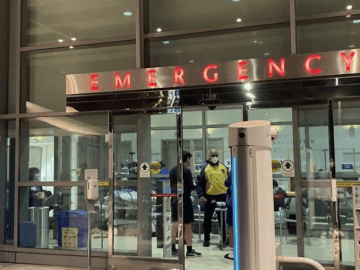
Hernández speaks with particular passion about the recent Lineage fire in Boyle Heights.
“It’s a tragedy what happened. Boyle Heights has been ignored for a long time. Elected officials need to understand that the community demands their presence. We need to have discussions and establish policies that address the problems facing the city, but in this specific case, Boyle Heights.
“We have to provide resources to the community and guarantee that they will be heard and served. I know the frustration people feel when they look for an elected official and cannot find them, or when they see their office closed. It has happened to me.
“I consider myself an old-school politician. I believe communication is very important, and I plan to work along those lines, keeping channels of communication open.
“Now people can’t even go to City Council to see their councilmember without an appointment. We have to go back to the way politics used to be, making it accessible and meeting people’s needs.”
One of her central concerns is young people. She is convinced that more must be done to provide opportunities and give young people confidence that a different future is possible.
“I have been doing this for many years. I have worked through my organization, looking for opportunities for them. Young people are the ones suffering the most. It is impossible to buy a house or establish yourself in a city with so few opportunities for them. We need to change that.
“I believe I am the candidate with the greatest participation from young Latinos. I have made an effort to bring in interns who work closely with us and get involved. Did you like those social media posts? They are the ones behind them.
“One thing is certain. If we don’t work to create more opportunities for housing in California, the dream dies.
“These are not just words. It is work. And I am committed, because of my personal history, my education and my professional and political career, to doing things, not just talking about them.”
Her Mom Agenda is built around eight commitments. Among them are improving streets and making them safer, improving public transportation and its operations and maintenance, universal child care, housing, addressing homelessness, and reducing screen time for children.
“We cannot solve these problems alone. We have to work together across the different levels of state government. We have gotten used to the idea that certain problems belong only to the City Council or the mayor’s office. I don’t believe that.
“I believe we can all work together. That is how we solve things more efficiently. There are no isolated places in government. There is an interconnection between them. I am going to promote that discussion.”
It brings to mind words Hernández recently shared with us:
“I truly believe people run for office because they care about their communities and want to make a positive impact. My story is part of a long chain of generations, my grandparents, my parents. I want to build a healthy community and help make the dream of a prosperous California a reality again.
“Those dreams are slipping away, and I want families seeking justice to know they have an ally. When I think about all of that, yes, it’s worth it.”