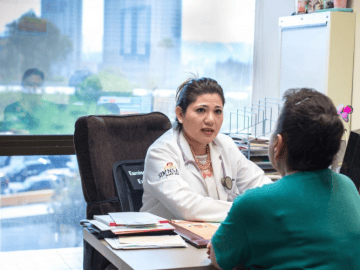
California has built a maternal mental-health screening system. For a Spanish-speaking Medi-Cal mother in Los Angeles, the harder question may be what happens after the positive screen.
The jury could not reach a unanimous verdict in the Lindsay Clancy murder trial, and a Massachusetts judge declared a mistrial Friday after more than six weeks of testimony and seven days of deliberations. Clancy’s defense argued that severe postpartum mental illness left her unable to understand her actions. Prosecutors disputed that account. The case remains unresolved. Reuters coverage of the Lindsay Clancy mistrial
But the case has again forced a difficult question into public view: What happens when a mother develops a serious mental-health condition after giving birth?
For California families, the question is not simply whether doctors can identify the problem.
California has built a system designed to do that.
The harder question is whether a mother who screens positive can actually get to the right care.
That distinction matters particularly for Medi-Cal patients and for mothers who prefer to receive care in Spanish.
California already screens for maternal mental health
California requires health care providers who provide prenatal, postpartum or interpregnancy care to offer screening for maternal mental-health conditions. The state also requires Medi-Cal managed-care plans to track prenatal and postpartum depression screening.
The need is substantial.
The California Department of Public Health’s 2026 maternal mental-health report found that about one in three California women and other birthing people experienced symptoms of anxiety or depression during or after pregnancy.
But screening does not equal treatment.
It is the beginning of a chain:
Screening → positive result → referral → appointment → evaluation → treatment → follow-up.
If one of those handoffs fails, the screening may identify a problem without actually connecting a mother to help.
For Parriva readers, this fits into a broader health-access question the newsroom has examined before, including UCLA’s Medi-Cal contract changes and what they mean for patients in Los Angeles.
The language gap is already visible
California’s own data shows why language deserves particular attention.
Among people surveyed by the state, 70.9% of English speakers reported receiving a mental-health screening during pregnancy, compared with 62.2% of Spanish speakers.
After pregnancy, the gap was larger: 74.3% of English speakers reported screening compared with 55.4% of Spanish speakers.
Those numbers do not prove that language caused the difference. The state’s report itself notes that multiple factors can affect access.
But they establish something important:
Spanish-speaking mothers are not experiencing the maternal mental-health system in exactly the same way as English-speaking mothers.
That makes the question of what happens after a positive screen even more important.
Parriva has also examined how language, trust and access can shape health care experiences in Latino communities in “El sistema de salud ha ignorado a la comunidad Latina”.
Meet María
To test that question, consider a standardized patient scenario.
María is 29, lives in Los Angeles County and is six weeks postpartum. She has Medi-Cal managed care. Spanish is her preferred language.
Her OB recently screened her for depression and anxiety. The result was positive.
Her doctor told her she needs mental-health care.
Her symptoms are getting worse.
She is not experiencing an immediate emergency, but she needs an appointment soon.
She is looking for a provider who can treat postpartum or perinatal mental-health conditions and communicate with her in Spanish.
The question is deliberately simple:
Can María get from a positive screening result to the right appointment?
That is different from asking whether her Medi-Cal plan technically covers behavioral health.
We tested the system’s public pathways
California’s own Department of Health Care Services has identified the same potential weak point.
In its Birthing Care Pathway report, DHCS said pregnant and postpartum Medi-Cal members face challenges accessing behavioral-health providers who have perinatal training and available appointments.
The state is now trying to strengthen those connections.
DHCS says Medi-Cal managed-care plans are responsible for transitional care services during pregnancy and through 12 months after delivery, including coordination across medical, behavioral-health and social needs. California DHCS Population Health Management initiative
And a California bill moving through the system would make the expectations even more explicit.
SB 626, as enrolled, would require plans to provide case management or care coordination for members who screen positive for maternal mental-health conditions. The services can include identifying treatment providers, scheduling appointments, behavioral-health navigation, medication-access assistance, regular follow-up and communication between obstetric and behavioral-health providers.
That list is revealing.
It describes almost exactly what María needs.
The five-plan test
Los Angeles County has several Medi-Cal managed-care pathways, so the test cannot stop with the county’s general provider directory.
The same María scenario should be presented to each major plan serving Los Angeles County:

No plan gets information about what another plan found.
Each receives the same patient.
Each receives the same questions.
Each is asked to solve the same problem.
The central question is:
“I am a Medi-Cal member in Los Angeles County. I am six weeks postpartum and recently screened positive for depression and anxiety. My OB told me I need to see a mental-health professional. Spanish is my preferred language. I am not having an emergency right now, but my symptoms are getting worse and I need an appointment soon. I need someone who treats postpartum or perinatal mental health. Can you help me find the right provider?”
Then the test asks:
- Who is responsible for helping María?
- Can the plan identify a Spanish-speaking provider?
- Does that provider specifically treat perinatal or postpartum mental health?
- Does the provider accept María’s exact Medi-Cal plan?
- Can María access psychiatric evaluation or medication if clinically appropriate?
- What is the earliest appointment?
- Can the plan schedule it?
- What happens if the first provider cannot see her soon enough?
- Who follows up if María never makes the appointment?
- What should she do if her symptoms worsen but she is not experiencing an emergency?
Those questions test something that a provider directory cannot.
They test the handoff.
The directory can say “yes” without answering the most important question
Los Angeles County has a substantial behavioral-health infrastructure.
Its public Service and Bed Availability Tool can identify providers by characteristics including Medi-Cal participation, language, perinatal services and appointment information.
That means it would be inaccurate to tell readers that Spanish-speaking Medi-Cal mothers simply have nowhere to go.
There are providers that appear to meet several of María’s requirements.
For example, public county information has identified providers in Los Angeles County offering combinations of Medi-Cal, Spanish-language services and perinatal care.
That is good news.
But it does not answer everything.
A directory does not necessarily tell María:
- whether the provider accepts her particular managed-care network;
- whether the provider is treating her particular condition;
- whether the provider is offering therapy or psychiatric care;
- whether the first available appointment is clinically appropriate;
- whether she can get medication evaluation if she needs it;
- whether the referral will be completed;
- or whether anyone will contact her if she never makes the appointment.
That is the difference between finding a provider and receiving care.
Some plans already have pieces of the answer
The public evidence also makes clear that California’s Medi-Cal plans are not starting from zero.
Blue Shield Promise, for example, has a maternal mental-health program and behavioral-health pathways for its Medi-Cal members. Its public materials describe mechanisms for connecting members with behavioral-health services and, when appropriate, county specialty mental-health services.
Kaiser has publicly identifiable clinicians in Southern California who speak Spanish, accept Medi-Cal Managed Care and have expertise relevant to pregnancy and postpartum mental health.
Other plans also publish behavioral-health directories, member resources and Spanish-language materials.
So the story is not:
“Medi-Cal provides no maternal mental-health care.”
The evidence does not support that.
The more important question is:
How reliably do those pieces connect when a mother actually needs them?
That question is consistent with Parriva’s broader coverage of how Medi-Cal access changes can affect Latino families.
California’s next test is not screening. It is follow-through.
This is where SB 626 becomes particularly relevant.
The legislation’s proposed care-coordination requirements describe a system in which a positive screen should trigger more than a referral.
The plan could help identify a provider.
It could help schedule an appointment.
It could help with behavioral-health navigation.
It could help with medication access.
It could communicate with the OB and behavioral-health providers.
And it could follow up with the patient. SB 626 legislative text
That is essentially a definition of what a successful María journey would look like.
But legislation and policy requirements are not the same thing as a completed patient journey.
The real accountability question is whether the system actually performs those functions when María needs them.
What a successful handoff would look like
For María, success should not mean:
“Here is our provider directory.”
It should look more like:
“We found a Spanish-speaking provider who treats postpartum mental health, accepts your Medi-Cal plan, and can see you on Tuesday. We can help schedule the appointment. If that provider cannot see you soon enough, we will help you find another option. Here is what to do if your symptoms worsen.”
That is a care pathway.
Anything less may leave a mother doing the navigation herself while she is already struggling.
And that is precisely when navigation becomes a barrier.
The question California should be able to answer
California has invested heavily in maternal mental-health screening, expanded postpartum Medi-Cal coverage and built programs intended to connect mothers with behavioral-health services. The state even promotes its maternal mental-health infrastructure as a national strength. California Governor’s Office on maternal mental health
Parriva has previously examined other California maternal-care access pressures, including the loss of maternity wards in Los Angeles County.
But identifying a problem is not the same as solving it.
A positive screen tells a doctor that a mother may need help.
It does not tell us whether she gets the appointment.
It does not tell us whether the provider speaks her language.
It does not tell us whether the provider understands perinatal mental health.
It does not tell us how long she waits.
And it does not tell us who notices if she falls through the gap.
For a Spanish-speaking Medi-Cal mother in Los Angeles, those details may determine whether a screening result becomes a doorway to treatment—or simply another item in a medical record.
California has built the screen.
Now the real test is what happens afterward.
If you or someone you know needs immediate mental-health help
A person experiencing an immediate mental-health emergency should seek emergency care or call/text 988 for the Suicide & Crisis Lifeline.
For postpartum mental-health information and support, Postpartum Support International also provides resources for families and professionals.