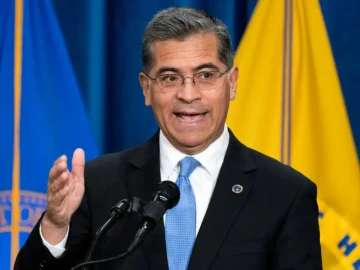
Steve Hilton is running for governor of California with a message built around a problem many Californians already feel every day: California is too expensive.
His campaign’s Califordable agenda calls for lower taxes, lower energy costs, more housing and fewer regulations, including a proposal for starter homes for young families. The campaign also says it wants to reduce gas prices and utility bills.
That message matters for Latino voters because affordability is not an abstract issue.
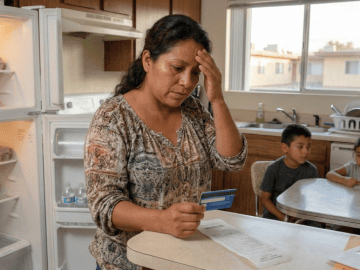
In the September 2026 Public Policy Institute of California statewide survey, 71% of Latino likely voters said candidates’ positions on affordability and the cost of living were very important to their vote. The survey also found that 68% of Latino adults said recent price increases had caused financial hardship, while 52% said housing costs were putting financial strain on their household.
So there is a broader question for Hilton’s campaign:
Can an affordability message overcome policy disagreements with Latino voters on immigration, health care, education and homelessness?
The evidence does not support simply saying that Hilton’s agenda is “anti-Latino.” Some of his proposals could directly benefit Latino households.
But several of his positions also create direct policy tensions for large numbers of Latino Californians.
Immigration: A direct policy conflict for some Latino families
Immigration is one of the clearest areas of disagreement.
Hilton has called for greater cooperation between California and federal immigration authorities and has criticized California’s sanctuary-state approach.
That matters because immigration policy does not affect only undocumented immigrants.
California has many mixed-status families, where household members have different immigration statuses. Changes in cooperation between state or local agencies and federal immigration authorities can therefore have consequences that extend beyond the person whose immigration status is directly affected.
For Latino voters, the question is not simply whether they support or oppose immigration enforcement.
It is also whether increased cooperation with federal immigration authorities would affect their own families or communities.
That makes immigration a concrete policy question rather than a question of whether Latino voters as a group support or oppose Hilton.
Parriva context: California Governor Election 2026: Becerra vs. Hilton; Where They Stand on the Issues That Matter Most to Families.
Medi-Cal: Another direct policy dividing line
Health care creates another significant policy difference.
Hilton has proposed changing California’s approach to health coverage for undocumented immigrants.
California’s current Medi-Cal rules are already changing. The California Department of Health Care Services says that, beginning January 1, 2026, some adults can no longer newly enroll in full-scope Medi-Cal because of immigration status, while existing full-scope members can retain coverage if they continue to meet program requirements. Children, pregnant people and certain former foster youth remain eligible for full-scope coverage regardless of immigration status.
Hilton’s proposal therefore needs to be evaluated against an already-changing Medi-Cal system rather than an unchanging status quo.
The household question is especially important for mixed-status families.
But there is an important distinction: Latino voters are not a single bloc on this issue.
Some may oppose reducing health coverage for undocumented immigrants. Others may believe California should limit state-funded benefits based on immigration status.
The evidence establishes a clear policy difference. It does not establish that every Latino voter views that difference negatively.
Parriva context: How California’s New Budget Could Change Everyday Life for Immigrant Families Over the Next Two Years.
English learners: A potentially large education impact
Education is another area where Hilton’s proposals could have a large reach.
His campaign’s education platform emphasizes early literacy, accountability and changes to classroom instruction. Hilton has also advocated an English-focused approach to public education.
That proposal deserves particular attention because California has a large English-learner population.
According to the California Department of Education, California had 925,907 English learners in 2025–26. Of those students, 733,268 spoke Spanish, making Spanish by far the most common home language among English learners.
That does not mean all English learners are Latino. Nor does it mean all Latino students are English learners.
But the numbers show why changes to California’s English-learner system could have significant consequences for many Latino families.
The policy question is whether Hilton’s proposed approach would improve English acquisition while maintaining academic access for students who are still developing English proficiency.
That question requires more than a political label. It requires looking at how students would be taught, what services would change, how quickly students would be expected to transition and what evidence supports the proposed model.
Parriva context: Immigration Raids, Not Just Enrollment, Are Deciding Which L.A. Schools Close.
Housing: The part of Hilton’s agenda that could help some Latino families
Housing makes the picture more complicated.
Hilton’s affordability agenda includes proposals intended to increase housing production, reduce regulatory barriers and make it easier for Californians to purchase starter homes.
That could benefit Latino families.
But whether it does depends heavily on what gets built, where it gets built and who can afford it.
Latino Californians continue to face a substantial homeownership gap. At the same time, renters and lower-income households may not benefit equally from policies focused on new home purchases.
The September PPIC survey found that 52% of Latino Californians said housing costs were putting financial strain on their household.
That creates a direct connection between Hilton’s affordability message and a problem many Latino households identify themselves.
It also creates a test for the policy.
If new housing remains unaffordable to households experiencing the greatest financial pressure, increasing housing supply alone may not resolve the problem those voters are experiencing.
Parriva context: Can You Lose Federal Housing Assistance Because Someone In Your Family Is Undocumented? Here’s What We Know.
Homelessness: High Latino exposure, uncertain policy outcome
Homelessness presents another area where the potential effects are not straightforward.
Hilton has emphasized clearing encampments, increasing enforcement and expanding treatment and sober-housing options.
California’s housing and homelessness planning documents provide a broader picture of the populations affected by the state’s homelessness system. California Department of Housing and Community Development planning documents provide the underlying state-level context.
But the eventual effect of a particular homelessness strategy depends heavily on implementation.
Questions include how many people would move into permanent housing, how much treatment capacity would actually be available, how enforcement would be conducted and what happens to people who cannot immediately qualify for shelter or housing.
That makes homelessness different from an issue such as Medi-Cal eligibility, where a specific policy change can be identified more directly.
Here, the evidence is stronger on exposure to the problem than on the eventual effect of Hilton’s proposed solution.
The economic argument cannot be ignored
This is the strongest counterweight to the idea that Hilton’s policies necessarily create a problem with Latino voters.
The affordability issue is real.
The September PPIC survey found that Latino voters placed particularly high importance on candidates’ positions on affordability. It also found significant levels of reported financial hardship from recent price increases.
That means Hilton’s argument about taxes, energy costs, housing and the overall cost of living is addressing concerns that many Latino voters themselves identify.
This is why the question cannot simply be:
Are Hilton’s policies good or bad for Latinos?
The more useful question is:
Which parts of Hilton’s agenda address problems Latino households are experiencing, and which parts create new costs, risks or disagreements?
The answer may be different depending on the household.
A homeowner struggling with property taxes and energy costs may evaluate Hilton’s proposals differently from an undocumented immigrant worried about health coverage.
A renter may prioritize housing supply differently from a parent whose child is an English learner.
A family experiencing homelessness may evaluate enforcement and shelter policies differently from a voter whose primary concern is the cost of gasoline.
What does the polling tell us?
The polling provides important context, but it does not prove that any particular policy is causing Latino voters to choose one candidate over another.
The September 2026 PPIC statewide survey found Xavier Becerra at 60% and Steve Hilton at 38% among likely California voters.
The latest Berkeley IGS statewide poll, conducted September 15–20, similarly found Becerra ahead of Hilton, 58% to 33% among likely voters.
Those are statewide results, not evidence that a particular policy caused Latino voters to choose one candidate over another.
The most recent directly verified Latino-specific gubernatorial numbers available for this analysis come from the June Berkeley IGS Latino voter survey. At that point, Becerra received 52% support among Latino registered voters, compared with 28% for Hilton, while 20% chose neither candidate or were undecided.
That provides evidence of a substantial difference among Latino voters at that point in the campaign, but it does not establish why each voter made that choice.
The September polling also shows why affordability deserves special attention: 71% of Latino likely voters said candidates’ affordability positions were very important to their vote.
In other words, the same voters who may have concerns about immigration, health care or education may also be intensely focused on whether a candidate can make everyday life less expensive.
So, are Hilton’s policies creating a problem with Latino voters?
The evidence points to policy tension, not a simple yes-or-no answer.
Hilton’s immigration and Medi-Cal positions create clear policy differences that could matter to Latino families, particularly mixed-status households and people directly affected by immigration or health-care policy.
His education proposals could affect a large number of California students, including hundreds of thousands of English learners whose primary language is Spanish.
His homelessness proposals address a problem with substantial Latino exposure, but their eventual effects depend heavily on implementation.
At the same time, his housing and affordability proposals address problems that Latino voters consistently identify as important.
That means the political question is not whether Hilton’s entire agenda benefits or harms Latino voters.
It is which issues matter most to individual voters, and whether the benefits they expect from his affordability agenda outweigh the concerns they have about his other policies.
The current polling can describe where the candidates stand in the electorate.
It cannot tell us exactly why each Latino voter is making that choice.
And it cannot tell us what will happen in November.
For California voters, the more useful exercise may be simpler:
Look at the policy. Look at who it affects. Look at the evidence. Then decide what matters most to your household