The councilmember takes over the city’s homelessness response at the exact moment her district faces its steepest one-year spike in the crisis, and amid a political firestorm that could end up helping the very rival she’s replacing.
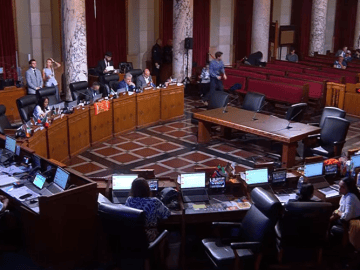
When Council President Marqueece Harris-Dawson named Ysabel Jurado chair of the city’s newly created Homelessness and Health Committee this week, he handed her one of the most consequential jobs in Los Angeles government. He also handed her a problem she’s already failing to solve in her own backyard.
The District She’d Have to Fix Firs
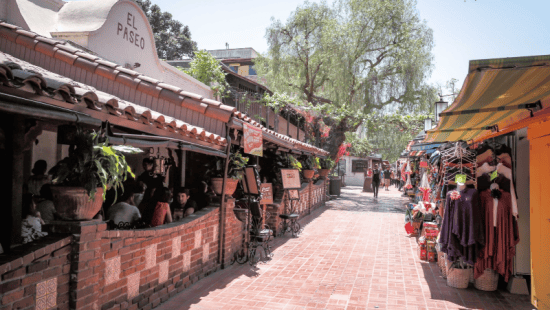
Jurado’s Council District 14 isn’t just another district grappling with homelessness. It’s the epicenter. CD14, which includes Skid Row, downtown Los Angeles, Boyle Heights and parts of Northeast LA, has historically contained the city’s largest concentration of unhoused residents, a legacy of a 20th-century “containment” policy that deliberately clustered homeless services and shelters in the area.
The most recent data makes the scale of that concentration hard to ignore. Downtown Los Angeles, entirely within CD14, saw homelessness surge 23% in a single year, from 3,427 people in 2025 to 4,215 in 2026. Skid Row alone holds a stable population of more than 4,400 unhoused residents, one of the largest concentrations of homelessness anywhere in the country. Citywide, the picture isn’t much better: the 2026 count found 45,194 homeless individuals in Los Angeles, up 3.4% from the year before, with unsheltered homelessness, people living directly on the street rather than in shelters, jumping 7.9%.
Layer onto that the fact that Jurado’s district is also still absorbing the fallout from the Lineage Logistics warehouse fire in Boyle Heights, a crisis she’s simultaneously chairing as head of the Ad Hoc Committee for Boyle Heights Fire Recovery, and the question writes itself: how does a councilmember take on the entire city’s homelessness strategy when her own district is arguably its most acute failure point?
Jurado’s Own Answer
To her credit, Jurado hasn’t pretended otherwise. “Our backs are against the wall, and we have to make hard decisions,” she said in accepting the role, adding that the city needs to decide “whether the City’s future is with LAHSA or requires a different model.” It’s a notably blunt admission for someone stepping into the job, essentially conceding that the current approach isn’t working, in the same neighborhoods she represents, before she’s chaired a single meeting.
Whether her hyperlocal, front-row experience with the crisis becomes an asset or a liability likely depends on what she does next. Optimists could argue that no one on the council understands the failure points of the current system, Skid Row’s containment legacy, LAHSA’s oversight gaps, the slow pace of permanent housing, better than someone watching it unfold daily in her own district. Skeptics will note that “understanding the problem intimately” and “having fixed it” are very different things, and Jurado has been in office less than two years.
The Raman Question
The other complicating layer is the politics surrounding how Jurado got this job in the first place. She’s not simply inheriting a vacant chairmanship, she’s replacing Nithya Raman, who is now challenging Mayor Karen Bass in the November mayoral race and has publicly framed her removal as retaliation.
“Mayor Bass’ top City Council ally removed me as Chair of the Housing and Homelessness Committee,” Raman said in a video posted to social media Monday. “The Mayor may be trying to punish me for challenging her, but Angelenos are the ones who pay the price for these political games.” Raman tied the timing directly to her push for an independent audit of the city’s homelessness spending, including Bass’s signature Inside Safe program.
Harris-Dawson, who has been a close ally of Bass for years, rejected the framing outright, calling Raman’s retaliation claim a reach to “the bottom of the barrel politically.” He said the decision followed months of discussions with Raman about her leadership and a new direction for the committee, and pointed to a record that included canceled meetings and a $62.6 million initiative that placed just three households in housing over roughly a year.
That record is exactly what the Bass campaign has seized on. “Nithya Raman canceled committee meetings for weeks, didn’t show up to votes, and failed to deliver on building more housing or getting people off the streets,” Bass campaign spokesperson Alex Stack said, crediting the mayor’s own Inside Safe program with clearing more than 120 encampments and unlocking 100,000 new homes.
Does This Help Raman Politically?
It’s a real possibility, and one that cuts against what Harris-Dawson and Bass likely intended. Removing a mayoral candidate from a powerful committee post in the middle of her campaign against the sitting mayor is exactly the kind of move that can read to voters as institutional retaliation rather than routine reshuffling, regardless of the underlying performance record. Raman’s framing, “Angelenos are the ones who pay the price for these political games”, is designed to shift the conversation away from her committee’s track record and onto Bass’s use of power against a rival, a narrative that resonates with voters already skeptical of City Hall.
The risk for Bass is that the move hands Raman a ready-made underdog narrative for the remainder of the race, one where she can now credibly claim she was punished not for failing on homelessness, but for demanding accountability on it. Even some conservative commentary framed the fight as both sides damaging themselves simultaneously, with one column describing the spectacle as Bass and Raman “going toe-to-toe” and neither coming out looking strong.
Whether voters ultimately side with Raman’s retaliation narrative or Bass’s performance critique will likely hinge on which story dominates headlines between now and November, the committee reshuffling itself, or what Jurado is actually able to accomplish with it.
What’s Actually at Stake
Underneath the political theater is a genuine governing question neither campaign has fully answered: can Los Angeles fix a homelessness crisis that keeps growing, 3.4% citywide, 23% in Jurado’s own downtown, by reorganizing who’s in charge of it, without first resolving whether the city’s core delivery mechanism, LAHSA, is the right one at all? Jurado says that’s the decision she now has to make. Her own district may end up being the clearest test of whether she gets it right.