Los Angeles City Council is reviewing tree-spacing guidelines after research found that current rules limit potential planting locations in Boyle Heights. But changing the rules won’t solve every barrier to creating more shade.
Los Angeles wants more trees. Now the city is examining whether some of its own rules are making that harder.
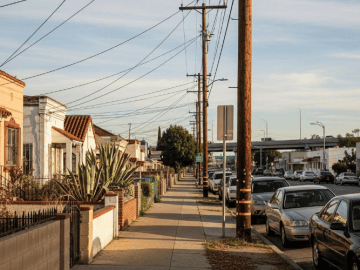
On Sept. 15, the Los Angeles City Council unanimously approved a motion directing city departments to review the city’s tree-spacing guidelines and recommend ways to modernize them. The review comes after research found that the rules can limit potential planting locations, particularly in dense neighborhoods such as Boyle Heights.
The research, led by USC Dornsife PhD candidate Laura Messier, compared Boyle Heights and Studio City. Boyle Heights has about 2,183 street trees per square mile, compared with roughly 3,020 in Studio City. Researchers attributed part of the difference to street density, multifamily housing, smaller parcels and the city’s spacing requirements.
For Boyle Heights, the issue is part of a larger pattern of environmental and public-health pressures. Parriva recently documented health problems reported by residents and patients following the Lineage warehouse fire in the neighborhood. Parriva’s Boyle Heights health report
Los Angeles’ Urban Forestry Division sets minimum distances between street trees and infrastructure such as utility poles, streetlights, driveways and intersections.
The current guidelines call for trees to be kept 20 feet from electrical power poles and streetlights, 10 feet from fire hydrants, 8 feet from driveways and 45 feet from unsignalized intersections. A 50-foot clearance is required from the approach to a traffic-control device.
Those standards are intended to protect safety and keep trees from interfering with streets, sidewalks and infrastructure.
The question now is whether some of those distances are more restrictive than necessary.
Messier’s team modeled what would happen if Los Angeles adopted more flexible spacing standards used in other California cities.
Under current rules, researchers estimated that Boyle Heights could accommodate about 121 additional potential planting locations per square mile, compared with 140 in Studio City.
Under the less restrictive standards they modeled, Boyle Heights’ potential increased to 153, while Studio City’s increased to 158.
For Boyle Heights, that is roughly a 26% increase in potential planting capacity, while substantially narrowing the difference between the two neighborhoods. USC’s study findings
The study also identified which changes could matter most. Relaxing restrictions near intersections produced a modeled 7.6% increase in planting capacity in Boyle Heights, while changes around utility poles produced another 5.5%.
But there is an important catch.
More planting spots do not automatically mean more shade
Narrow sidewalks remain a major constraint.
Only about 34.5% of potential new trees in Boyle Heights could be large-canopy species, compared with 61% in Studio City. That matters because large-canopy trees are the ones capable of providing substantial shade as they mature. USC Dornsife’s study findings
In other words, changing the spacing rules could create more places to plant trees. It would not, by itself, create wider sidewalks, relocate utilities or provide enough room for every tree to become a large shade tree.
That distinction is central to what the Council is now being asked to examine.
The researchers also found that roughly half of the existing street trees in the Boyle Heights study area do not comply with the city’s current spacing guidelines.
The study reported little evidence that those trees have caused the kinds of safety problems the restrictions are intended to prevent. That finding raises a practical question for city officials: Are some of the standards more restrictive than necessary if existing trees can remain in place without creating documented problems?
It does not mean every spacing requirement is unnecessary or that every existing tree is safe. The research instead provides a reason to reconsider whether the current standards are calibrated correctly.
Boyle Heights is not simply a symbolic example.
It is one of the two neighborhoods researchers actually studied. The comparison was designed around communities similar in size, topography and parcel layout but substantially different in income, demographics and existing tree coverage.
That makes the neighborhood a useful test of a broader Los Angeles question:
Can the city make it easier to add shade in dense communities without first undertaking major street reconstruction?
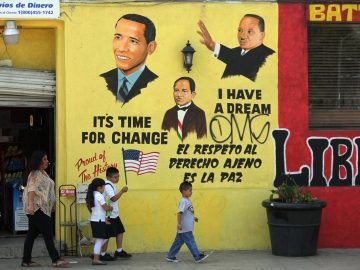
For historically Latino neighborhoods such as Boyle Heights, the question has particular relevance because tree canopy can affect the experience of walking, biking and waiting for transit in hot weather.
Parriva’s previous coverage has also examined how environmental burdens intersect with life in Boyle Heights, including the neighborhood’s longstanding exposure to industrial activity and pollution.
The Council’s action does not immediately change Los Angeles’ tree-spacing rules.
Instead, city departments have been directed to review the existing standards and return with recommendations. The process will determine whether the city changes its guidelines and whether additional street or infrastructure changes are needed to expand tree planting.
For Boyle Heights, the most important question is therefore not simply whether Los Angeles loosens a few measurements.
It is whether the city can turn additional planting capacity into additional shade.
The research suggests changing the rules could help. It also shows why rules alone will not close the city’s shade gap.
That makes the upcoming city review the next story to watch.