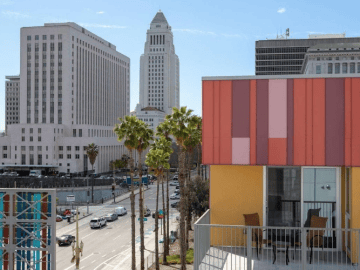
The new 208-bed village offers rent-free interim housing, meals and supportive services—but its ultimate goal is to help residents move into permanent housing.
A new tiny-home village opened Monday in Sun Valley, adding approximately 208 interim-housing beds to Los Angeles’ homelessness response system.
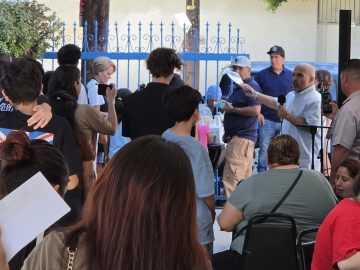
Mayor Karen Bass and Councilmember Imelda Padilla joined nonprofit Hope the Mission on Aug. 10 to open the village near the Sun Valley Metrolink station. The city says the project is part of a larger effort to build more than 500 tiny homes across Los Angeles.
For people experiencing homelessness—and for families trying to help someone who is—the ribbon cutting is only part of the story.
The more important questions are practical: Who can live there? Do residents pay rent? What services are available? How does someone get placed? And is a tiny home actually a path to permanent housing?
The village is located near the Sun Valley Metrolink Station, at the site identified by the city as 8358 San Fernando Road, also associated with 11080 Olinda Street.
Los Angeles city records describe a project with 122 sleeping units and approximately 208 beds. The site includes an administrative structure, hygiene facilities, restrooms, showers, laundry facilities and perimeter fencing.
The village is being operated by Hope the Mission under an agreement with the city.
Hope the Mission’s Tiny Home Villages information
The project is classified as interim housing, rather than permanent housing.
That distinction matters.
The tiny homes are intended to give people a stable place to live while they receive services and work toward a longer-term housing solution.
Los Angeles officials say residents at the Sun Valley village will not pay rent.
City records also show that the city is providing the property through a no-cost lease to the operator, with the agreement initially extending for three years after substantial completion and the certificate of occupancy.
That makes the village different from a conventional affordable-housing development.
Residents are not signing a normal apartment lease and paying monthly rent. Instead, the site is part of Los Angeles’ interim-housing system.
What do residents receive?
The village is designed to provide more than a roof.
According to the city and local reporting, services include:
- Three meals a day
- Case management
- Residential monitoring and security
- Hygiene facilities
- Showers
- Laundry
- Housing navigation
- Connections to supportive services
City documents say Hope the Mission’s role includes helping residents address employment, public-assistance, medical and mental-health needs, substance-use recovery and housing placement.
That case-management component may ultimately be more important than the tiny structures themselves.
A tiny home can provide immediate stability. But homelessness is rarely solved simply by providing a place to sleep.
The larger goal is to help residents overcome barriers that have prevented them from obtaining permanent housing.
How does someone get into one of the tiny homes?
This is one of the most important questions—and one that opening-day coverage does not answer in much detail.
The village is not a conventional apartment complex where anyone can submit a rental application and choose a unit.
Placement takes place through Los Angeles’ homelessness-response system and the organizations working with people experiencing homelessness.
That means someone seeking assistance should generally start with the city’s homelessness-services network rather than simply arriving at the village and requesting a tiny home.
People experiencing homelessness can also call 211 Los Angeles to ask about available homelessness and housing resources.
For people already working with an outreach worker or case manager, asking about interim-housing placement and the pathway to permanent housing may be the most direct route.
The key point is that opening 208 beds does not mean 208 people can simply walk in and claim a unit.
Why is Los Angeles building more tiny-home villages?
Mayor Bass has made interim housing a central part of her homelessness strategy.
The mayor’s office says the Sun Valley village is part of a broader effort to create 500 or more tiny homes across Los Angeles.
Bass has also argued that tiny homes can help the city reduce its reliance on motel rooms through the Inside Safe program while permanent housing is developed.
The city is therefore using tiny homes as an interim step:
street → interim housing → supportive services → permanent housing
The question is whether that pathway works consistently.
Do tiny homes actually solve homelessness?
Not by themselves.
That’s the most important context for understanding Monday’s opening.
Tiny-home villages can provide immediate shelter and stability. But their success ultimately depends on what happens after residents enter them.
A 2025 investigation by the Los Angeles Public Press examined existing tiny-home villages and reported maintenance problems and challenges transitioning residents into permanent housing. Its analysis found that fewer than one-quarter of residents were placed into permanent housing after leaving the villages, while more than half experienced homelessness again.
Those findings concern existing villages and should not be treated as a prediction for the new Sun Valley site.
But they raise a legitimate question for the new project:
How many of the 208 residents will eventually move into permanent housing?
That is a much more meaningful measure of success than the number of tiny homes opened.
Sun Valley is a predominantly Latino community in the San Fernando Valley, making the project particularly relevant to Parriva’s audience.
But the Latino connection should not obscure the larger issue.
Housing instability can affect people in many ways, including people living outdoors, in vehicles, in overcrowded homes or temporarily with relatives and friends.
For families already struggling with high housing costs, one person’s loss of housing can affect an entire household.
That makes the availability of interim housing important even when the person needing assistance is not visibly living on the street.
The question for Sun Valley residents is therefore not simply whether a new village has opened.
It is whether the new resource will help people in the surrounding community move from housing instability to lasting housing stability.
What the new village can—and cannot—do
The Sun Valley project adds approximately 208 interim-housing beds to Los Angeles’ homelessness-response system.
That is significant.
But 208 interim beds are not the same thing as 208 permanent homes.
The village can provide a stable place to sleep, meals, hygiene facilities, case management and connections to housing and other services.
What it cannot do by itself is eliminate the city’s shortage of permanent affordable and supportive housing.
That is why the project’s ultimate test will come later.
If residents move from the village into permanent housing, the site becomes a functioning pathway out of homelessness.
If people leave without permanent housing and return to homelessness, the city will have to examine what prevented that transition.
What people experiencing homelessness should know
If you or someone you know is experiencing homelessness in Los Angeles:
- Call 211 Los Angeles to ask about available homelessness and housing resources.
- If you already have an outreach worker or case manager, ask about interim-housing placement.
- Ask what services are available to help you move from interim housing into permanent housing.
- Do not assume that a tiny-home village operates like a conventional apartment complex with direct public applications.
- Ask for information about available housing options in your area.
The new Sun Valley village gives Los Angeles another tool for helping people get indoors.
But the larger measure of success will not be the ribbon cutting.
It will be how many people who enter those tiny homes ultimately have a permanent place to call home.
Related Parriva coverage
Parriva has previously reported on homelessness in Los Angeles and the challenges facing people experiencing housing instability. Our earlier coverage includes reporting on the city’s homelessness emergency and the broader housing pressures affecting Los Angeles.
Parriva’s previous coverage of homelessness in Los Angeles
Housing affordability is also closely connected to the financial pressures facing California Latino families. Parriva’s guide to preparing for economic uncertainty examines how high housing costs can affect household financial stability.
Parriva: Preparing for Economic Uncertainty — A Guide for California’s Latino Community