The new state program gives California manufacturers a way to market products made in the state. But for small and Latino-owned businesses, the bigger question is whether a government-backed label can translate into more customers, contracts and sales.
California has a new label for products made in the state.
The question for small businesses is whether that label can actually help them compete.
Gov. Gavin Newsom launched the Made in California program Friday, giving manufacturers a state-backed logo they can use on qualifying products, packaging, websites and marketing materials.
The program is designed in part for small and midsize manufacturers, which make up about 89% of California’s manufacturing firms, according to the state. California says the label can help businesses reach customers, buyers, retailers, investors and government contractors.
For a small business owner operating on a thin margin, however, another logo is not necessarily the thing that keeps the doors open.
Customers are.
What the “Made in California” label actually means
The label is not simply available to any California business.
A company must manufacture, assemble, fabricate or produce the qualifying product in California, and the product must add at least 51% of its wholesale value in California. The calculation is based on qualifying costs including direct labor, materials and certain overhead expenses.
That means “Made in California” does not necessarily mean every ingredient, part or material came from California.
A product can contain materials sourced elsewhere and still potentially qualify if enough of its value is added through qualifying production in California.
That detail is significant for businesses such as food producers, clothing companies, beauty-product makers and other manufacturers that rely on supply chains extending beyond the state.
Why this could matter to Latino businesses
California’s manufacturing economy is much bigger than the technology companies that usually dominate conversations about the state’s economy.
The state program includes industries such as food and beverage, transportation equipment, medical devices and other manufacturing sectors. Its advisory committee includes manufacturers from Southern California communities including Carson, Santa Ana, Corona and Torrance.
That creates a potential opportunity for Latino entrepreneurs who have moved beyond simply selling a service and are producing products of their own.
A salsa company.
A clothing manufacturer.
A beauty-product business.
A specialty food producer.
A family-owned manufacturer trying to get its products into more stores.
For these businesses, the value of the label would not be the label itself.
It would be whether the label helps them get noticed.
Parriva has previously examined how difficult that can be for Latino entrepreneurs. In our coverage of the pressures facing Los Angeles small businesses, we reported on the combination of rising costs, weaker customer traffic and limited access to capital that can make growth difficult even for businesses that are already established.
The Made in California program is trying to address a different part of that problem: visibility.
There is one reason businesses may want to look at it now
Applying for the program currently costs nothing.
California says program fees are waived through December 31, 2026. After that, the two-year certification fee is $75 for businesses with fewer than 20 employees, $250 for businesses with 20 to 500 employees and $500 for businesses with more than 500 employees.
The application itself takes roughly 15 to 20 minutes, according to the state.
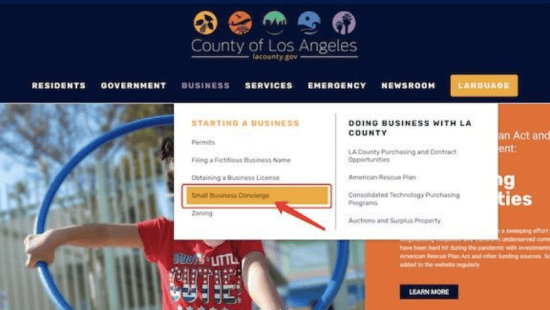
Businesses can review the eligibility requirements and apply through the official Made in California program.
That makes the timing important for a small manufacturer considering whether the program is worth trying.
But will the label actually increase sales?
That is the part California cannot guarantee.
The state says the program is intended to help manufacturers build credibility, reach new buyers, compete for shelf space, pursue contracts and attract capital. It will also promote participating businesses through a statewide product directory and other marketing resources.
Those are potential benefits, not guaranteed results.
A logo cannot fix high rent.
It cannot replace working capital.
It cannot guarantee that a retailer will put a product on its shelves.
And it cannot make consumers buy something they do not want.
For small businesses, the real test will be whether the California brand creates enough additional visibility to produce something measurable: more customers, more orders, more contracts or more opportunities to grow.
That is the part worth watching.
What small businesses should ask before applying
If you manufacture products in California, the basic questions are straightforward:
- Is the final product manufactured, assembled, fabricated or produced in California?
- Does your business add at least 51% of the product’s wholesale value in California?
- Can you document the labor, material and qualifying overhead costs used to establish that threshold?
- Would an official California designation strengthen your marketing?
- Could being listed in the state’s product directory help you reach buyers or retailers?
If the answer to those questions is yes, the program may be worth exploring while the fees are waived.
California has spent years building a powerful economic identity around the products and businesses created here.
Now it is asking consumers to recognize that identity when they shop.
For small businesses — including many Latino entrepreneurs trying to turn a product into a lasting company — the more important question is whether consumers will recognize the label and actually choose to buy.
That is where the success of “Made in California” will ultimately be measured.