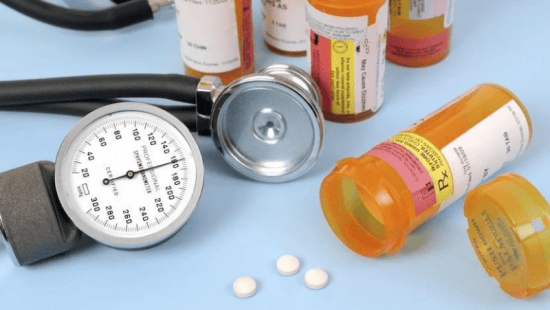
Two prescription blood-pressure medications are involved in nationwide Class II recalls, including more than 13,000 bottles of chlorthalidone and more than 28,000 bottles of ramipril.
The recalls involve specific products and lots, not every prescription containing these medications.
If you take either drug, check the information on your prescription bottle. Do not make changes to your medication without first talking with your pharmacist or prescribing health care professional.
Chlorthalidone: Check Your Bottle
The FDA drug recall database lists a chlorthalidone recall classified as Class II on Sept. 17, 2026. The recall was initiated after the tablets failed dissolution specifications, meaning the medication may not dissolve properly and could potentially be less effective.
FDA defines a Class II recall as one in which use of the product may cause temporary or medically reversible health consequences, or in which the probability of serious consequences is considered remote.
CHLORTHALIDONE RECALL
Drug: Chlorthalidone Tablets USP, 25 mg
Bottle: 100 tablets
NDC: 64980-599-01
Batch: RISA24002
Expiration: 04/2027
Manufacturer: Inventia Healthcare Limited
Quantity: 13,567 bottles
Distribution: Nationwide
If the drug, strength, NDC, batch number and expiration date on your bottle match these details, contact your pharmacist or prescribing clinician for instructions.
A recall does not mean that every bottle of chlorthalidone is affected. The FDA recall applies to the specific product and lot identified above.
For more information about blood pressure, treatment and prevention, see Parriva’s health coverage.
Ramipril: Check These Lot Numbers
A separate recall involves 10-milligram ramipril capsules. The FDA classified that recall as Class II after testing found an out-of-specification result involving the process impurity dicyclohexylurea, or DCU. The recall involves two lots with a July 2027 expiration date.
RAMIPRIL RECALL
Drug: Ramipril Capsules USP, 10 mg
100-count NDC: 76282-673-01
500-count NDC: 76282-673-05
Lot: AC5470A — expiration July 2027
Lot: AC5470B — expiration July 2027
Manufacturer: West-Ward Columbus Inc., for Exelan Pharmaceuticals
Recall firm: Hikma Pharmaceuticals USA Inc.
Quantity: 28,354 bottles combined
Distribution: Nationwide
The recalled ramipril includes 25,970 bottles in the 100-capsule package and 2,384 bottles in the 500-capsule package.
The recall applies to the specified products and lots. It does not mean that every ramipril prescription has been recalled.
What Should You Do?
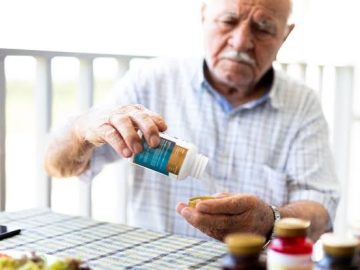
If you take chlorthalidone or ramipril, start with your prescription bottle.
1. Check the label
Look for the medication name, strength, NDC number, lot or batch number and expiration date.
If the information matches one of the recalled products above, don’t assume that you should simply stop taking your prescription.
2. Call your pharmacist or doctor
Tell them that you believe you have a recalled product and provide the information from your bottle.
Your pharmacist can determine whether the specific product and lot you received are affected and explain how to obtain a replacement.
3. Don’t change your treatment on your own
According to the FDA’s guidance on understanding drug recalls, patients should talk with their doctor or pharmacist about what to do with a recalled medication.
The appropriate response can depend on the specific drug and recall. Do not stop or change a prescribed blood-pressure medication without first speaking with your pharmacist or prescribing clinician.
4. Ask about a replacement
If your medication is part of the recall, your pharmacist or clinician can tell you whether another lot is available or whether another treatment is appropriate.
Do not assume that another bottle with the same medication name is necessarily affected. The recall is tied to specific product and lot information.
Why Blood Pressure Medication Matters
The recalls come as high blood pressure remains common among Hispanic and Latino adults.
According to the Centers for Disease Control and Prevention, 44.9% of Hispanic adults have high blood pressure, compared with 44.8% of non-Hispanic White adults and 59.6% of non-Hispanic Black adults.
CDC also reports that among Hispanic adults who are recommended to take blood-pressure medication, 41.3% have their blood pressure under control.
Those statistics are part of a broader health picture explored in Parriva’s health and wellness coverage.
The numbers also vary among Hispanic and Latino communities. Research has found differences in cardiovascular risk and hypertension among people from different country-of-origin backgrounds. A peer-reviewed study published through the National Library of Medicine found differences in hypertension incidence among several Hispanic/Latino background groups.
That is important context because “Hispanic/Latino” is a broad population category and does not describe one medically identical community.
For patients who rely on prescription medication to control blood pressure, a drug recall can therefore create an important practical question:
Is my medication actually affected, and what should I do next?
The answer begins with the bottle in your hand.
What a Class II Recall Means
A Class II recall does not mean that serious injury is expected.
The FDA defines Class II as a situation in which use of or exposure to a violative product may cause temporary or medically reversible adverse health consequences, or when the probability of serious adverse health consequences is remote. See the FDA’s recall classification definitions.
The classification is one reason patients should take a recall seriously, but it is not a reason to panic or make an unsupervised medication change.
What the Recall Does Not Tell Us
The recalls do not tell us how many affected bottles were dispensed in California, how many California patients received them, or whether a particular pharmacy dispensed an affected lot.
The available recall information also does not establish that any particular patient’s blood pressure was affected by one of these products.
Those are questions that would require additional patient-level or pharmacy-level information.
If you take chlorthalidone or ramipril, check your prescription bottle against the recall information above.
If the medication and lot information match, contact your pharmacist or prescribing clinician promptly and ask how to obtain a safe replacement.
If your bottle does not match the recalled product and lot information, the recall does not automatically apply to your prescription.
For the latest information, check the FDA Drug Recalls database or ask your pharmacist to verify the product.