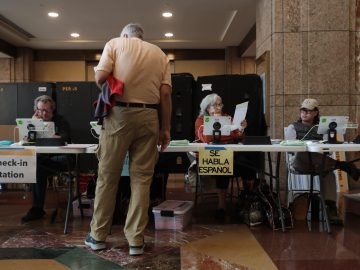
Latino communities are one of Los Angeles’ most powerful voting blocs, but campaign spending reveals a deeper question about who has the resources to shape political decisions.
Latino communities have major voting power in the city, but campaign spending shows another side of political influence
Los Angeles is a city where Latino communities shape elections, neighborhoods, culture, and the future of local government.
Latinos represent one of the largest communities in the city and are a decisive force in determining who reaches City Hall.
But political power in Los Angeles is not measured only by votes.
It is also measured by money.
Campaign contributions and independent expenditures help candidates build organizations, communicate with voters, pay for advertising, and define the issues that dominate public debate.
The groups with the ability to spend hundreds of thousands or even millions of dollars often have greater access to the political process.
The 2026 Los Angeles mayoral race shows how financial influence has become a central part of local politics.
The money behind the mayor’s race
The race between Mayor Karen Bass and challenger Nithya Raman has attracted major spending from unions, businesses, and political organizations seeking to influence the outcome.
The largest independent spender reported so far is the Los Angeles Police Protective League, the union representing LAPD officers. The group reported spending approximately $1.2 million on advertisements opposing Raman and progressive community organizer Rae Huang.
Airbnb was another major political spender, contributing approximately $750,000 to a committee supporting Bass. The company’s spending came as Bass advanced a proposal supported by Airbnb related to regulations affecting short-term rentals.
Commercial real estate company Douglas Emmett also became a significant player, contributing approximately $525,000 to a committee connected to police union spending. The company has previously faced criticism from tenant advocates over housing issues involving rent-controlled apartments.
Labor organizations have also played an important role in the race. Laborers’ Local 300 contributed approximately $200,000, while affiliates of SEIU, which represents many city workers, contributed about $180,000 to support political efforts connected to the election.
These numbers show that campaigns are shaped not only by individual voters but also by organizations with the financial resources to influence elections.
Why campaign money matters
Money does not guarantee victory. Voters ultimately decide Los Angeles elections.
But money changes what campaigns are able to do.
Large contributions allow candidates and political committees to:
Purchase television, radio, and digital advertising.
Hire campaign staff.
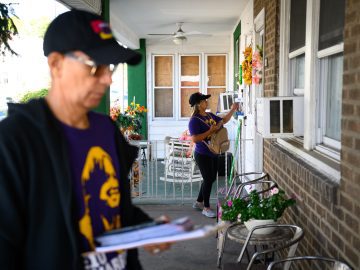
Conduct voter outreach.
Organize volunteers.
Define political messages before Election Day.
Independent expenditure groups can also spend large amounts supporting or opposing candidates, often making them a powerful force in elections.
The result is that some voices have more ability to reach voters than others.
The Latino political question
Latino communities are essential to Los Angeles politics, but campaign finance reveals a different measure of influence.
Campaign reports do not identify a donor’s ethnicity, so there is no official count of how many Latino residents contribute to political campaigns.
But economic realities affect participation.
Campaign donations often require disposable income, time, and access to fundraising networks. Communities facing lower incomes and higher economic pressures may participate politically through voting, organizing, advocacy, and community leadership, while contributing less money to campaigns.
This creates a difference between two types of political power:
the power of the vote and the power of the dollar.
Latino communities have significant electoral influence, but campaign finance raises another question: do the communities that shape Los Angeles through their votes have the same influence in the financial system that shapes elections?
Millions of residents without a ballot
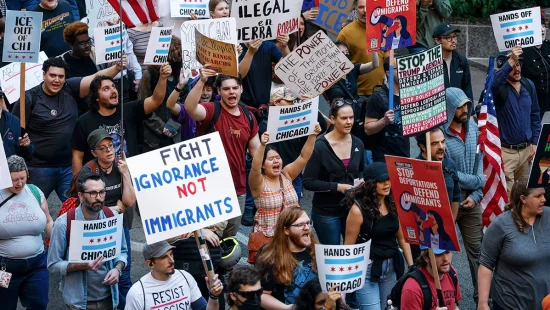
Another factor affecting political representation in Los Angeles is immigration status.
The city is home to many undocumented immigrants who live, work, and contribute to their communities but cannot vote in federal, state, or local elections.
Many are affected by decisions made at City Hall involving housing, transportation, public services, labor issues, and public safety, yet they cannot directly choose the elected officials who make those decisions.
Undocumented residents are not politically invisible. Many participate through community organizations, labor movements, neighborhood groups, and advocacy campaigns.
But they remain outside the formal electoral system.
For many Latino communities, this creates multiple challenges: some residents face economic barriers to campaign contributions, while others cannot participate through voting.
A city where influence comes in different forms
Los Angeles elections are decided at the ballot box, but the road to Election Day is shaped by money, organizations, and access.
The 2026 mayoral race demonstrates how political influence is built through a combination of voters, donors, unions, businesses, and advocacy groups