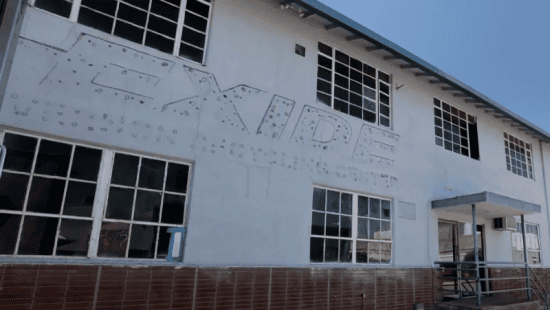
Nearly 6,500 residential properties have been cleaned around the former Exide battery plant. Thousands more may need treatment, and independent research is raising questions about lead left behind.
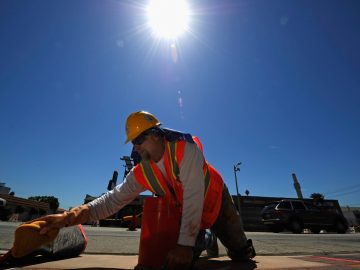
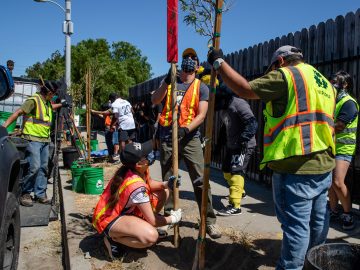
California has spent more than $700 million removing lead-contaminated soil from neighborhoods surrounding the former Exide battery recycling plant in Vernon. Nearly 6,500 residential properties have been cleaned, along with schools, parks and childcare centers.
For communities that lived with the pollution for decades, that is substantial progress. But it is not the end of the cleanup.
The state’s November 6 announcement celebrates the work completed so far. Its own records tell the other half of the story: thousands of properties may still need treatment, some owners have not granted access, and researchers have detected elevated lead levels in yards the state previously cleaned.
The question now is not simply how much California has accomplished. It is how much work remains, whether completed cleanups provide lasting protection and when families can expect the job to be finished.
Thousands of properties remain in the cleanup process
Governor Gavin Newsom’s administration reported completing cleanup at 6,495 residential parcels, 7,818 parkways, 12 schools, 68 childcare centers and five parks.
The residential total represents approximately 80% of a defined group of eligible properties whose owners granted access. It does not mean 80% of every potentially affected property has been cleaned.
According to the Department of Toxic Substances Control’s cleanup records, the investigation covers 10,638 parcels or decision units. By October 30, the agency had sampled 10,029.
Of 8,580 properties prioritized for cleanup, 1,524 still lacked signed access agreements. Owners of 967 had declined treatment.
The reasons vary. Some want to preserve landscaping. Others believe their property is not contaminated, have grown frustrated with delays or face personal circumstances that complicate the work.
These figures are not interchangeable. A property awaiting sampling may not ultimately need soil removal. A property approved for cleanup cannot be treated without the necessary access.
DTSC says crews are completing about 40 residential cleanups per month and expects to reach 7,005 completed parcels by December 2027.
Even that milestone would leave work unfinished.
California’s enacted budget provides $140 million over two fiscal years to clean approximately 1,000 additional properties. The nonpartisan Legislative Analyst’s Office reports that DTSC expects roughly 2,100 properties will still require remediation afterward.
That is a projection of the future workload, not an additional count to combine with properties awaiting owner permission.
What researchers found in yards already cleaned
The remaining properties are only part of the challenge.
A 2026 study by UC Irvine researchers and community partners examined soil contamination in neighborhoods surrounding Exide, including homes where remediation had already occurred.
Between 2021 and 2024, the team collected 1,128 soil samples from 373 residential properties.
Nearly 70% of the previously remediated homes examined had at least one sample exceeding 80 parts per million of lead, a state soil screening threshold. Researchers also detected elevated contamination beyond the designated cleanup boundary.
Those findings do not mean every cleaned property remains unsafe. The study was not a random survey of all remediated homes, and an individual sample exceeding a screening threshold does not automatically establish that an entire property failed its cleanup requirements.
But the results raise a serious question about whether soil removal has consistently achieved lasting protection.
UC Irvine researcher Jill Johnston described the findings as evidence of problems with how cleanup was designed and verified. She also warned that restoring trust would require sustained oversight and community involvement.
The research grew out of a partnership with East Yard Communities for Environmental Justice. One of its co-authors, community organizer mark! Lopez, had questioned the cleanup’s geographic boundaries for years.
In Parriva’s earlier interview with Lopez, he raised concerns about how far Exide’s pollution had spread. The new research gives that longstanding community concern additional scientific evidence.
DTSC has challenged its ability to evaluate the study independently without access to underlying property-level information. The agency also emphasizes that remediation follows health-protective standards and does not require removing every particle of soil.
The disagreement matters because residents need to know not only whether their property was treated, but what testing shows afterward.
California has strengthened oversight. Is it enough?
Cleanup procedures have changed since the program began.
Newer contracts require verification sampling after remediation. A state-funded independent monitor oversees work, and officials have undertaken additional testing at previously cleaned properties.
The Governor’s Office reports verification and retrospective sampling at 623 properties.
DTSC also publishes property-specific soil sampling and verification information, allowing residents to review available results.
These measures provide more oversight than existed during earlier phases. They do not, by themselves, establish that every previously treated yard meets current standards.
Researchers have also raised the possibility that contaminated dust can move through neighborhoods and contribute to renewed soil contamination.
That makes continued testing important, even after crews leave a property.
The cost of finishing the job
Exide’s Vernon facility closed in 2015 after decades of battery recycling operations that contaminated surrounding communities, including Boyle Heights, East Los Angeles, Maywood, Commerce and Huntington Park.
California has financed much of the response while seeking to recover costs from parties considered responsible for the pollution.
The question of who should pay has followed the cleanup for years. As Parriva previously reported, local leaders sought federal assistance to clean contaminated Latino neighborhoods.
The latest $140 million allocation will keep crews working, but it does not cover every property the state expects to treat. Nor does the November announcement establish a final completion date.
For families living near the former plant, the next meaningful measures are straightforward: more properties cleaned, reliable testing of completed work and a funded plan for what remains.
California can point to thousands of completed cleanups. Residents still need to know when the work will reach their property, what the results mean and whether the protection will last.