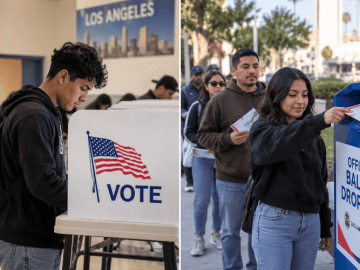
From progressive challengers in California to young conservatives in Wisconsin, the 2026 midterms put a new generation of candidates in the spotlight, revealing competing visions for America’s political future.
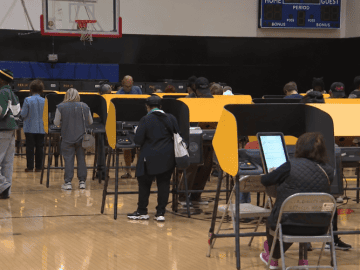
The November 3 midterm elections brought a new generation of political figures into the American spotlight. From progressive challengers in California and New York to young conservative candidates in the Midwest, voters saw younger politicians competing with established figures and seeking a place in a political system long dominated by older generations.
Their political positions could hardly be more different. Some campaigned on affordable housing, economic equality, immigration rights and social reforms. Others embraced conservative policies and the America First agenda associated with President Donald Trump. Yet they shared something important: a generational shift that could influence the future of American politics.
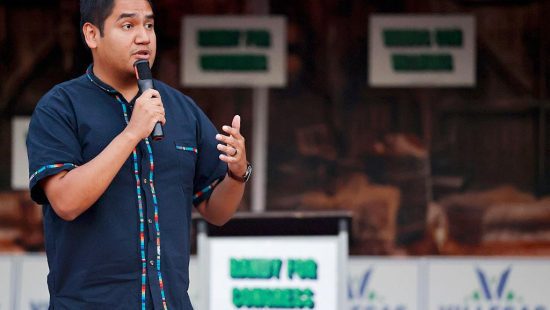
One of the most closely watched examples was Angela Gonzales Torres, the Democratic Socialist candidate who challenged Democratic Representative Jimmy Gomez in California’s 34th Congressional District. At 31, she represented a younger generation of activists seeking to transform the Democratic Party from within. Her campaign focused on economic inequality, housing affordability, immigration and the need for greater political accountability.
Her challenge to Gomez also reflected a broader debate within the Democratic Party over its future direction. Younger progressive candidates have increasingly questioned the priorities of established Democratic leadership, arguing that traditional approaches have failed to address the economic difficulties facing working class Americans. Gonzales Torres became part of that movement, although her reported lead in early returns needed to be distinguished from a formally confirmed victory.
Another important figure was Melat Kiros, who emerged as one of the younger representatives entering Congress from Colorado. Her election was particularly significant for generational representation, as she was identified as a member of Generation Z. Her arrival reflected the growing participation of younger Americans in electoral politics, a development that could gradually change the demographic composition of the House of Representatives.
New York also remained an important center of progressive political activity. The political momentum associated with Zohran Mamdani’s rise continued to influence discussions about the future of the Democratic left. His campaign had helped bring issues such as housing costs, public transportation, economic inequality and the cost of living to the center of political debate. The movement surrounding him illustrated how younger politicians and grassroots organizations were seeking to build a different political agenda.
But the emergence of younger leaders was not limited to the progressive left. On the Republican side, Michael Alfonso, a 26 year old candidate in Wisconsin, attracted attention as one of the youngest political figures in the congressional races. His conservative positions and alignment with Trump’s political agenda demonstrated that generational renewal was not exclusive to Democrats or progressive movements.
This contrast is important. Younger Americans are not moving toward a single political ideology. Instead, the new generation is developing different political identities, with some supporting democratic socialism and others embracing conservatism. Their emergence suggests that age alone does not determine political orientation, even as younger candidates increasingly seek to represent voters who feel disconnected from traditional political institutions.
The broader question is whether this generational shift will translate into lasting influence. Winning an election is only the beginning. Younger representatives will have to establish themselves within Congress, build coalitions, negotiate with party leadership and turn campaign promises into legislation. They will also face the challenge of representing constituencies whose priorities do not always coincide with their own political movements.
The debate over generational change is particularly relevant at a time when housing costs, healthcare, education, immigration and economic insecurity remain central concerns for millions of Americans. Younger voters have increasingly demanded that political leaders address these issues, while candidates under 40 have used their campaigns to argue that established institutions need new perspectives and approaches.
The midterms also highlighted the importance of diversity in the next generation of political leadership. Younger candidates from different racial, ethnic and economic backgrounds have sought to expand representation in institutions that have historically been less accessible to them. Their campaigns have brought new experiences and perspectives into national discussions, particularly on immigration, inequality and the cost of living.
Still, it would be premature to describe the election as a complete generational transformation. Older politicians continue to hold considerable power in Washington, and younger representatives will have to demonstrate that they can build durable political influence. The composition of Congress will not change overnight, nor will the divisions between Democrats and Republicans disappear simply because new faces enter the political arena.
What the November 3 elections did demonstrate was that the next generation is no longer waiting on the sidelines. Progressive activists, young conservatives and candidates from diverse backgrounds are increasingly competing for elected office and challenging established political structures.
From California to Wisconsin, their campaigns offered different answers to the same question: what should American politics look like in the years ahead?
The answer remains uncertain. But the emergence of younger candidates has made one thing clear: the debate over America’s political future is increasingly being shaped by people who intend to play a much larger role in it.