As inflation, housing costs, immigration fears, and healthcare access dominate Latino voter concerns, Los Angeles mayoral candidates are offering sharply different visions for the city’s future.
With just days before the June 2 Los Angeles mayoral primary, Latino voters remain one of the most influential blocs in the race. Polling consistently shows that Latino Angelenos are primarily focused on the economy, housing affordability, jobs, healthcare costs, and immigration policy, not partisan political theater. The question now is whether the city’s leading candidates are speaking directly to those concerns or missing the moment.
A recent CBS News Unidos poll found that cost of living and inflation rank as the top concern for Latino voters nationally, followed by jobs, housing, healthcare, and immigration. Immigration remains important, but “kitchen-table” economic pressures dominate daily life for many Latino families.
That dynamic matters enormously in Los Angeles, where Latino residents make up nearly half the city population and are disproportionately affected by rising rents, healthcare instability, wage pressure, and fears surrounding federal immigration enforcement.
The top-tier candidates, incumbent Mayor Karen Bass, City Councilmember Nithya Raman, and conservative challenger Spencer Pratt, are offering very different responses to those priorities.
What Latino Voters Say Matters Most
The latest polling paints a clear picture.
According to the CBS News Unidos Bipartisan Poll, 53% of Latino voters identified inflation and cost of living as their biggest concern. Housing, jobs, and healthcare also ranked ahead of immigration reform.
Equis Research, which closely tracks Latino voter sentiment nationally, found many Latino voters increasingly skeptical of both political parties while demanding practical economic relief, especially around groceries, healthcare costs, and housing affordability.
That creates a difficult challenge for Los Angeles mayoral candidates because city government has limited control over inflation or federal immigration law. Instead, candidates are trying to connect those broader anxieties to local issues they can influence directly, especially housing, wages, public safety, homelessness, small business regulation, and immigrant protections.
Karen Bass: Stability, Housing Protection, and Sanctuary Policies
Mayor Karen Bass continues to lead in most public polling, including among Latino voters. A recent Los Angeles Times poll showed Bass receiving 33% support among Latino voters, ahead of Spencer Pratt at 25%.
Bass has centered her reelection campaign on protecting vulnerable residents from economic displacement. Her platform focuses heavily on affordable housing expansion, homelessness programs, tenant protections, and preserving city safety-net services.
For many Latino families struggling with rent increases, Bass frames housing stability as economic policy.
Her immigration message is also among the clearest in the race. Bass has strongly defended Los Angeles’ sanctuary city policies and aligned herself with immigrant-rights organizations that oppose expanded federal immigration enforcement cooperation.
That position could resonate with mixed-status families and immigrant communities increasingly worried about federal crackdowns and deportation rhetoric nationally.
Still, critics argue Bass has struggled to convince frustrated voters that City Hall is improving daily affordability fast enough. Housing construction remains slow, homelessness continues to dominate public frustration, and many working-class Angelenos say they still feel economically squeezed despite city spending initiatives.
Nithya Raman: Structural Change for Renters and Workers
Nithya Raman is positioning herself as the candidate most directly confronting the cost-of-living crisis through structural reforms.
Raman’s campaign leans heavily into rent stabilization, tenant protections, labor rights, housing production, and expanding worker protections. She has argued Los Angeles must aggressively increase housing supply while also protecting tenants from displacement.
For younger Latino renters and working-class families burdened by rising housing costs, that message could carry significant appeal.
Raman also strongly supports immigrant protections and has argued undocumented workers should be shielded from exploitation and separated from federal immigration enforcement systems when accessing city services.
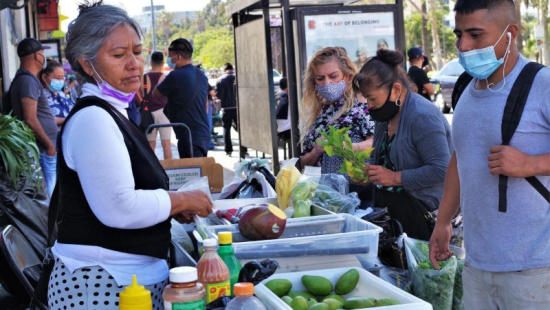
Her healthcare messaging is more indirect than Bass’, but it focuses on environmental health disparities, workplace protections, cleaner neighborhoods, and access issues affecting informal workers and street vendors.
Supporters say Raman offers more detailed policy solutions than many traditional candidates. Critics question whether her agenda can realistically move through Los Angeles’ bureaucracy and political opposition.
Her campaign also faces the challenge of introducing herself citywide beyond politically engaged progressive voters, despite growing momentum in polling and online activism.
Spencer Pratt: Public Safety and Economic Deregulation
Spencer Pratt has emerged as the race’s most unconventional candidate and perhaps its most polarizing.
The former reality television personality has built a populist campaign focused on public safety, government frustration, homelessness cleanup, and reducing regulations for businesses.
Pratt argues Los Angeles needs fewer bureaucratic barriers, more support for business owners, and stronger law enforcement to restore economic confidence.
His message appears to resonate with some frustrated voters angry about homelessness, street conditions, and government dysfunction.
But his immigration platform sharply diverges from the positions favored by many Latino advocacy organizations. Pratt has criticized sanctuary policies and supports stronger cooperation with federal immigration enforcement.
That stance may appeal to some voters prioritizing public safety, but it risks alienating immigrant families and Latino voters who support pathways to citizenship and fear aggressive enforcement policies.
Pratt also spends comparatively little time discussing healthcare access or affordability, instead focusing heavily on crime, wildfire recovery, and city management failures.
Key Takeaways
Latino voters are prioritizing affordability over ideology
Economic pressure dominates voter anxiety. Housing costs, inflation, wages, and healthcare affordability consistently outrank partisan rhetoric.
Bass focuses on protection and stability
Her campaign emphasizes preventing displacement, defending immigrant communities, and maintaining social safety nets.
Raman pushes structural reform
She targets rent burdens, worker protections, housing production, and long-term affordability reforms.
Pratt centers frustration with City Hall
His campaign appeals to voters angry about homelessness, crime, and bureaucracy, but his immigration stance differs sharply from most immigrant-rights advocates.
The June 2 primary could determine whether Los Angeles voters want continuity, progressive restructuring, or an anti-establishment disruption campaign.
For Latino voters, the race may ultimately come down to which candidate most convincingly addresses daily economic stress while also making communities feel protected, represented, and heard.
National polling increasingly shows Latino voters are not voting as a monolithic bloc. Economic pressure, housing insecurity, immigration fears, and distrust in institutions are reshaping political behavior across California and the country.
The Los Angeles mayoral race is becoming an early test of which political message can actually connect with Latino voters in 2026: stability, structural reform, or anti-establishment frustration.