She nearly missed the runoff, faced opposition from political allies and defeated an incumbent mayor. Now Latino voters, City Hall’s performance and her ability to govern come into focus.
For several days in June, Nithya Raman’s campaign for Los Angeles mayor appeared to be over.
She was running third in the primary, behind Mayor Karen Bass and television personality Spencer Pratt. Raman had entered the race late, lacked citywide name recognition and faced opposition from some of her closest political allies.
Six days later, additional ballots pushed her ahead of Pratt and into the November runoff.
Five months later, Raman has defeated Bass.
On November 5, Bass conceded after the Associated Press called the race for Raman. The latest reported count gave Raman 52.1% of the vote, compared with Bass’s 47.9%, with ballots still being counted.
Her victory is an extraordinary political comeback. It also raises questions about the city’s direction, the growing influence of younger voters and whether a new administration can deliver the improvements Los Angeles residents have been waiting for.
How Raman Overcame the Odds
Raman entered the mayoral contest in February, leaving less than four months before the primary. She had served on the City Council since 2020 but had never managed a government the size of Los Angeles.
Her political base was divided.
Three councilmembers associated with the Democratic Socialists of America — Eunisses Hernandez, Ysabel Jurado and Hugo Soto-Martínez — endorsed Bass. The organization’s Los Angeles chapter did not endorse Raman until September.
Bass had the backing of prominent Democratic leaders, labor organizations and much of the political establishment.
Yet Raman’s campaign gained ground.
By September, a Berkeley IGS poll showed her leading Bass by 11 points. The final October survey showed the candidates tied at 40%, with 19% undecided.
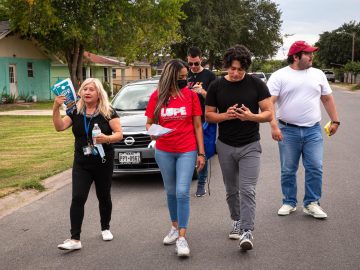
Raman also used short social media videos, humor and messages about everyday city problems to reach voters beyond her council district.
Her campaign attracted significant independent spending, including support from a carpenters-backed committee. Bass raised more money directly, but Raman had more cash remaining in her campaign account by mid-October.
Her victory was not achieved without financial resources. What made the campaign unusual was how quickly her political position changed.
Raman’s central message was straightforward: Los Angeles should be a city that works for the people who live here.
A Vote That Raises Questions About City Hall
Bass entered office promising to reduce homelessness, expand housing and improve city services.
Her administration launched Inside Safe, accelerated housing approvals and reported reductions in unsheltered homelessness.
But those efforts did not end public frustration.
Housing remained expensive. Encampments continued to occupy sidewalks and neighborhoods. Residents questioned how effectively the city was spending money and responding to everyday problems.
The January 2025 Palisades fire brought intense scrutiny of the administration’s emergency preparedness and response.
In June 2026, the Lineage warehouse fire in Boyle Heights created another crisis. Smoke, odors and air-quality concerns affected nearby communities, while residents sought answers about cleanup and government oversight.
Bass issued emergency orders to coordinate the response. But the incident reinforced questions about how quickly government acts when neighborhoods face serious problems.
Bass defended her administration’s progress and argued that longstanding challenges could not be resolved overnight.
Raman campaigned on a different standard: whether residents could see improvements in their daily lives.
The election cannot be attributed to one issue alone. Still, the result places City Hall’s performance at the center of the political conversation.
Latino Voters and the Generational Divide
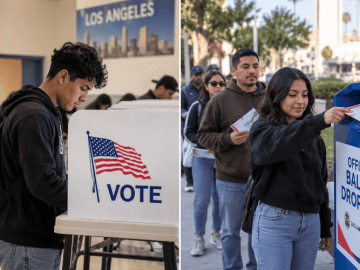
Latino voters were an important part of the mayoral contest, but their preferences were far from uniform.
In September, a Berkeley IGS poll showed Raman leading Bass among Latino likely voters, 45% to 21%. By late October, that advantage had narrowed to 43% to 40%.
The more revealing difference was generational.
According to the original Berkeley IGS polling tables, 63% of Latino likely voters ages 18 to 49 supported Raman, compared with 25% for Bass.
Among Latinos 50 and older, Bass led 47% to 32%.
The results revealed different priorities and political preferences within a community that represents a substantial share of Los Angeles voters.
Raman’s focus on housing affordability, renters and city services coincided with particularly strong support among younger Latinos. Her social media strategy also offered a way to reach younger audiences, although its direct electoral impact has not been established.
As Parriva previously reported in its examination of young Latino voters, the generational divide was already visible before Election Day.
Final turnout and precinct-level analysis will be needed to determine how much Latino voters contributed to Raman’s winning margin.
But the election reinforces a larger question raised in Parriva’s coverage of Latino political influence: How do candidates earn lasting trust from communities whose priorities and political preferences are changing?
For Raman, that question now moves from campaigning to governing.
The Harder Test Begins at City Hall
Raman inherits a city facing budget pressures, housing shortages, homelessness, public safety concerns and preparations for the 2028 Olympic Games.
She must also work with councilmembers who supported Bass and manage departments responsible for services affecting millions of residents.
Her leadership appointments will matter.
Experienced administrators, effective emergency management, capable budget officials and productive relationships with county and state government will be essential to carrying out her agenda.
Raman has experience developing policy and representing a council district. Managing the entire city will require different skills and a broader coalition.
In June, she was fighting to remain in the mayoral race. Today, she is preparing to lead Los Angeles.
Her victory answered the question of whether she could overcome the political odds.
The next question is whether City Hall can deliver the changes residents expect.