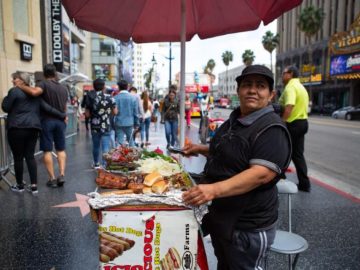
California’s hospitality industry lost thousands of jobs in September, while national data shows fewer restaurant purchases. What does this mean for local businesses and workers?
When fewer customers walk into a restaurant, owners may cut shifts, delay hiring or rethink expenses. For workers, even a few lost hours can make a difference.
New employment figures raise questions about whether California restaurants are facing more of that pressure.
California lost 9,600 leisure and hospitality jobs in September, the largest monthly decline among the state’s major industries, according to the Employment Development Department’s October 16 report.
Meanwhile, separate national data shows Americans made fewer restaurant purchases.
Both findings deserve attention. But they don’t prove that fewer customers caused California’s job losses.
Not all 9,600 jobs were restaurant positions.
California’s leisure and hospitality industry includes restaurants, hotels, entertainment venues and recreational businesses.
According to the Center for Jobs and the Economy, the September losses were divided between:
- Accommodation and food services: 4,800 jobs lost.
- Arts, entertainment and recreation: 4,800 jobs lost.
The first category includes hotel workers, so the entire 4,800 cannot be attributed to restaurants.
The EDD also reported a larger-than-usual September decline in restaurants and other eating places, although the figures reviewed here don’t establish the precise statewide restaurant-only loss.
The monthly figures are preliminary and adjusted for typical seasonal employment changes.
Are people eating out less?
Nationally, restaurant transactions are declining.
According to Fiserv’s September Small Business Index, food-service transactions fell 3.9% compared with September 2025, while sales declined 1%.
Customers were spending more per transaction, but businesses recorded fewer purchases.
The slowdown wasn’t the same everywhere.
Limited-service restaurants, including many fast-food and counter-service businesses, experienced a 5.6% decline in transactions and a 4% drop in sales.
Full-service restaurant sales increased slightly, by 0.8%.
These are national figures, not California-specific results. They also measure transactions, not individual customers.
Still, they raise an important question: Are neighborhood restaurants serving fewer customers, even when their total sales haven’t changed much?
Los Angeles restaurants have faced customer losses before
For some Los Angeles restaurant owners, concerns about customer traffic aren’t new.
Researchers estimated approximately 46,000 fewer customer visits near nine enforcement locations during a two-week period following activity in June 2025.
That study examined specific neighborhoods and circumstances. It doesn’t explain California’s September 2026 employment decline.
But it shows why local conditions matter.
A restaurant in South Los Angeles may face challenges different from those of a hotel near an airport or an entertainment venue elsewhere in California.
Another article to read is how rising costs are putting pressure on California restaurants.
Fewer customers are only one possible problem. Rent, wages, food prices and other expenses also affect business decisions.
Across all industries, California lost 9,300 payroll jobs in September.
Manufacturing lost 4,000 positions, while professional and business services added 4,000. Private education and health services gained 8,000.
Yet the unemployment rate remained at 5.1%.
That’s because payroll employment and unemployment come from different surveys. One counts jobs reported by employers; the other measures people who are unemployed and actively looking for work.
California still had 129,300 more payroll jobs than in September 2025.
However, the Center for Jobs and the Economy calculated that the state gained only 7,300 net jobs from January through September 2026.
That suggests employment growth has been limited this year, even though the state has more jobs than a year ago.
What restaurant owners should watch
Statewide employment figures can’t tell an individual business owner whether sales will improve or worsen.
A better starting point is the restaurant’s own numbers:
- Customer transactions: Are fewer orders coming in, or are customers spending differently?
- Sales: How do this month’s results compare with the same period last year?
- Staffing: Are labor hours changing because of demand, costs or operating decisions?
- Profit: Are higher expenses eating into revenue?
For owners considering changes to their operating schedule, our guide, Should Your Small Business Close One Day a Week? Do the Math First, offers a practical way to evaluate the decision.
What about Los Angeles?
The biggest local question remains unanswered.
Are Los Angeles restaurants cutting jobs because customers are spending less, or are other pressures driving staffing decisions?
The statewide employment report and national restaurant data cannot settle that question.
For now, September’s numbers give restaurant owners and workers a reason to pay attention, not a reason to assume the worst.