Proposition 37 would create a state-backed second-mortgage program for qualifying buyers of certain newly built homes. Here is how the 3% down payment works, who could qualify, what the loan really costs, and what the measure could mean for Latino families.
Fast Facts
- Election: November 3, 2026
- What it does: Creates a new California homebuying assistance program.
- Potential assistance: A second mortgage of up to 17% of the home’s purchase price.
- Buyer contribution: At least 3% of the purchase price.
- Income limit: Generally up to 200% of the area’s median income, depending on household size and location.
- Homes covered: Qualifying newly constructed homes and certain newly created residential units.
- Maximum bonds: Up to $25 billion in revenue bonds.
- Is it free money? No. It is a loan that homeowners would repay.
- Big question: Could reducing the down-payment barrier make homeownership more reachable without making California homes themselves more affordable?
Quick Answer
Proposition 37 would create a new state homebuying assistance program for qualifying middle-income Californians.
The program, administered through the California Housing Finance Agency, or CalHFA, could provide a second mortgage covering up to 17% of the price of a qualifying home. Buyers would have to contribute at least 3% themselves. The state could issue up to $25 billion in revenue bonds to finance the program, with the bonds repaid through homeowners’ loan payments.
The important catch is simple: the 17% is not a grant. It is borrowed money.
And Proposition 37 would not help someone buy just any California home. The program is aimed at qualifying buyers purchasing qualifying new homes.
Why Proposition 37 Matters
For many Californians, the dream of owning a home can run into a very practical problem:
The down payment.
Even when a family can afford monthly housing costs, saving tens of thousands of dollars for a down payment can be difficult while also paying rent, childcare, food, transportation, student loans and other expenses.
That pressure is particularly relevant to Latino households. A 2026 statewide survey from the Public Policy Institute of California found that 54% of Latinos were concerned about being able to pay their rent or mortgage, compared with 27% of white Californians.
For families already trying to balance housing costs and savings, the question behind Proposition 37 is therefore straightforward:
Could California help more people get past the down-payment barrier?
What Is Proposition 37?
Proposition 37 would create what the measure calls a “middle-class homeownership loan” program.
CalHFA would be authorized to issue up to $25 billion in revenue bonds. The money raised from those bonds would finance second mortgages for eligible homebuyers.
Unlike a traditional state bond paid back through the state General Fund, these are revenue bonds. The idea is that payments made by participating homeowners would generate the money needed to repay bond investors and cover the program’s costs. The Legislative Analyst’s Office says Proposition 37 would have no direct state or local government costs under its structure.
That distinction matters because “a $25 billion bond” can sound like California is simply borrowing $25 billion to hand to homebuyers.
That is not what the measure does.
How Would the 3% Down Payment Work?
This is the easiest way to understand Proposition 37.
A buyer would need to put down at least 3% of the home’s purchase price.
The new state program could provide a second mortgage of up to 17%.
Together, that could equal as much as a 20% down payment.
The remaining amount would generally be financed through the buyer’s primary mortgage.
Here’s a simple example
Imagine a qualifying home costs $600,000.
A 3% buyer contribution would be:
$18,000
A second mortgage covering 17% could be:
$102,000
Together:
$120,000, or 20% of the purchase price
The remaining:
$480,000
would need to be covered through the primary mortgage or other permitted financing.
This is an illustration, not a guarantee that a buyer would receive exactly these amounts.
The actual program rules, loan terms and buyer qualification would determine what an individual buyer could receive.
The Most Important Thing to Understand: It’s a Loan
This may be the most important sentence in the entire Proposition 37 guide:
The 17% is not free money.
The assistance would be a second mortgage.
Homeowners would make payments on the loan. Those payments would be used to repay the bonds over time and cover the program’s administrative costs. CalHFA also would be required to keep interest costs for borrowers as low as possible.
So Proposition 37 could reduce how much cash a buyer needs up front, but it does not eliminate the debt associated with that assistance.
That’s why readers should not think of the measure as:
“California will pay 17% of my house.”
A more accurate way to think about it is:
“California could help me borrow another 17% of the home’s price through a state-backed second mortgage.”
That difference matters.
Who Could Qualify?
Proposition 37 would not be available to every California homebuyer.
Among its requirements, a buyer would need to:
- Be a California resident.
- Meet the program’s income requirements.
- Contribute at least 3% toward the purchase price.
- Buy a qualifying home.
- Meet other program requirements established under the measure.
The income ceiling would generally be 200% of the area’s median income for a household of similar size. That means the income limit can vary depending on where the buyer lives and the size of the household.
This is important because “middle income” does not mean the same dollar amount everywhere in California.
A household income that looks high in one community may fall within the program’s limit in a much more expensive housing market.
What Kind of Home Could You Buy?
This is another major limitation.
Proposition 37 is not a down-payment program for every home on the market.
The home would have to meet specific requirements. Among them, the buyer generally must be the first purchaser, and the home must fall within the measure’s definition of a qualifying new home.
That means someone hoping to use Proposition 37 to purchase an existing home from another homeowner may not qualify.
The measure is designed in part to connect homebuyer assistance with new home construction.
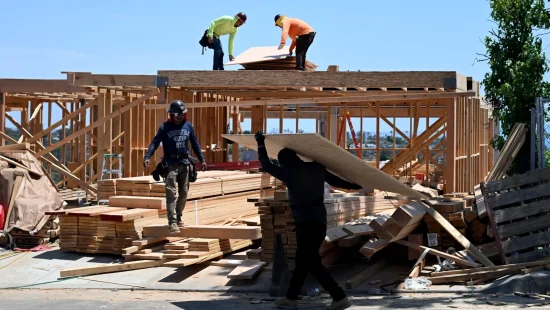
Developers could build homes eligible for the program, and Proposition 37 also creates a “qualified builder option” with additional labor requirements and different construction-defect rules for developers that choose to participate.
Could Proposition 37 Make California Homes More Affordable?
This is where voters should be careful.
Proposition 37 could make the upfront cost of buying a qualifying home easier to manage for some families.
But that is not the same thing as making California homes cheaper.
A family could have a smaller cash requirement at the beginning and still face:
- A large primary mortgage.
- Payments on the second mortgage.
- Property taxes.
- Homeowners insurance.
- Maintenance and repairs.
- Homeowners association fees, where applicable.
- Other costs associated with owning a home.
The LAO says the measure’s overall impact is uncertain. Among the factors it identifies are whether investors want to buy the bonds, how the program’s loans compare in cost with other down-payment assistance programs, and whether the program actually results in more home construction and homebuying.
That means Proposition 37 should not be described as a solution to California’s entire housing affordability problem.
It targets one barrier: the upfront cost of buying a home.
Why the New-Home Requirement Matters
California’s housing shortage is not only about financing.
It is also about how many homes are available and what they cost.
Proposition 37 tries to address both sides by tying its homebuyer assistance to qualifying new construction.
The theory is straightforward:
Help buyers finance homes → create more demand for qualifying new homes → encourage developers to build more homes.
But whether that actually happens at a meaningful scale is uncertain.
The LAO specifically says the program’s impact could depend on whether it results in increased home construction and homebuying.
That is one of the biggest questions voters should keep in mind.
What Could Proposition 37 Mean for Latino Families?
There is no special Latino-only provision in Proposition 37.
The program would be available based on its eligibility requirements, not a person’s race or ethnicity.
But housing affordability has particular significance for Latino Californians.
Latino households are more likely to face housing affordability pressures, and access to homeownership can affect a family’s ability to build wealth over time. The 2026 PPIC survey found that Latino Californians reported higher concern about paying housing costs than several other demographic groups.
That makes the down-payment issue worth watching.
For a Latino family that has stable income but has struggled to accumulate enough cash for a traditional down payment, Proposition 37 could potentially lower one barrier to buying a home.
But the family would still need to qualify for the primary mortgage, have enough income to handle the ongoing costs of ownership and find a qualifying new home.
In other words:
Getting through the front door is not the same as being able to afford the house.
For families thinking about homeownership, Parriva’s previous guide on preparing for economic uncertainty and building a stronger household financial foundation offers useful context on savings, debt, housing costs and emergency funds.
What About Los Angeles?
The issue is especially relevant in Los Angeles, where housing costs can make saving for a down payment particularly difficult.
PPIC’s February 2026 statewide survey found that 46% of Los Angeles-area residents were concerned about paying their rent or mortgage, while concern among Latinos statewide reached 54%.
But Proposition 37’s new-construction requirement is important for Los Angeles-area buyers.
A person cannot simply find any existing house or condominium and assume the program would apply.
The home would have to meet the program’s eligibility rules.
That makes the availability of qualifying new homes a key part of whether Proposition 37 ultimately helps families in high-cost areas such as Los Angeles.
Would Proposition 37 Cost California Taxpayers $25 Billion?
Not directly, according to the state’s nonpartisan Legislative Analyst’s Office.
The measure authorizes CalHFA to issue up to $25 billion in revenue bonds. The bonds would be repaid through payments from homeowners participating in the program. The LAO therefore estimates no direct state or local government costs.
But “no direct state cost” does not mean the program has no financial risks or uncertainties.
The LAO says the ultimate impact depends on factors that cannot yet be known, including demand for the bonds, the cost of the loans to borrowers and whether the program actually increases home construction and homebuying.
That distinction is important for voters:
The state would create the financing system, but homeowners would ultimately make the payments that support it.
What Supporters See as the Benefit
Supporters of Proposition 37 can point to a simple problem: many families can afford a mortgage payment but struggle to save enough money for the initial down payment.
A second mortgage covering up to 17% could substantially reduce the amount of cash a qualified buyer needs to bring to the transaction.
The measure also attempts to connect that assistance to new construction, potentially encouraging developers to build homes that middle-income buyers can purchase.
The strongest argument for Proposition 37 is therefore:
If the down payment is keeping qualified families from buying homes, reducing that barrier could help more families become homeowners.
What Are the Concerns?
The biggest concerns involve cost, eligibility and whether the program actually increases affordability.
1. The assistance is debt
The second mortgage must be repaid.
A buyer could therefore have both a primary mortgage and a second-mortgage payment.
2. The program is limited
It does not cover every buyer or every home.
The new-home and first-purchaser requirements could substantially narrow the pool of eligible properties.
3. A smaller down payment does not lower the home’s price
If a home costs $700,000, reducing the upfront cash requirement does not turn it into a $500,000 home.
The buyer still has to afford the home.
4. The program’s broader effect is unknown
The LAO says it is not yet clear whether the program would lead to significantly more construction and homebuying.
Those questions are central to judging whether Proposition 37 would meaningfully improve California’s housing affordability problem.
What Voters Are Really Deciding
Proposition 37 is not simply a vote on whether California should spend $25 billion on housing.
It is a vote on whether California should create a large, state-backed second-mortgage program designed to help middle-income buyers purchase qualifying new homes.
A YES vote would authorize the program and allow CalHFA to issue up to $25 billion in revenue bonds to finance it.
A NO vote would mean California would not create this new program.
For voters, the most useful question may be:
Would helping qualified families overcome the down-payment barrier make homeownership more attainable — even though the assistance itself is a loan and only applies to qualifying homes?
For Latino families, that question matters because homeownership can be more than having a place to live. It can also be part of building long-term family financial security.
But Proposition 37 does not solve every obstacle.
It could help some families get into a home. It does not guarantee that the home will be affordable, that a family will qualify, or that enough qualifying homes will be available.
That is the tradeoff California voters will decide on November 3, 2026.
Parriva’s Bottom Line
Proposition 37 is best understood as a down-payment solution, not a complete housing-affordability solution.
For a qualified family with enough income to support homeownership but not enough savings for a large down payment, the program could be meaningful.
For families who cannot afford the monthly cost of a home, cannot qualify for the mortgage, or cannot find a qualifying new home, the 3% entry point may not solve the larger problem.
The promise is easier access to homeownership. The question is whether the debt, eligibility rules and supply of qualifying homes make that promise useful to the families who need it most.