California is building more homes than it was a few years ago. That is real progress. But for families still struggling with rent or trying to buy their first home, the harder question is whether more construction is translating into affordability.
Something positive is happening in California housing.
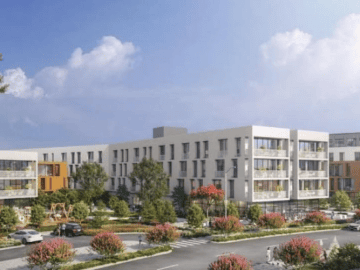
The state says annual residential construction increased 59%, from about 70,000 homes in 2018 to roughly 111,000 in 2024. More than 682,000 homes have been built statewide since 2019, while multifamily construction has reached its highest level in decades. California Department of Housing and Community Development (hcd.ca.gov)
That matters. California cannot solve a housing shortage without building housing.
But construction is only the first measurement.
More Homes Doesn’t Automatically Mean Affordable Homes
In April, the Public Policy Institute of California examined a similar puzzle: California had added hundreds of thousands of housing units while gaining relatively few residents, yet the housing crisis had not disappeared.
PPIC found that the state’s rental vacancy rate remained low and that new units were being absorbed quickly. Household formation, not simply population growth, is also creating additional demand.
In other words, building more is progress, but the starting shortage is enormous.
And the affordability numbers show why that distinction matters.
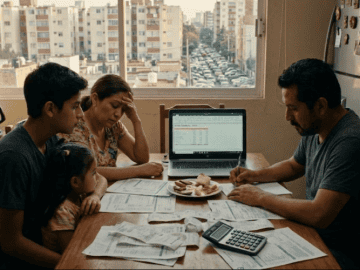
In the second quarter of 2026, just 19% of California households could afford the state’s median-priced $916,750 home, according to the California Association of Realtors. That was better than the 17% recorded a year earlier, but down from 22% in the first quarter. A household needed about $228,400 in annual income to afford the typical home under the index’s assumptions.
So two things can be true at the same time:
California is building more housing.
California housing remains unaffordable for most households.
That isn’t a contradiction. It is the story.
The Measure Matters
A housing permit tells us that a home has been authorized.
A completed home tells us that it was actually built.
An affordable home tells us something more.
And a home that a family can realistically afford tells us something different again.
California’s housing strategy is increasingly focused on turning funding and regulatory changes into actual construction. Parriva recently examined that challenge in “California Has Billions for Housing. Now It Has to Figure Out How to Build the Homes.”, including the state’s effort to speed approvals and reduce development costs.
Those distinctions matter because California’s housing crisis is not simply about the number of structures. It is about access.
Who can rent the new apartment?
Who can qualify for the mortgage?
Who can save enough for the down payment?
Who can remain in the neighborhood?
And who can turn housing into an asset rather than another monthly expense?
California’s housing policies therefore need to be measured across a chain:
Production → affordability → access → stability → ownership.
A gain at the first stage does not automatically produce a gain at the last.
The Latino Question Is Still There
That is particularly important for Latino households.
Earlier Parriva reporting examined why Latino families remain disproportionately locked out of homeownership and the wealth-building opportunity that comes with it.
The new housing numbers don’t invalidate that story.
They give us the next question:
Is California’s increased housing production changing who can actually afford to live here—and who gets to own?
That is a much harder outcome to measure than permits.
The Crisis Is Moving Beyond the Coast
California’s housing problem is also changing geographically.
As housing costs push households away from the state’s most expensive markets, affordability pressures can spread into inland communities and other regions that once offered cheaper alternatives.
That makes the question of where new housing is built almost as important as how much is built.
A family may leave Los Angeles or the Bay Area looking for affordability and discover that the communities they move to are becoming less affordable, too.
More State Money Still Has to Become Homes
California is also trying to encourage local governments to make housing production easier.
In August, the state awarded $11.3 million to 13 communities with Prohousing designations, including Santa Ana, Lancaster, Indio, Vista and Culver City. The program is intended to support affordable housing, rapid rehousing and other local housing efforts.
Parriva’s recent report on the Prohousing awards examined the same question that matters here: What happens after the state announces the money?
A grant is not an apartment.
A designation is not a completed home.
And a completed home is not necessarily affordable to the family that needs it.
That is why implementation matters.
So What Should California Measure?
The debate over housing spending often begins and ends with dollars spent.
That is the wrong endpoint.
California should also be asking:
- How many affordable homes were actually built?
- Where were they built?
- How many families received housing assistance?
- How many people avoided homelessness?
- How much did each affordable unit cost?
- How many publicly supported homes remain affordable?
- How many programs helped families become homeowners?
- Are Latino, Black and other historically disadvantaged households gaining ownership and wealth?
- Which policies are producing measurable results?
Those questions move the discussion from spending to outcomes.
And they give Californians a better way to judge whether the state’s recent progress is reaching the people facing the greatest housing barriers.
The American Dream Is the Real Measure
California deserves credit for building more housing.
But “more housing” and “more affordable housing” are not the same claim.
The real test is what happens next.
If production continues rising while more families can afford rent, buy their first home and remain in their communities, California will have evidence that its housing strategy is reaching beyond construction.
Until then, the positive news is real, but it is only part of the story.
California is building more homes. The question is whether more Californians can actually afford to call one home.