California Proposition 45 would create a faster environmental-review process for certain housing, infrastructure, health, energy, water and other projects.
Supporters say the changes could help California build needed projects faster and reduce costly delays. Opponents warn that the measure would limit some environmental review, public participation and legal challenges.
Here’s what Prop. 45 actually changes and what voters still don’t know.
For more context on the statewide measures on the November ballot, see Parriva’s California 2026 Voter Guide.
Prop. 45 in 30 seconds
If approved by voters on November 3, 2026, Proposition 45 would give eligible projects the option of using a new, expedited environmental-review process instead of the existing process.
The new rules would establish tighter deadlines for environmental review and court challenges and would change how alternatives, public comments and lawsuits are handled.
The measure would not simply eliminate environmental review.
What projects would be affected?
The new process could apply to certain projects involving:
- Housing
- Water systems
- Clean energy
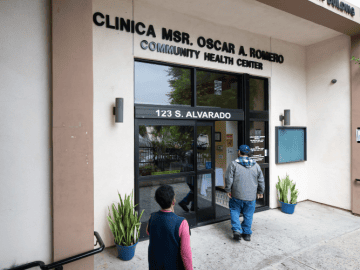
- Health facilities and clinics
- Transportation
- Education facilities
- Broadband
- Wildfire-risk reduction
- Fire, police and sheriff stations
There are specific exceptions and requirements within these categories.
What would actually change?
Environmental review would have tighter deadlines
Prop. 45 would establish deadlines for completing environmental reviews. For certain projects requiring an environmental impact report, the process could be subject to a 365-business-day deadline.
The goal is to prevent environmental review from stretching on indefinitely.
The rules would be set earlier
The measure would generally use the laws and standards in effect when a project application is submitted.
That could make the review process more predictable for project applicants.
Fewer alternatives could be considered
Under current environmental-review rules, agencies can examine multiple alternatives that could reduce a project’s environmental effects.
Prop. 45 would allow the project applicant to develop one alternative for the agency to consider under the new process.
Public comment would have tighter limits
The measure would establish time limits for public review and comments on qualifying projects.
That could make the process faster, but it also means communities would have less time to participate than they might under a longer review.
Courts would face tighter deadlines and limits
Prop. 45 would speed up lawsuits challenging qualifying projects and limit some aspects of judicial review.
If a court finds an environmental-review problem, the measure generally would limit the court’s ability to stop an entire project. Instead, the court could stop the portion connected to the problem while the agency corrects the environmental review.
What Prop. 45 would NOT do
Prop. 45 would not simply end California’s environmental-review laws.
It would create an alternative process for certain projects, with different deadlines and procedures.
It also would not guarantee that California builds more housing, lowers rents or reduces project costs.
Those are possible outcomes supporters point to, not results that can be known before the measure is implemented.
The official California Legislative Analyst’s Office analysis of Proposition 45 provides the nonpartisan explanation of the measure’s changes to environmental review, permitting and court procedures.
Why supporters say YES
Supporters argue California needs to build housing and essential infrastructure faster.
They say lengthy environmental reviews and lawsuits can delay projects and increase costs, including projects involving housing, water, transportation, health care, clean energy and wildfire protection.
Their basic argument is that California can maintain environmental review while making the process faster and more predictable.
Why opponents say NO
Opponents argue that speeding up the process comes with a price.
They say fewer alternatives, shorter public-review periods and tighter judicial rules could make it harder for communities to identify or challenge environmental problems before projects move forward.
They also warn that communities already experiencing pollution or other environmental burdens could have less opportunity to influence projects affecting them.
Those potential environmental consequences are predictions, not outcomes that can be established before the law takes effect.
The official California Secretary of State voter guide includes the measure’s title and summary, analysis, and arguments and rebuttals from the campaigns.
What could Prop. 45 mean for Latino communities?
Prop. 45 does not specifically target Latino Californians, and there is no basis for saying Latino voters have a single position on the measure.
But the proposition touches issues that matter to many Latino communities.
Faster housing construction could potentially benefit households facing high housing costs. Faster health, transportation, water and infrastructure projects could also address community needs.
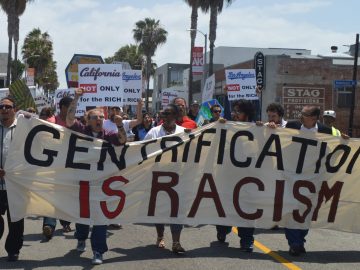
At the same time, many communities of color have historically faced disproportionate environmental burdens. Reducing the time available for environmental review and public participation could matter if projects create environmental risks.
The practical question is therefore not simply whether Prop. 45 is “good” or “bad” for Latino communities.
It is whether faster project approval produces meaningful benefits without reducing communities’ ability to understand and respond to environmental impacts.
What we know and what we don’t
We know: Prop. 45 would create a faster alternative environmental-review process for certain projects.
We know: The measure would change deadlines, public participation, alternatives and court challenges.
We know: It would not eliminate environmental review altogether.
But we don’t know how many projects would use the new process, how much faster projects would actually be approved or whether the measure would ultimately increase housing production.
We also cannot know in advance whether environmental impacts would increase or decrease overall.
The LAO identifies these longer-term effects as uncertain and notes that the fiscal and project-related consequences would depend in part on how the new process is used.
Proposition 45 is essentially a choice about how California balances speed with environmental and public review.
A YES vote would allow certain projects to use a faster, more structured review process.
A NO vote would leave the existing environmental-review system in place.
The central question for voters is straightforward:
Would California benefit more from moving qualifying projects through environmental review faster or from giving communities more time and tools to examine their potential impacts?