The late-summer COVID wave is losing momentum nationally, but wastewater, hospitalizations and vaccine access remain important indicators as California enters the fall respiratory-virus season.
California is entering fall with COVID-19 activity showing signs of easing nationally after a late-summer increase.
According to the latest CDC respiratory-virus activity data, COVID-19 infections were growing or likely growing in 14 states as of Sept. 23, down from 27 states the previous week and 35 states the week before that.
That does not mean COVID-19 has disappeared. It means the recent summer increase appears to be losing momentum.
For Californians, the question heading into fall is less about whether COVID is “over” and more about what the current indicators are actually showing.
COVID-19 continues to circulate, but several national indicators have moved in a direction consistent with an easing summer wave.
The CDC tracks COVID through several measures, including emergency-department visits, laboratory testing, wastewater surveillance and epidemic trends. These measures provide different pieces of the picture rather than a single count of infections.
This is important because COVID infections are no longer captured through widespread individual testing in the way they were earlier in the pandemic.
Wastewater, emergency-room visits and hospitalizations have therefore become increasingly important for understanding how much virus is circulating and whether infections are translating into serious illness.
Wastewater surveillance can provide an early signal because virus particles can be detected in sewage even when people have no symptoms or never seek medical care.
The CDC says wastewater can detect respiratory viruses circulating in communities before people who are sick go to a doctor or hospital.
But the latest national data also come with an important limitation.
The CDC is transitioning to a new wastewater testing contract, creating a temporary gap affecting approximately 200 monitoring sites. The agency warns that recent wastewater data can be preliminary or incomplete.
That means wastewater remains useful, but current trends should be interpreted with some caution.
For California, the important question is whether wastewater levels, emergency-department visits and hospitalizations continue moving in the same direction as the national decline.
California has experienced COVID activity during the summer, but the available evidence does not justify describing the state as being in a new statewide surge without qualification.
The CDC’s wastewater system groups California within the Western region and provides state-level wastewater information where sufficient data are available.
California also has its own respiratory-virus monitoring system through the California Department of Public Health.
That makes several indicators worth watching as fall progresses: wastewater levels, emergency-department visits, hospitalizations and the percentage of respiratory-virus tests that are positive.
For Californians who want additional context about recent COVID activity in the Los Angeles area, Parriva has previously reported on the possibility of a Los Angeles County mask mandate returning as COVID cases rose.
Parriva has also covered the NB.1.8.1 COVID variant detected in the United States and the continuing questions surrounding the origin of COVID-19.
Those stories provide historical context, but they should not be treated as evidence that California is currently experiencing the same conditions.
Wastewater can provide an early warning about community transmission, but hospitalizations answer a different question: Is the virus producing enough serious illness to put pressure on the health-care system?
That distinction is particularly important now.
A rise in infections does not necessarily produce the same level of severe illness seen during earlier phases of the pandemic. Conversely, a decline in infections does not mean the risk of hospitalization disappears for people who are older, immunocompromised or otherwise at higher risk.
The CDC continues to track emergency-department visits and hospital data alongside wastewater and laboratory indicators.
For Californians, those measures provide a better picture of whether a change in COVID activity is translating into a meaningful change in severe disease.
Updated COVID vaccines are available for the 2026–27 season
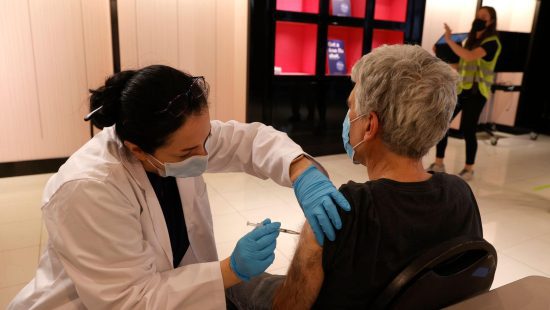
California has also entered the new respiratory-virus season with updated immunization guidance.
The California Department of Public Health issued its 2026–27 respiratory-virus recommendations on Sept. 4, emphasizing protection against serious illness from COVID-19, influenza and RSV.
CDPH says Californians can access COVID-19 vaccines through their health plans, health-care providers, local public-health clinics and federally qualified health centers. The state also directs residents to My Turn for vaccine information and scheduling.
The state’s recommendations place particular emphasis on people at higher risk of complications, including older adults, young children, pregnant people and people living in congregate settings, as well as people who live or work with individuals at higher risk.
For Californians deciding whether vaccination is relevant to them this fall, the most useful information is therefore the current state and federal guidance rather than assumptions based on the pandemic years.
The Latino COVID disparity was real — but the current wave is different
California’s Latino communities experienced significant COVID disparities during earlier stages of the pandemic.
Latinos were disproportionately represented among California COVID-19 cases and hospitalizations during important periods of the pandemic, with researchers pointing to factors such as essential work, household crowding, economic conditions and differences in access to health care.
Those historical disparities matter because they show how infectious-disease risks can interact with existing social and economic conditions.
Historical disparities do not establish that Latinos are experiencing disproportionately high COVID infection or hospitalization rates during the 2026 summer wave.
Current statewide ethnicity-specific evidence is not sufficient to make that claim.
That means the responsible question for California’s Latino communities this fall is not whether the disparities of 2020 automatically continue today.
It is whether current surveillance eventually shows differences in infection, hospitalization, vaccination or access to treatment—and whether those differences require a targeted public-health response.
What Californians should watch next
The next several weeks should provide a clearer picture of whether the summer increase has genuinely subsided.
The most useful indicators are:
- Wastewater: Is viral activity continuing to decline?
- Emergency-department visits: Are COVID-related visits moving lower or beginning to rise again?
- Hospitalizations: Is increased transmission translating into more serious illness?
- Testing positivity: Are more respiratory-virus tests coming back positive?
- Vaccination: Are Californians at higher risk receiving updated seasonal protection?
- Access: Can uninsured and underserved Californians obtain vaccines and treatment?
- Equity: Do current data show meaningful differences among racial and ethnic groups?
The CDC cautions that wastewater coverage is temporarily affected by the transition to a new testing contract, so individual weekly changes should not automatically be interpreted as a definitive trend.
California’s public-health agencies will also continue monitoring respiratory-virus activity as the fall season develops.
The summer COVID wave may be easing.
But fall will show whether that is a sustained change or simply another pause in a virus that continues to circulate.