California offers a revealing look at a generation that moved back toward Democrats at the ballot box but continues to demand answers on housing, economic opportunity, immigration and the cost of living.
California has long been a stronghold of the Democratic Party, but the 2026 midterm elections offer a reminder that young Latino voters should not be taken for granted.
Across the country, Latino voters between the ages of 18 and 29 gave Democratic candidates a substantial advantage in the congressional elections. According to Tufts University’s Center for Information and Research on Civic Learning and Engagement (CIRCLE), 71% supported Democratic House candidates, compared with 25% who supported Republicans. The Youth Shifts that Defined the 2026 Midterm Elections
The result represents a significant Democratic comeback among younger Latino voters following the 2024 presidential election, when Donald Trump made unexpected gains among Latino men, particularly younger voters.
But the numbers tell only part of the story. A vote for a Democratic candidate does not necessarily represent an enduring commitment to the party. It can also reflect dissatisfaction with the opposing party, concerns about the political climate or a desire to see a different direction in Washington.
In California, where Latinos represent a major part of the electorate and younger generations are increasingly shaping the state’s demographic future, that distinction matters.
The affordability test
For many young Latinos, the American Dream increasingly collides with the reality of living in California.
Housing costs, stagnant wages, student debt, healthcare expenses and the difficulty of building financial security are shaping how younger generations view government.
PPIC found that 45% of young registered voters identified the cost of living as the most important problem for California’s government to address in 2026. More than half, 55%, said recent price increases had caused financial hardship in their households. And 94% said a gubernatorial candidate’s position on affordability was important to them.
These numbers help explain why Democratic support should not automatically be interpreted as unconditional loyalty. Young voters may favor Democratic candidates while remaining dissatisfied with the party’s record on the issues affecting their daily lives.
The UCLA Latino Policy and Politics Institute has also documented the financial pressures facing Latino households. Its October analysis found that approximately 22% of Latinos in California live in poverty, accounting for roughly half of the state’s impoverished population.
For young people trying to establish themselves, the challenge is particularly consequential. Political promises about economic opportunity carry less weight when families struggle to pay rent, cover groceries or afford healthcare.
Immigration still matters, but Latinos are not a monolith
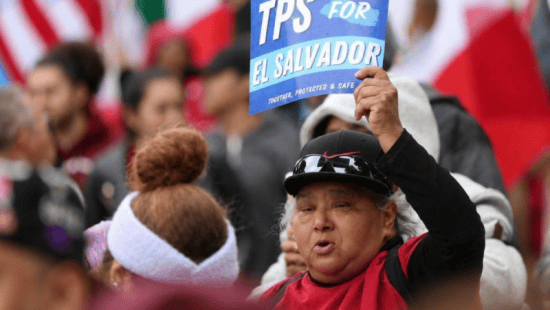
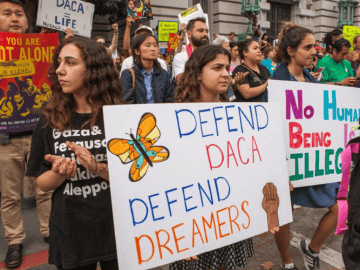
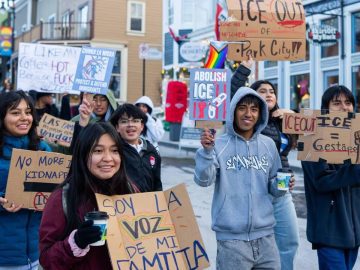
Immigration remains an important political issue, particularly for young Latinos with immigrant parents, relatives or friends who have experienced the consequences of enforcement policies.
But there are differences within the community, including between young Latino men and women.
A September 2026 study by UCLA’s Latino Policy and Politics Institute and UC Berkeley’s Institute of Governmental Studies found significant gender differences among California Latino voters.
Among women, 69% considered protecting immigrant communities very important, compared with 52% of Latino men. Similarly, 68% of Latinas considered fighting the Trump administration’s agenda very important, compared with 51% of Latino men.
The differences were especially pronounced among voters under 30 and those without bachelor’s degrees.
The findings suggest that even within the same generation, political priorities can vary considerably. Shared cultural backgrounds do not necessarily translate into identical political positions.
For Democrats, that creates a complicated political challenge. Immigration and defending democracy can motivate young Latino voters, but those issues do not replace demands for better economic opportunities.
Are young Californians becoming Democrats or independents?
California’s voter registration data offers another perspective.
According to PPIC researchers Eric McGhee and Jennifer Paluch, the movement away from Democratic registration that accelerated before the 2024 presidential election has slowed and reversed among the youngest voters.
Since 2024, Californians under 25 have moved primarily from independent registration toward the Democratic Party, producing a net gain of approximately 30,000 Democratic registrations in that age group.
Among Californians registering for the first time since January 2025, 42% registered as Democrats, 31% as independents and 18% as Republicans. Among new registrants under 35, only 15% registered Republican.
These findings complicate the idea that young Californians are abandoning Democrats. At the same time, they do not establish permanent party loyalty, and PPIC cautions that its registration analysis does not identify significant differences among switchers by race or gender.
The distinction between registering with a party and voting for its candidates is important. A young Latino voter can register as a Democrat, support a Democratic candidate in one election and still question the party’s priorities or consider another political option in the future.
A generation demanding more
The challenge for Democrats is not simply maintaining support among young Latinos. It is understanding what that support represents.
The 2026 results show that Latino youth overwhelmingly supported Democratic congressional candidates nationally. But the comparison with 2024 also demonstrates how quickly voting patterns can change.
In California, the warning signs are not necessarily a mass movement toward Republicans. They include economic frustration, differences within the Latino electorate and questions about whether political leaders understand the realities facing younger generations.
A CalMatters examination of California’s Gen Z electorate before the midterms found that some young voters supported Democratic gubernatorial candidate Xavier Becerra reluctantly. Interviews revealed frustration with the party’s leadership and doubts about whether Democratic politicians were delivering meaningful results.
For a generation confronting an expensive housing market, uncertain employment prospects and concerns about immigration, political identity may be less important than tangible results.
Democrats may have regained considerable support among young Latino voters in 2026. But the relationship between the party and this generation should not be confused with a permanent political alliance.
The question heading into the next election cycle is whether Democrats can turn electoral support into lasting trust, or whether young Latinos will continue searching for political leaders who can deliver on the promises that matter most to them.