After an election shaped partly by immigration enforcement, Trump officials and Democratic leaders are discussing a possible deal for Dreamers. But their positions remain far apart.
For years, Dreamers have heard politicians talk about giving them a permanent place in the country they grew up in. This week brought another opening and another question: Will anything actually change?
President Donald Trump says he is willing to work with Democrats on immigration. Homeland Security Secretary Markwayne Mullin has raised the possibility of helping DACA recipients obtain permanent legal status.
And Democrats have begun responding.
The statements come after midterm elections in which immigration enforcement was a significant concern for Latino voters. But there is no agreement, no newly enacted immigration reform and no announced change to DACA protections.
The challenge now is turning political statements into legislation.
What did Trump and Mullin propose?
In a November 8 60 Minutes interview, Trump acknowledged that his administration’s deportation policies might have been too aggressive and expressed interest in negotiating with Democrats.
The following day, Mullin said Democratic lawmakers had contacted him about immigration and Trump encouraged him to engage.
According to Associated Press reporting on Mullin’s remarks, the secretary specifically raised Deferred Action for Childhood Arrivals, or DACA, and suggested Congress could consider permanent legal status for recipients.
But Mullin also rejected what he called amnesty and said the administration’s immigration enforcement would continue.
That leaves an unanswered question: What kind of agreement would the White House actually accept?
Democrats have responded. What are they proposing?
House Democratic Leader Hakeem Jeffries offered an initial answer on November 9.
In a CBS interview published by his congressional office, Jeffries identified the Dream and Promise Act as a starting point for legislation addressing DACA recipients and people with Temporary Protected Status.
He also called for changes to immigration enforcement, including an end to the administration’s mass-deportation approach.
That establishes a Democratic negotiating position, not an agreement.
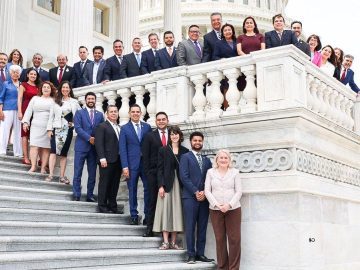
The response comes as Latino lawmakers seek a stronger role in shaping the new congressional agenda, including immigration reform and protections for immigrant families.
Democrats would still need to advance legislation and identify terms acceptable to other lawmakers. Republicans would have to decide whether to support legal-status provisions, and Trump would have to sign any bill that reaches his desk.
The disagreement over enforcement could be especially difficult. Jeffries wants substantial changes, while Trump and Mullin have defended continued enforcement.
Why are Latino voters part of this debate?
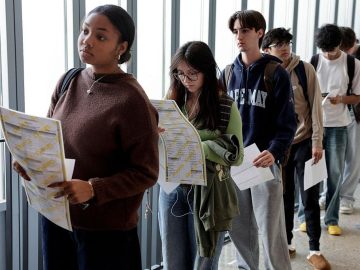
Immigration was a major concern among Latino voters before the November elections.
An October Pew Research Center survey found that 64% of Latino registered voters considered immigration very important to their congressional vote.
Another 62% said the administration was doing too much to deport immigrants living in the country without legal status.
The survey included 774 Latino registered voters and was conducted before Election Day.
These findings help explain the political significance of immigration enforcement. They do not prove that immigration alone caused voters to change parties. The economy remained the top concern.
Parriva’s examination of what Latino voters communicated in the 2026 midterms also identified a broader challenge for both parties: electoral support does not necessarily mean lasting trust.
For Democrats, the question is what legislation they will pursue. For Republicans, it is what compromises they will accept.
Both parties now face a test of what their immigration commitments mean in practice.
Has anything changed for DACA recipients?
Not because of these statements.
DACA offers qualifying recipients temporary protection from deportation and access to work authorization. It does not itself grant lawful permanent residence or citizenship.
Even before this week’s political discussions, delays in DACA renewals were creating uncertainty for Dreamers, including concerns about interrupted employment authorization.
Under current federal DACA guidance, eligible existing recipients may continue seeking renewals. Initial applications can be submitted, but cannot currently be approved under the applicable court restrictions.
A permanent pathway would require a separate legal basis, such as legislation enacted by Congress.
No new DACA legalization program has been announced through these discussions.
What should DACA recipients do now?
People with DACA should continue following their existing renewal requirements rather than wait for a possible congressional agreement.
USCIS recommends submitting eligible renewal requests 120 to 150 days before expiration. Filing within that window reduces the risk of a gap in protection or employment authorization, but does not guarantee a decision before expiration.
Anyone with an unusual immigration situation or questions about eligibility should consult a qualified immigration attorney or accredited legal representative.
What should readers watch next?
Three developments would show whether the political opening is becoming something more concrete.
First, congressional leaders would need to identify a legislative proposal and the lawmakers responsible for negotiating it.
Second, both parties would need to address their differences over permanent legal status, enforcement and the administration’s opposition to amnesty.
Third, any agreement would have to advance through Congress and receive presidential approval.
Until those steps occur, the possibility of reform remains just that: a possibility.
For Dreamers and their families, current protections depend on existing law, court decisions and individual eligibility, not this week’s political statements.
The next question is whether the parties can turn their competing proposals into legislation that Congress can pass.