Records and interviews reveal domestic abuse allegations and racist remarks involving an ICE officer who fatally shot a Colombian immigrant in Maine, raising questions about federal hiring and background checks.
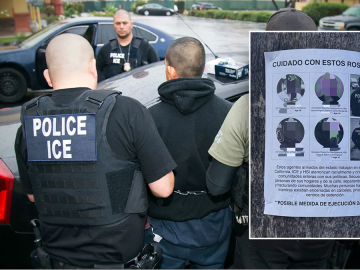
The man who killed a Colombian immigrant during an Immigration and Customs Enforcement operation in Maine had a troubling history of violent behavior, domestic abuse allegations, and racist remarks, according to interviews with relatives, former colleagues, and court records. His past is now at the center of a broader examination of how the federal government recruits and screens the officers enforcing President Donald Trump’s mass deportation campaign.
David Brouillette, a 37-year-old former U.S. Army sergeant, was identified by multiple news organizations as the ICE officer who fatally shot Johan Sebastián Durán Guerrero, a 25-year-old Colombian immigrant, on July 13 in Biddeford, Maine.
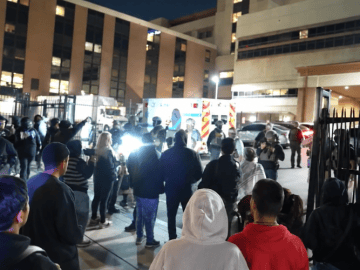
The shooting happened during an attempted traffic stop near Durán Guerrero’s home. The Department of Homeland Security said the vehicle attempted to flee and that an officer fired because he feared for public safety. Brouillette reportedly told relatives that he acted in self-defense. The circumstances of the shooting remain subject to investigation.
But reporting by The New York Times, The Associated Press, NPR and The Washington Post has uncovered a personal history that includes allegations of domestic violence, threats against family members and hostility toward people of other racial and national backgrounds.
One particularly revealing episode dates to 2021, four years before Brouillette joined ICE.
According to emails obtained by The New York Times, Brouillette attacked his sister’s longtime relationship with a Colombian man, with whom she had two children. His messages included derogatory comments about the man’s nationality and immigration status.
In one email, Brouillette said the Colombian man should return to his country and enjoy what he described as third-world luxuries. He also questioned whether the man deserved to enjoy the freedoms of the United States.
The messages provide a direct example of hostility toward a Colombian immigrant within Brouillette’s own family. They also take on particular significance because the person he later fatally shot was Colombian.
There is no publicly established evidence that anti-Colombian prejudice motivated the shooting. However, the emails offer a documented glimpse into his views about immigrants from that country.
His former military colleagues and acquaintances also described racist behavior. A former service member who knew Brouillette while they were stationed in Kansas told the Portland Press Herald that he frequently made racist remarks. His former high school friend Scott Collins told NPR that Brouillette had used racial slurs against Black people.
A history of abuse and threats
The accounts of domestic violence are equally troubling.
His second former wife also described years of threatening and abusive behavior. Hundreds of family court documents reviewed by the Associated Press detail allegations of stalking, harassment and physical and verbal abuse involving her and their children.
In 2021, a judge granted a protective order on behalf of his teenage daughter following allegations of abusive behavior.
Court documents also contain allegations that Brouillette dragged his daughter out of bed and physically mistreated her during confrontations.
Ashley later shared a voicemail with reporters in which Brouillette made violent comments about her and other women in her family, including saying that their throats should be slit.
Brouillette did not respond to requests for comment from several news organizations. His court filings included denials and accusations that his second former wife had slandered him. The family court allegations should not be confused with criminal convictions.
How did he get hired by ICE?
Brouillette’s professional background included military service, corrections, and other public service jobs. He served in the Maine Army National Guard before joining the regular Army, where he deployed to Afghanistan and eventually left as a sergeant in 2015.
He subsequently worked as a corrections officer at a Maine prison, a police officer at a Department of Veterans Affairs medical center and in the state’s human services department.
His employment history, however, was not without problems.
The Boston Globe reported that Brouillette had previously been rejected for a position with the Hallowell Police Department because officials saw too many warning signs in his background. He also never completed the Maine police training program required by most state and local law enforcement agencies.
Court records documented protective orders requiring him to surrender firearms. He had also suffered a serious head injury during firefighter training, resulting in a concussion and reported cognitive difficulties.
Despite these circumstances, ICE hired him in late 2025 during an aggressive recruitment campaign designed to expand the agency’s workforce.
The Boston Globe reported that ICE may have relied on older employment evaluations from other federal agencies when considering his application. Former immigration officials questioned whether the agency had adequately investigated his personal history, including allegations involving his former wives.
A recruitment campaign under scrutiny
Brouillette’s case is unfolding against the backdrop of an unprecedented expansion of federal immigration enforcement.
The Trump administration launched a campaign to recruit thousands of additional ICE officers, offering signing bonuses of up to $50,000 and accelerating the hiring process to support its mass deportation agenda.
The speed of that expansion has become a central concern among former immigration officials and law enforcement experts.
On November 10, The Washington Post published an investigation identifying at least 19 recently hired ICE officers who had previously faced misconduct allegations, criminal charges or employment-related disciplinary problems.
The newspaper reviewed approximately 300 names from a database of federal employees exposed in a Department of Homeland Security data breach. Its investigation identified officers with histories involving excessive force, misconduct, criminal cases and previous dismissals from law enforcement positions.
At least five had been involved in use-of-force incidents, while five had been named in lawsuits that ended in settlements.
Three independent experts who reviewed anonymized summaries of the cases told the newspaper that most should have received additional scrutiny before being hired.
DHS defended its recruitment practices, saying its Office of Professional Responsibility applies the required personnel screening regulations. The department also acknowledged that some officers receive temporary employment status while their full background investigations remain pending.