California’s new law expands children’s hearing aid coverage in 2028, while an existing state program helps eligible families now, regardless of immigration status.
For many families, helping a child hear comes with a price tag that can reach thousands of dollars. A pair of specialized hearing aids for a child can cost $6,000 or more, creating a financial burden for parents who often have to navigate complicated insurance rules while trying to secure treatment during critical years of development.
For immigrant families, the challenge can be even more complicated. Limited access to health insurance, financial pressures, and uncertainty about available public assistance can make it difficult to obtain the devices children need.
California is now taking steps to change that.
On September 30, 2026, Gov. Gavin Newsom signed Senate Bill 331, known as the Let California Kids Hear Act, requiring certain private health insurance plans to cover medically necessary hearing aids and related services for children and young adults under 21.
The legislation, introduced by state Sen. Caroline Menjivar, aims to make hearing devices more accessible to families who have historically faced significant expenses because their insurance policies did not adequately cover the cost.
The new requirements will take effect January 1, 2028, giving health insurers time to incorporate the coverage into their policies.
For parents, the financial difference could be substantial.
In an account published by California Health Report, Jennifer McLelland described how her son’s hearing aids cost more than her car. His latest pair cost approximately $8,000.
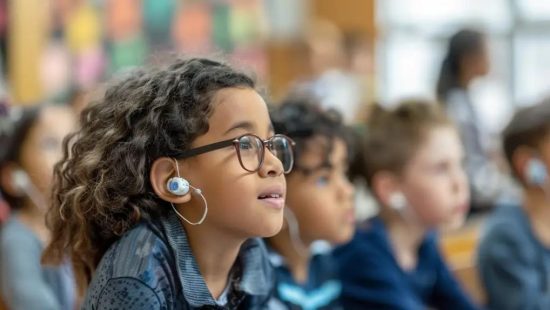
The devices allow her son to participate in classroom discussions, follow conversations with his classmates, and communicate with his family at home.
But obtaining them was not easy. Even though her son qualified for multiple forms of health coverage, including Medi-Cal through a disability related waiver, securing authorization for his first hearing aids took more than six months.
Her experience illustrates the difficulties families can encounter when insurance coverage is limited or fragmented.
Why hearing aids matter during childhood
Hearing is fundamental to how children develop language, communicate, and learn. When hearing loss goes untreated, children can face delays in speech, language acquisition, and educational development.
According to the Centers for Disease Control and Prevention, more than 98 percent of newborns in the United States were screened for hearing loss in 2022. More than 6,000 infants born that year were identified with permanent hearing loss, equivalent to approximately 1.7 cases per 1,000 babies screened.
California has screened newborns for hearing loss since 1998. However, identifying a hearing problem is only the first step. Families must also find specialists, obtain medical assessments, and secure the devices their children need.
Children’s hearing aids often require specialized programming and frequent adjustments as children grow. They must also function in challenging environments, including noisy classrooms where children need to distinguish their teachers’ voices from conversations and other sounds.
For children who are still learning to communicate, delays in obtaining the appropriate equipment can have lasting consequences.
What the new California law covers
Under SB 331, large group health insurance plans regulated by California must cover medically necessary hearing aids for people under 21.
The coverage also includes necessary hearing assessments, fittings, adjustments, new earmolds, auditory training and maintenance.
Eligible children must be able to receive new hearing aids at least once every three years. Replacement may happen sooner if existing devices no longer work or cannot be adjusted to meet the child’s medical needs.
The law allows insurers to establish a coverage limit of up to $3,000 for each individual hearing aid. Families can purchase more expensive devices, but they would be responsible for the difference.
The legislation also prohibits deductibles for covered hearing aids and limits coinsurance to 10 percent.
However, the law does not apply to every insurance plan in California. Small group health plans and individual policies purchased through Covered California are not included. Medi-Cal managed care plans are also excluded from this particular requirement because they operate under separate coverage rules.
That means some families will continue to depend on existing state assistance programs or other sources of coverage.
A program that includes children regardless of immigration status
For immigrant families, one important resource already exists.
California’s Hearing Aid Coverage for Children Program, known as HACCP, provides hearing aid assistance to eligible children and young adults who lack adequate coverage through other health programs or private insurance.
One particularly important provision is that immigration status is not a condition of eligibility.
Children can qualify regardless of whether they or their parents have legal immigration status. The program is available to California residents under 21 who meet the income and health coverage requirements.
To qualify, families generally must have household income at or below 600 percent of the federal poverty level. Children must not be eligible for Medi-Cal or hearing-related coverage through California Children’s Services. They must also lack adequate hearing aid insurance coverage. Families whose insurance covers no more than $1,500 toward hearing aids may qualify for supplemental assistance.
The program covers hearing aids, replacement devices, earmolds, batteries, medically necessary accessories, and related audiology services.
For families who are concerned about immigration restrictions, the distinction matters. The state explicitly says that a child’s immigration status does not determine eligibility for HACCP.
The application portal is available in Spanish and several other languages. Families can also receive multilingual assistance by calling 1 (833) 956 2878.
The program operates separately from SB 331. While the new law expands private insurance coverage beginning in 2028, HACCP already provides an option for qualifying families who cannot obtain adequate hearing aid coverage.
What families still need to know
The new legislation will not eliminate every coverage gap. Children whose families have individual insurance policies or small group coverage will not automatically receive the new benefits. Others may need to rely on Medi-Cal, California Children’s Services or HACCP, depending on their circumstances.
For immigrant families, understanding which program applies to their children can be an important first step.
California’s new law represents a change in how certain insurers must cover hearing aids for children. But the existing assistance program also sends a message to families who might otherwise hesitate to seek help: children should not lose access to hearing care because of their parents’ immigration status or their family’s financial circumstances.
For parents, the ability to hear is about more than a medical device. It can determine how a child learns, communicates, makes friends, and participates in everyday life. Reducing the financial barriers to that access could make a meaningful difference during some of the most important years of childhood development.