The Airbnb cofounder’s contribution puts one of Silicon Valley’s wealthiest entrepreneurs at the center of California’s debate over voter identification, election security, and the influence of big money in politics.
Joe Gebbia made his fortune helping build Airbnb. Now, the company’s cofounder is putting $8 million behind a California ballot measure that would change how people vote.
Gebbia donated the money to support Proposition 39, a proposed constitutional amendment on California’s November 3, 2026, ballot. The measure would require voters to show government-issued identification when voting in person and provide identifying information when voting by mail.
The donation, reported October 8, puts Gebbia among the wealthy donors backing a debate over election rules, voting access and how much money shapes campaigns.
It also draws attention to his changing political ties. Gebbia previously donated to Democratic presidential candidates Hillary Clinton and Joe Biden. More recently, he moved closer to President Donald Trump’s political circle and served in the Trump administration as the federal government’s first chief design officer. Recent reporting on Gebbia’s donation and political history outlines that shift.
But for Californians deciding how to vote, the bigger question is what Proposition 39 would change—and whether those changes are worth the cost.
What would Proposition 39 change?
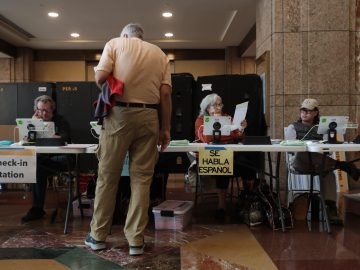
Under current California rules, people generally do not have to show identification at the polls. Voters identify themselves through the registration process and, when voting by mail, through a signature on the ballot envelope.
Proposition 39 would add new requirements.
People voting in person would have to show government-issued identification. People voting by mail would have to select a government-issued identification number when registering and write its last four digits on their ballot envelope. The numbers would have to match. If they did not, the ballot would not count under the measure.
The proposal would also require state and local election officials to make their best efforts to check the citizenship status of registered voters using government data. Officials would report each year what share of voters in each county had their citizenship verified.
The state would provide a voter identification card at no cost to people who request one. The measure would also require regular audits of how well state and county election officials follow the new rules.
The details matter because the measure leaves some decisions for lawmakers and election officials to work out, including which forms of identification would qualify and how citizenship checks would be carried out. The official state voter guide explains the proposal and its likely costs.
Supporters say the changes would strengthen election safeguards and help build public confidence in election results. Opponents say California already has ways to check voters’ identities and warn that the added requirements could create problems for eligible voters, including people whose information does not match their registration records.
There is also a cost to consider. The state’s Legislative Analyst estimates that the measure could add tens of millions to the low hundreds of millions of dollars in state and local government costs each year. The final amount would depend on how the rules are put into practice.
For more context on the issues shaping California voters’ choices, see our coverage of Latino voters and the 2026 California governor’s race.
Who is paying to support the measure?
Gebbia’s $8 million contribution is one part of a larger campaign over Proposition 39. Other wealthy donors and organizations have also put substantial money into efforts to influence the outcome.
California’s official campaign finance records show contributions to committees supporting and opposing the measure. The totals change as new reports are filed, so the records offer the best way to track how much each side is raising and spending.
That money can pay for advertising, voter outreach and other campaign work. But a large donation does not prove a measure will work, and it does not tell us how voters will respond.
Gebbia’s contribution also does not, on its own, explain why he supports Proposition 39. His reasons should be judged by what he has said and done; not guessed from his wealth or political connections.
Still, the size of the donation raises a fair question about the role wealthy donors play in California elections. Voters deserve to know who is funding campaigns and what those campaigns are asking them to support.
What should voters weigh?
Proposition 39 asks Californians to weigh election safeguards against the possibility of new costs and added hurdles for voters.
Supporters argue that requiring identification would make elections more secure and increase trust in the process. Opponents question whether the added rules are necessary and warn that mistakes or mismatched information could keep eligible voters’ ballots from being counted.
Those are competing claims, and neither should be taken at face value. Voters can review the measure’s language, the state’s cost estimate and the arguments made by both sides before deciding.
For more information on how voters make choices, view our coverage of undecided voters in the Los Angeles mayoral race.
Gebbia has put $8 million behind Proposition 39. That is a significant contribution, but it does not settle the debate.
For Californians, the decision comes down to a few practical questions: What would the new rules require? What would they cost? What problem would they solve? And would the benefits justify the changes?