With one month until Election Day, the 2026 midterms are being framed largely around one question: Who will control Congress?
For Latino families, the stakes are broader.
The November 3 election will put all 435 House seats and 33 regularly scheduled Senate seats before voters, along with 36 gubernatorial contests and thousands of state legislative races. The Federal Election Commission confirms November 3, 2026, as the next regularly scheduled federal general election date, while the U.S. Senate identifies the 33 Class II Senate seats whose terms expire in January 2027.
The results will shape who makes decisions in Washington and in state capitals on issues that reach directly into household budgets and daily life.
That includes the cost of living, jobs and wages, health care, housing, immigration and education.
And current polling suggests that economic pressure is at the center of what many Latino voters are thinking about as Election Day approaches.
A September UnidosUS analysis of its bipartisan polling found that cost of living was the top concern among Hispanic voters, cited by 60%. Jobs and wages followed at 40%, health-care costs at 37%, housing costs at 27% and immigration reform at 21%.
Those numbers do not mean immigration has become unimportant.
They show something more useful: Latino voters cannot be understood through immigration policy alone.
For many families, the political questions are also immediate and practical. Can they afford rent? Are wages keeping up with expenses? Can they afford health care? What happens to public benefits? What opportunities will their children have?
Those concerns help explain why affordability has become such an important part of the 2026 political conversation.
Parriva’s reporting on the Latino electorate and the 2026 Senate map provides additional context on why the Latino electorate should not be treated as one uniform national voting bloc.
Immigration remains a major issue for Latino communities.
The Trump administration has expanded immigration-enforcement resources and partnerships, including the federal 287(g) program, which allows participating state and local law-enforcement agencies to perform certain immigration-enforcement functions under federal oversight.
The consequences can extend beyond people who are themselves subject to immigration enforcement.
Mixed-status families, U.S. citizens with immigrant relatives and people who are eligible for government programs may also make decisions based on how immigration policy affects their families and communities.
But the UnidosUS polling provides an important boundary: immigration reform was identified as a priority by 21% of Hispanic voters in the September analysis, compared with 60% for cost of living and 37% for health-care costs.
Latino voters can care deeply about immigration while also putting grocery bills, wages, housing and health care ahead of it when asked what they want Congress to address.
Our reporting on Latino voters and immigration’s role in elections provides additional background on the issue’s place in Latino political coverage.
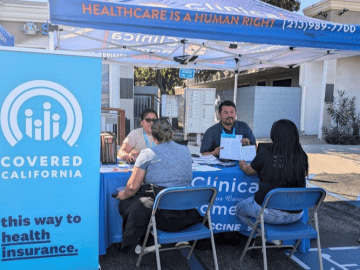
Health care is one of the clearest examples of how federal policy can become a household issue.
Changes to Medicaid, health insurance and public-benefit programs can affect whether families receive coverage, how much they pay and how they navigate eligibility requirements.
A September analysis by UCLA’s Latino Policy and Politics Institute examined how changes to Medi-Cal and CalFresh, alongside new immigration policies, could affect California Latino families. The researchers identified several potential pathways to losing benefits, including changes in eligibility, administrative requirements and families withdrawing because of concerns about immigration consequences.
That research provides a concrete example of how federal and state policy can overlap.
The issue is especially relevant in California, where we have been following Latino voter priorities and political participation.
The broader lesson is important: a congressional race may be decided on a ballot, but the consequences of federal policy can show up at a doctor’s office, in a family budget or when someone applies for benefits.
Housing presents another immediate concern.
For Latino families, affordability can mean more than buying a home. It can mean keeping up with rent, remaining in a neighborhood and managing housing costs alongside food, transportation and health-care expenses.
UnidosUS found that 27% of Hispanic voters identified housing costs among the issues they want Congress to address.
Education shows why voters also need to look beyond Washington.
Governors and state legislatures have significant authority over school funding, education policy and other decisions affecting public schools. State governments also influence workforce and higher-education policies that can shape economic opportunities for younger generations.
That is important for a Latino electorate that is relatively young and growing. Pew Research Center estimates that Hispanics will account for about 39 million eligible voters nationally in 2026, roughly 5.25 million more than in 2022.
The election therefore involves more than choosing members of Congress. State-level races can determine who has authority over policies that affect families just as directly.
Taken together, these issues point to a common thread.
For many Latino voters, the question is not simply whether a candidate supports or opposes a particular policy. It is whether government decisions make everyday life more affordable and secure.
Cost of living connects housing, health care and wages. Immigration policy can affect families economically as well as legally. Education connects today’s household decisions with tomorrow’s economic opportunities.
That does not make Latino voters a single political bloc.
Pew’s July survey found that 49% of Hispanic registered voters said they would vote for the Democratic congressional candidate if the election were held at that time, compared with 26% for the Republican candidate. But 24% either supported another candidate or were unsure, and Pew cautioned that preferences can change and that people who actually turn out may differ from the broader registered-voter population.
The polling can tell us what voters are saying now. It cannot tell us how every Latino voter will vote in November.
What Latino voters should watch before November 3
The most useful question heading into Election Day is therefore not simply which party will control Congress.
It is which decisions are being made, by whom, and how those decisions could affect everyday life.
For federal races, that means looking at Congress and the policies lawmakers can influence in Washington.
For state races, it means looking at governors and legislatures and the authority they have over education, health care, housing and other policies.
And for individual voters, it means looking beyond the national political conversation to understand what is actually on their own ballot.
Parriva’s Election Day guide can serve as a practical starting point for readers who want to move from the national conversation to the details of their own election.
The 2026 midterms will certainly determine who holds political power.
But for Latino families, the more immediate question may be what that power means for the cost of living, health care, housing, education, immigration and economic opportunity.
That is where the election moves from Washington and state capitals into people’s everyday lives.