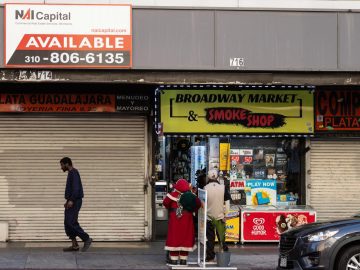
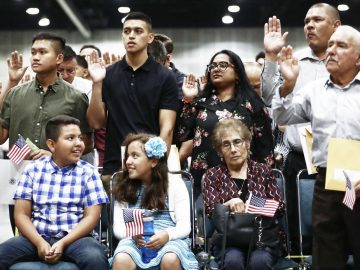
The November runoff is more than a choice between two candidates. It is a choice between two different approaches to housing, public safety, economic development, immigration and how City Hall should serve South Los Angeles.
For the first time in more than a decade, Los Angeles City Council District 9 will have a new representative.
But the November election is about more than replacing Councilmember Curren Price.
For District 9 voters, the choice between Jose Ugarte and Estuardo Mazariegos is also a choice between two different approaches to governing South Los Angeles: one built around experience inside City Hall and broad institutional coalitions, and another built around grassroots organizing and a more aggressive push to redistribute public investment and power.
Ugarte finished first in the June 2 primary with 39.45% of the vote, according to the Los Angeles County Registrar-Recorder/County Clerk. Mazariegos finished second with 26.21%. The two will meet in the Nov. 3 general election.
The election is historic regardless of who wins. District 9 has been represented by a African American councilmember since 1963, when Gilbert Lindsay entered the council, while the district has since become majority Latino. The Los Angeles Times reported that Latinos make up about 78% of District 9’s population.
But history alone doesn’t tell voters what the next council office will actually do.
The more useful question is:
What kind of government would each candidate try to build—and what would that mean for the daily lives of District 9 residents?
Parriva examined the candidates’ campaign platforms, public statements and backgrounds to identify the differences voters should understand before November.
Two candidates, two governing approaches
Ugarte is running on experience, relationships and the argument that he can begin working for the district immediately.
An immigrant from Mexico who grew up in South Los Angeles, Ugarte served as a senior aide to Price and describes himself as a community organizer and public servant. His campaign says he has helped bring jobs and investment into South L.A. and worked on parks, transportation and affordability issues. He also points to his youth fellowship program, through which he says he mentored more than 100 high school students during the past year.
His campaign’s coalition is broad, including labor organizations, Democratic clubs, business groups, housing organizations and elected officials. His endorsement list includes the Los Angeles County Democratic Party, CHIRLA Action Fund, the Los Angeles Area Chamber of Commerce’s L.A. Jobs PAC, Central City Association, Abundant Housing Los Angeles and YIMBY Los Angeles, among many others.
Mazariegos is offering a different model.
A father, immigrant and longtime community organizer, he describes himself as a 20-year organizer who has worked with low-income African American and Latino communities. His campaign says it refuses corporate and developer money and emphasizes grassroots organizing, tenant protections, economic justice and government accountability.
His platform goes considerably deeper into structural reforms, including equity audits of city services, stronger campaign-finance rules, a permanent Office of Immigrant Affairs, small-business protections, social and community-based housing models and greater reinvestment of revenue generated inside District 9.
That contrast is important.
This isn’t simply a contest between two Latino candidates.
It is a contest over how change should happen.
1. Housing: Build more or change who benefits?
Housing is likely to be one of the defining issues of the runoff.
Ugarte’s housing platform emphasizes increasing supply while protecting longtime residents. He supports building more affordable housing as well as student, senior, veteran and workforce housing. He also proposes expanding first-time homebuyer programs and grants for homeowners to repair their properties.
His transportation platform is closely connected to that housing strategy. He wants to expand transportation options for lower-income residents and pursue a rail line along the Slauson corridor, arguing that better transit can connect South L.A. residents to jobs, education and housing opportunities.
Mazariegos also supports increasing housing opportunities, but his platform places greater emphasis on who owns the housing and who remains in the neighborhood.
His campaign says 70.4% of District 9 families are renters and proposes stronger tenant protections, affordable housing, community land trusts, limited-equity cooperatives, down-payment assistance and other ownership models.
The difference is subtle but significant.
Ugarte’s approach: increase housing supply, expand affordability and create pathways to ownership.
Mazariegos’ approach: increase affordability while placing greater emphasis on tenant protections, community ownership and preventing displacement.
For voters, the question isn’t which slogan sounds better.
It is:
How should District 9 add housing without losing the families and businesses already here?
That question will become increasingly important as South L.A. continues to attract investment.
2. Public safety: Police presence or broader community investment?
Public safety is another area where the candidates’ approaches diverge.
Ugarte’s campaign calls for more foot, bike and horse patrols, community-based policing and recruitment of more women and officers of color. The campaign says officers should build stronger relationships with residents and focus on proactive policing.
His homelessness platform also calls for banning homeless encampments near sensitive locations such as schools, parks and places of worship, while pairing enforcement with transitional housing, mental-health services and permanent housing.
Mazariegos’ public-safety platform puts more emphasis on community-based violence prevention, youth programs, mental-health services, neighborhood infrastructure and addressing the economic and social conditions that contribute to violence. His racial-justice platform calls gun violence a public-health crisis and supports community violence intervention and mentorship programs.
That creates a meaningful choice for voters.
Ugarte places more emphasis on visible policing and public-order strategies combined with services.
Mazariegos places more emphasis on prevention, community intervention and addressing underlying conditions.
Both say they want safer neighborhoods.
They differ more on how government should get there.
3. City services: Who can make government work better?
This may ultimately be the most important, and least flashy, issue in the race.
District 9 residents don’t experience City Hall primarily through policy papers. They experience it through potholes, streetlights, trash collection, sidewalks, parks, permits, public safety calls and the ability to get a government department to respond.
Mazariegos has made this a central part of his campaign.
His good-government platform argues that residents routinely encounter unclean streets, unrepaired lights and unanswered 311 requests. He proposes equity audits to determine whether high-need neighborhoods receive their fair share of city services, compensation for residents who organize recurring neighborhood cleanups, more local hiring and public dashboards showing government investments and outcomes.
He also proposes changes to city ethics rules, whistleblower protections, stronger disclosure requirements and restrictions on the “revolving door” between government and lobbying.
Ugarte’s campaign takes a different route: use experience and existing City Hall relationships to secure resources and deliver projects.
His campaign describes him as someone prepared to continue working on Day 1 and points to his previous work inside the council office on parks, transportation, housing affordability, jobs and community resources.
This creates perhaps the clearest governing question of the entire election:
Does District 9 need a representative who knows how to work the existing City Hall system or one who wants to fundamentally change how that system operates?
There is no automatic answer.
But voters should recognize that they are choosing between different theories of how City Hall should work.
4. Immigration: What can a councilmember actually do?
Both candidates have immigrant backgrounds, but that should not be confused with identical policy positions.
Ugarte describes his own family’s immigration story as central to his motivation for public service and says he will fight for immigrant communities.
Mazariegos proposes a more specific city-government role.
His platform calls for establishing a permanent Office of Immigrant Affairs that would coordinate translation services, legal assistance, small-business resources and workforce development. He also proposes preventing federal immigration enforcement from using city facilities for enforcement or intimidation.
His platform also calls for stronger enforcement against wage theft and outreach to undocumented workers about their rights.
But there is an important distinction voters should keep in mind:
A Los Angeles City Councilmember does not control federal immigration policy.
The office can influence city policy, services, contracts, policing rules and partnerships with community organizations. It cannot determine who receives a federal visa, whether someone is deported or whether Congress changes immigration law.
That distinction matters because one of Parriva’s jobs is to help voters separate what a candidate promises from what the office can actually deliver.
5. Small businesses: A major issue hiding in plain sight
District 9’s economy isn’t just large institutions and major development projects.
It includes street vendors, restaurants, barbershops, panaderias, neighborhood stores, garment businesses, home-based businesses and other entrepreneurs.
Both campaigns talk about economic opportunity, but Mazariegos has laid out an especially detailed small-business agenda.
His platform proposes a dedicated Small Business Deputy in the council office, more contracting opportunities for District 9 businesses, commercial tenant protections, assistance for street vendors, another community-serving business incubator modeled on Mercado La Paloma and additional technical assistance for businesses navigating city bureaucracy.
He also proposes incentives for green businesses, support for worker-owned enterprises and economic-development strategies designed to keep ownership rooted in the community.
Ugarte’s economic platform emphasizes bringing good-paying jobs into South L.A., local hiring on major construction projects, support for entrepreneurs and ensuring that events such as the 2028 Olympics create opportunities for local residents.
For small-business owners, the important question is therefore:
Will the next councilmember focus primarily on attracting investment and jobs or on changing the rules so existing neighborhood businesses capture more of the economic value created by that investment?
That is a question worth asking before November.
6. The Olympics could change the stakes
The 2028 Olympic Games are another reason this election matters beyond the usual four-year political cycle.
District 9 contains some of Los Angeles’ most important sports, entertainment and cultural institutions.
Mazariegos’ economic platform argues that District 9 generates substantial economic activity but does not receive a proportional share of the resulting investment. His campaign proposes redirecting revenue from major events toward housing, green space, transportation and neighborhood improvements.
Ugarte also sees major events as an opportunity to create jobs for local residents. His campaign specifically calls for ensuring that opportunities associated with the World Cup and 2028 Olympics benefit people who live in South L.A.
That raises a much bigger question for District 9:
Will the next wave of investment make it easier or harder for longtime residents and small businesses to remain in South Los Angeles?
The answer will depend on decisions involving housing, transportation, commercial development, local hiring and public investment.
The next councilmember will have a significant role in those decisions.
7. The historic question: Can the next councilmember represent all of District 9?
The demographic transition in District 9 makes representation itself an important issue.
The district is now heavily Latino, but its political history is deeply rooted in Black Los Angeles. The Times reported that Ugarte and Mazariegos have both emphasized the importance of representing Black residents as the district enters a new political era.
That means the next councilmember will inherit something more complicated than a demographic majority.
They will inherit a multiracial community with different histories, needs and political priorities.
For Ugarte, that means building on the coalition associated with Price and emphasizing his relationships across African American and Latino communities.
For Mazariegos, it means pairing his Latino immigrant identity with a platform that explicitly addresses racial inequality and the historical economic and political exclusion of African American residents. His campaign has proposed investments in African American-owned businesses, a Historic South L.A. Black Cultural District and programs addressing environmental and economic disparities.
Neither candidate can successfully govern District 9 by speaking only to one constituency.
The next councilmember will have to answer a more difficult question:
How do you build a political coalition that recognizes the district’s Latino present without erasing its Black history?
That may be one of the most consequential tests of the next council office.
What voters should watch before November
The runoff gives District 9 voters something the primary did not: a much clearer opportunity to compare two governing agendas.
Rather than asking only which candidate has more endorsements or campaign events, voters can watch for answers to five practical questions:
1. Housing
How many homes does each candidate want to build, who will they be affordable to, and what protections will exist for current residents?
2. Public safety
How much emphasis will go toward policing, and how much toward violence prevention, youth programs, mental health and neighborhood investment?
3. City services
What specific measurable improvements will residents see in their first year?
4. Economic opportunity
How will existing small businesses, street vendors, workers and entrepreneurs benefit from new investment?
5. Accountability
How will residents know whether the next councilmember actually delivered?
That last question may be the most important of all.
Campaign promises are easy to make.
Measurable results are harder.
District 9 voters are not simply choosing between Jose Ugarte and Estuardo Mazariegos.
They are choosing between two different approaches to the future of South Los Angeles.
Ugarte offers a City Hall-experienced, coalition-building model, emphasizing affordable housing, transportation, public safety, jobs, local hiring and the ability to use existing relationships to deliver resources.
Mazariegos offers a grassroots, structural-change model, emphasizing tenant protections, community ownership, economic justice, government accountability, immigrant services, small-business protections and greater reinvestment in neighborhoods that he argues have historically received too little public investment.
The choice isn’t necessarily between someone who wants South L.A. to succeed and someone who doesn’t.
Both candidates say they want a safer, more affordable and more prosperous District 9.
The more consequential difference is how they believe the city should get there.
And that is what voters should be evaluating between now and Nov. 3.
Parriva’s question for District 9 voters is simple:
What kind of government do you want and what specific results will you expect from it?
The answer may determine not only who replaces Curren Price, but what South Los Angeles looks like as Los Angeles enters the Olympic era.

‘South LA Is Not for Sale’: Estuardo Mazariegos Wants to Turn District 9’s Pain Into Power
The Road to City Hall: The Road to City Hall: José Ugarte and the Fight for South Los Angeles