California reports growing participation in its mental health program and encouraging housing improvements. But questions remain about how many people receive sustained care.
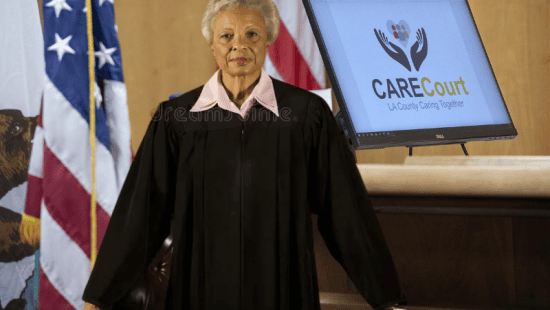
California says its CARE Act has reached nearly 12,000 people, a milestone for a program designed to connect residents with severe mental illness to treatment, housing and support.
But for families who have struggled to find help for loved ones, the number raises a more important question: How many people are receiving care that lasts?
On November 9, Governor Gavin Newsom announced that CARE Act pathways had reached 11,912 Californians. The administration also reported 6,531 court petitions, nearly 1,800 CARE agreements or plans, and more than 5,381 connections to treatment outside the formal court process.
Those figures show expanding activity. They do not all measure the same thing.
What does reaching 12,000 people mean?
The Community Assistance, Recovery, and Empowerment Act creates a civil court process for eligible adults with certain severe mental illnesses, including schizophrenia-spectrum disorders and bipolar I disorder with psychotic features.
Family members, health professionals and other authorized people can petition the court. Eligible participants may enter voluntary CARE agreements or court-ordered plans that coordinate treatment and other support. The process does not authorize forced medication.
As we described in our earlier coverage of CARE Court, the program has raised questions about access to treatment, government responsibility and individual rights.
Not everyone who enters the process receives a formal agreement or plan. Some connect with voluntary services outside court.
That is important when evaluating the Governor’s announcement.
In October, CalMatters reported that the administration’s earlier counting method could include people in overlapping categories. A state spokesperson acknowledged that someone might be counted through a petition and an outside-court service connection.
The November total therefore should not be treated as a verified count of 11,912 distinct individuals without further clarification.
California’s Judicial Council also cautions that petition counts measure requests submitted to courts, not program effectiveness.
Are participants getting treatment and housing?
The state has reported encouraging early results.
According to its 2026 implementation findings, the proportion of participants living in housing rose from 53% when petitioned to 71% at the latest reporting point.
Among participants who entered without housing, 45% subsequently became sheltered or housed.
Mental health service use increased from 77% to 87% during the first five months of participation. Use of stabilizing medication rose from 47% to 61%.
Housing and consistent treatment can help people move toward greater stability.
But the findings come from earlier reporting periods, not a new November study. They do not establish how many participants remained housed or continued treatment six months or a year after leaving CARE.
They also do not prove that CARE itself caused every improvement.
Housing availability is part of the challenge. As we discovered in Earlier reporting about the $36 million in state funding for Los Angeles supportive housing projects serving people experiencing homelessness and behavioral-health challenges. Those projects are part of the broader housing response, not evidence of CARE participants’ outcomes.
What is happening in Los Angeles County?
Los Angeles County provides an important local test.
The county reported 1,172 CARE petitions through July 2026 and training for 133 community partners, including hospitals, first responders and behavioral-health providers.
More than 43% of 162 participants whose petitions were dismissed were connected with services or support, compared with a statewide reported rate of 27.9% among 689 dismissed participants.
That suggests Los Angeles has developed pathways to assist some people even when formal CARE proceedings end.
But a connection at dismissal does not establish whether someone remained in treatment months later.
The county also reported more than two dozen CARE Court graduates and nearly 50 people who voluntarily extended their agreements.
Continuing an agreement is not necessarily a failure. Treatment needs vary, and recovery is not always linear.
Did pressure from Sacramento change anything?
In March, Newsom identified 10 counties, including Los Angeles, for additional scrutiny because their CARE petition rates were below the statewide average.
The administration offered targeted technical assistance. By November, it said all 10 counties had made progress.
Yet Los Angeles was already reporting rising petitions before the March intervention. State officials said monthly filings increased more than 85% between November 2025 and March 2026.
Expanded outreach, hospital partnerships and improved referral procedures may have contributed.
The available evidence does not establish that the Governor’s intervention caused the increase.
Nor does a higher filing rate independently demonstrate better patient outcomes.
What remains unknown?
California’s next accountability challenge is demonstrating what happens after people connect with CARE services.
How many maintain stable housing? How many continue treatment after court involvement ends? How many return to hospitalization or homelessness?
These questions matter to families and to residents evaluating public spending.
Parriva’s examination of Los Angeles County’s $54.2 billion budget raised a related accountability question: whether spending on behavioral health produces measurable improvements in services and outcomes.
CARE’s early findings offer reasons for cautious encouragement. They also reveal important limits in what the public can currently measure.
For Californians struggling to obtain mental health care, the central question is not simply how many people entered the system.
It is whether the help they received continued when they needed it most.