California Helps Pay for Child Care. Here’s How L.A. Families Can Apply
California’s child-care subsidies can cover care outside traditional work hours, but parents must navigate eligibility rules, waiting lists and provider availability.
California has expanded subsidized child care, helping more parents afford a service that can determine whether they can work, attend school or complete job training.
An October 2026 report from the Public Policy Institute of California found that average monthly enrollment of children younger than five increased from approximately 60,000 in 2015 to 150,000 in 2025.
But receiving financial assistance and finding an available provider are two different challenges. Families may qualify for help yet struggle to find care that accommodates an infant, an evening shift or changing work hours.
As Parriva previously reported about California’s child-care affordability challenges, reducing costs does not necessarily resolve shortages of suitable care.
For Los Angeles parents, understanding where to apply is the first step.
Where can Los Angeles families apply?
Los Angeles County does not have one application covering every subsidized child-care program.
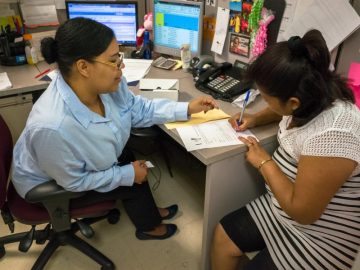
Families can start with the Child Care Alliance of Los Angeles, which connects parents with local Resource and Referral agencies. These organizations provide free help locating providers and information about financial assistance.
Call 888-922-4453 or search by ZIP code on the agency’s website.
Families can also explore LA County Child Care Choices, a resource featured by Parriva, to understand different care options and available assistance.
For northern Los Angeles County, the Child Care Resource Center provides an online financial-assistance application.
Parents receiving CalWORKs cash aid should contact their county welfare office about the separate CalWORKs child-care process.
Who qualifies, and what are the income limits?
Eligibility depends on the program, household income, family circumstances and applicable need-for-care requirements.
For the 2026–27 fiscal year, California’s monthly income ceilings for programs using the 85% state-median-income threshold include:
 Source: California Department of Social Services, Child Care Bulletin 26-17. Effective July 1, 2026, through June 30, 2027. California State Preschool uses different limits.
For families of two, three and four, the respective monthly limits are $7,119, $8,054 and $9,636.
Some families may qualify through alternative eligibility pathways. Under applicable rules, a household member’s participation in programs including CalFresh, Medi-Cal, WIC or CalWORKs can establish an eligibility basis.
However, families may still need to document a qualifying need for care, such as employment, education or job training. Eligibility does not guarantee an immediate opening.
What if a family receives CalWORKs?
CalWORKs child-care assistance operates through three stages.
Stage 1 generally serves eligible families receiving CalWORKs cash aid who need care for work or approved activities. LA County DPSS refers families to contracted agencies.
Stage 2 provides continuing assistance to qualifying families, including those transitioning from cash aid.
Stage 3 provides longer-term assistance to eligible former CalWORKs families, subject to available funding and program requirements.
Families can consult LA County DPSS for current procedures and Parriva’s CalWORKs child-care resource for additional background.
Can parents get care for nights or weekends?
Yes, some subsidized programs accommodate care outside regular business hours.
The Child Care Resource Center identifies assistance for nights, weekends, variable schedules and care needed for only a few hours per week.
Depending on program requirements, families may use licensed centers, family child-care homes or certain approved family, friend and neighbor caregivers.
However, the availability of a provider and authorization of requested care hours remain separate questions.
PPIC’s October research documented a Los Angeles County parent’s difficulty obtaining approval for additional care hours. That experience illustrates a possible barrier, not a typical countywide waiting time.
Is subsidized child care free?
Not necessarily.
Under California’s family-fee rules, families with adjusted monthly income below 75% of state median income generally owe no official family fee. For families assessed a fee, it cannot exceed 1% of adjusted monthly income.
Families receiving CalWORKs cash aid are exempt from official family fees.
A new state requirement also changes how those fees are collected. By January 1, 2027, participating subsidy contractors must collect official family fees directly from families rather than deducting them from provider reimbursements.
This administrative change does not itself increase the state’s family-fee cap.
Some providers may charge additional amounts where program rules permit. Parents should ask what they would owe before accepting care.
Does subsidy approval guarantee a provider?
No.
A family may be waiting for financial assistance while a child-care provider separately has no available places.
A subsidy eligibility list concerns access to funding. A provider waiting list concerns actual child-care capacity.
Parents can use My Child Care Plan to search for providers. Parriva’s guide to the child-care finder provides additional background.
Families should contact providers directly to confirm openings, accepted subsidies, schedules and possible charges.
What should Los Angeles parents do first?
Start with the Resource and Referral agency serving your ZIP code. Ask which assistance programs accept applications, what documents are required and whether your circumstances affect eligibility or priority.
At the same time, search for providers who can accommodate your child’s age and your work schedule.
Families receiving CalWORKs should ask their DPSS worker about Stage 1 assistance.
California’s expansion has helped more children receive subsidized care. For individual families, the practical challenge is making financial assistance, an available provider and a workable schedule come together.