A UCLA–UC Berkeley study estimates roughly 150,000 fewer visits to six Los Angeles County regional parks across two summers, with the largest declines near Latino neighborhoods.
A year after federal immigration raids swept through Los Angeles, regional parks closest to large Latino neighborhoods have lost the most visitors, and attendance has not recovered, according to new research from UCLA and UC Berkeley.
A DROP THAT HAS LASTED
The joint report, from the UCLA Latino Policy and Politics Institute and the UC Berkeley Latinx Research Center, studied six county regional parks that charge entry fees. Researchers compared 12 matched summer weekends and found vehicle entries fell 17%, with about 21,000 fewer entries in 2025 and 17,000 fewer in 2026. Using an estimate of four visitors per vehicle, the team calculated that about 83,000 fewer people visited in 2025 than in 2024, and about 68,000 fewer in summer 2026. Together, that comes to roughly 150,000 visitors over two summers.
Recovery has been slight. Weekend vehicle entries rose only 4% in summer 2026 over the year before, still below levels seen before the enforcement surge. The county also lost money, with researchers putting the missed entry fees at about $380,000.
HIT HARDEST NEAR LATINO NEIGHBORHOODS
The losses were not spread evenly. The study found them concentrated in the regional parks nearest large Latino neighborhoods. Santa Fe Dam in Irwindale had about 8,500 fewer vehicle entries in 2025, while Whittier Narrows near South El Monte had about 7,000 fewer.
Two parks bucked the trend. Schabarum and Hahn saw modest increases, though these did little to offset the much larger declines elsewhere.
A STEADY ROUTINE, INTERRUPTED
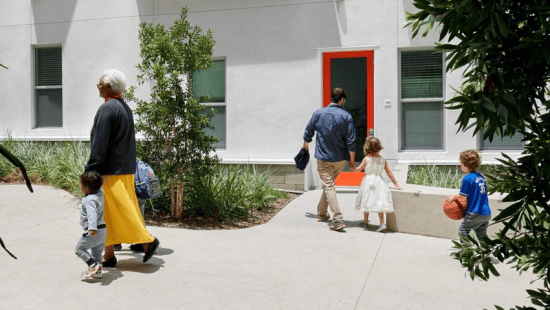
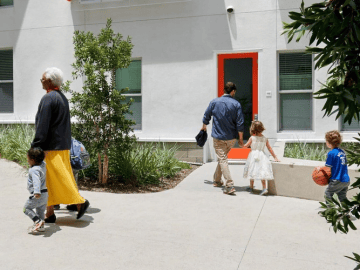
The authors noted that park use was fairly consistent before the raids, with families using athletic facilities and gathering for birthday parties. UC Berkeley professor Nicholas Vargas, a coauthor, said the findings show the effects reaching something as simple as a family spending a day in nature, and that losing safe access to parks adds pressure for residents already coping with rising costs.
County officials classify most county property, including parks, as sensitive locations. That designation does not prevent immigration agents from entering public areas.
A GAP THAT ALREADY EXISTED
The decline lands on communities with less green space to begin with. Across the county, the median is only 3 acres of park space per 1,000 residents, half the national median, and over 30% of residents live in neighborhoods with just 1 acre per 1,000. A 2016 county health report found Malibu, about 93 percent white, had 55.5 acres per 1,000 residents, while East Los Angeles, about 97 percent Latino, had 0.7.
A UCLA study found that two thirds of the county’s Black and Latino residents live in areas with disproportionately less green coverage and lower average life expectancy. Affluent areas such as Beverly Hills had life expectancies as high as 90, while South Los Angeles, 15 miles away, had a median of 77. The researchers linked green space to longer life even after controlling for factors such as smoking, obesity and physical inactivity.
MORE THAN A DAY OUT
Parks offer physical activity, time in nature, social connection and respite, and they also cool temperatures and filter air. Lower income Latino neighborhoods also tend to face higher rates of chronic conditions such as obesity, diabetes and cardiovascular disease. For families in those areas, a nearby park is free, shared space, and an emptier park means losing it.
A WIDER PATTERN
The park findings follow a July UCLA report on Latino small businesses. In a survey of 75 owners, 68% said they had to close temporarily or cut hours after enforcement activity. Nearly a year later, 95% of participating owners still reported financial stress. Together, the studies point to families pulling back from public and commercial life.
LIMITS OF THE DATA
The six parks are regional parks that charge entry fees, not neighborhood parks, and visitor totals are estimates based on vehicle counts. Coverage of the report does not address other possible influences, such as weather or fee changes.
The county says it aims to increase the share of residents within half a mile of a park or open space from 62% in 2025 to 70% by 2030.