After 172 Years Without a Woman Mayor, Los Angeles Elects Two in a Row
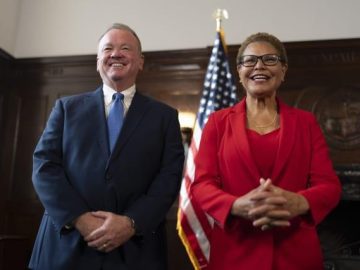
Karen Bass broke a historic barrier in 2022. Now Nithya Raman is preparing to become the city’s second elected woman mayor, marking a significant change in Los Angeles political history.
For 172 years, Los Angeles had never elected a woman mayor.
Then, in the span of four years, voters elected two.
Karen Bass became the first in 2022. On November 3, 2026, Nithya Raman defeated Bass, becoming the second woman elected mayor and the first person of South Asian descent elected to lead Los Angeles.
The transition is historically significant. After 42 numbered mayoral administrations led by men, Los Angeles is preparing for its second consecutive woman mayor.
But the city’s history reveals that women were participating in local politics long before they reached its highest office.
Women Entered City Politics Long Before They Became Mayor
Los Angeles incorporated as an American city in 1850, decades before California women gained statewide voting rights in 1911.
Women were already active in civic organizations, labor campaigns and reform movements.
One of the earliest breakthroughs came in 1915, when Estelle Lawton Lindsey became the first woman elected to the Los Angeles City Council.
According to the Los Angeles Public Library’s history of women councilmembers, Lindsey won with support from labor organizations and women’s groups.
She briefly served as acting mayor for one day, but was never elected to that position.
Her experience illustrates how women could gain political influence while remaining largely excluded from executive leadership.
The city’s historical study of women’s rights in Los Angeles documents the contributions of women who challenged political and institutional barriers.
Karen Bass Breaks the 172-Year Barrier
In November 2022, Karen Bass defeated businessman Rick Caruso to become the first woman elected mayor of Los Angeles.
She was also the first Black woman to hold the office.
Bass entered City Hall after decades in public service, beginning as a community organizer in South Los Angeles before serving in the California Legislature and Congress.
When she assumed office in December 2022, she became Los Angeles’ 43rd mayor, according to the city’s official mayoral history.
Her election ended a historical pattern that had continued since the city’s incorporation.
But the election of one woman did not establish that women would have equal opportunities to pursue the office in future elections.
Nithya Raman Becomes the Second Woman Elected Mayor
Four years later, voters selected Nithya Raman to succeed Bass.
Raman was born in India and first won election to the Los Angeles City Council in 2020, representing the Fourth District.
Bass conceded the November 3 election on November 5, acknowledging Raman’s victory. The election results remained unofficial while ballot counting continued.
Raman is expected to become Los Angeles’ 44th mayor when the new term begins in December.
Parriva has separately examined Raman’s leadership team and transition plans.
The succession from Bass to Raman means Los Angeles will move directly from its first elected woman mayor to its second.
Their victories, however, reflect different campaigns, political circumstances and approaches to governing.
Did Cultural Expectations Limit Women’s Political Opportunities?
Machismo is sometimes invoked when discussing traditional expectations about male authority, particularly in Latino communities.
But attributing Los Angeles’ history of male mayors to Latino culture alone would overlook broader political and institutional barriers.
For much of American history, women faced restrictions on voting, limited access to political networks and unequal opportunities to seek public office.
Even after women gained voting rights, influential donors, political organizations and established leadership networks remained largely dominated by men.
Women candidates have also faced scrutiny involving their appearance, family responsibilities and leadership styles.
Those patterns offer important historical context, but they do not establish why individual Los Angeles mayoral elections produced particular outcomes.
Understanding the city’s record requires examining political recruitment, campaign financing, voter attitudes and the opportunities available to women candidates across different generations.
Does Electing Two Women Mean Political Equality Has Arrived?
The elections of Bass and Raman represent important milestones, but political representation involves more than who occupies a single office.
Women may continue to encounter barriers when seeking campaign resources, institutional support and opportunities to compete for leadership positions.
The experiences of women from different racial, ethnic and economic backgrounds may also differ substantially.
Nor should Bass and Raman be treated as interchangeable simply because they are women.
Their records, priorities and political coalitions deserve examination on their own terms.
The historical significance of their elections lies in the fact that Los Angeles voters have now chosen women for the city’s highest office in consecutive elections.
That was unprecedented before 2022.
A Different Political History for Los Angeles
Estelle Lawton Lindsey entered the City Council in 1915, when women were still establishing their place in electoral politics.
More than a century later, Karen Bass became Los Angeles’ first elected woman mayor.
Now, Nithya Raman is preparing to follow her.
The city’s political history has changed considerably, although two elections cannot establish whether barriers to leadership have permanently diminished.
For future generations, the significance is clear: the office of mayor is no longer a position that Los Angeles voters have entrusted exclusively to men.
What remains to be examined is whether access to political leadership is expanding throughout City Hall, not only at the top.