A growing number of Americans are leaving their wallets at home. For younger people especially, a phone or card can now replace the bills and coins that once seemed essential for everyday purchases.
A new survey from Pew Research Center shows just how far that shift has gone. Among Americans ages 18 to 29, 51% say they make none of their typical weekly purchases with cash. That makes young adults the most likely age group to be completely cashless.
The change is also closely connected to income. Among Americans living in households earning $100,000 or more annually, 58% say they make none of their weekly purchases with cash. That compares with 43% among households earning between $50,000 and $99,999 and just 24% among households earning less than $30,000.
Yet walk through many Latino neighborhoods in Los Angeles County and cash remains visible.
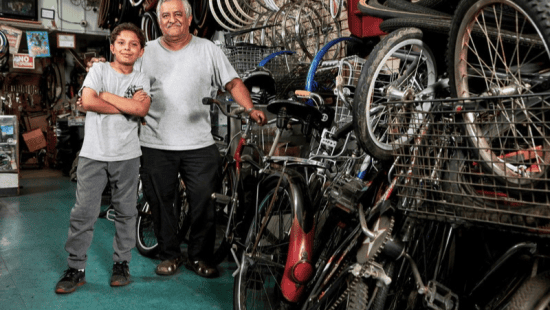
At small restaurants, neighborhood markets, swap meets and other locally owned businesses, cash continues to be part of everyday transactions. For some families, it is also part of how money moves between generations.
That raises a question that national statistics alone cannot answer: What happens to a community when the country around it is rapidly moving away from cash?
The answer may have less to do with technology than with how families earn, spend and share money.
For young Latinos, the transition can be especially complicated. A teenager or young adult may use a debit card or payment app for most purchases while still living in a household where parents or grandparents prefer cash.
That can create two financial systems within the same family.
The younger generation may be comfortable paying with a phone, while older relatives may continue to withdraw cash, use it for everyday purchases or rely on it to manage household spending.
In neighborhoods such as South Gate, Huntington Park, Bell and other communities across Southeast Los Angeles, that generational divide is worth examining.
The Pew findings provide a starting point.
The survey, conducted May 26 through June 1, 2026, found that Americans overall are using cash less frequently than they did a decade ago. But the change has not happened equally across the population.
Income is one of the clearest dividing lines.
People in lower income households are considerably more likely to use cash than those in higher income households. That makes the move toward a cashless economy more than a question of convenience. It can also be a question of access.
Having a bank account, a credit card, reliable internet access and a smartphone can make digital payments easy. For people without those tools, cash can remain essential.
That distinction matters in communities where many households are working with tight budgets or where family members have different levels of experience with the financial system.
Cash can also serve a purpose that a payment app cannot.
For some people, using physical money makes it easier to control spending. For others, cash is simply the payment method they have always trusted. Small businesses may also prefer cash because it avoids transaction fees associated with cards and other payment systems.
And then there is the informal economy.
Not every job, service or transaction takes place through a payroll system or a digital payment platform. Money can move between relatives, neighbors, independent workers and small businesses without leaving the kind of electronic record that banks and financial institutions routinely collect.
That makes cash difficult to measure.
A neighborhood can appear to be rapidly entering the digital economy while cash continues to circulate underneath it.
The Pew survey does not establish that Latino communities are resisting the transition. It does not provide evidence that young Latinos are more likely than other young Americans to use cash.
That is precisely what makes the question worth reporting.
The national data shows where the country is going. The streets of Latino Los Angeles may reveal how complicated that transition can be.
For a young person, going cashless might mean paying for lunch with a phone, splitting a restaurant bill through an app or receiving money from a friend instantly.
But the same young person may go home to a parent who keeps cash in a wallet, a grandparent who prefers bills to cards or a family business that still accepts cash from customers.
The future of money, in other words, may not arrive at the same speed for everyone.
And in Latino neighborhoods, the most interesting story may not be whether cash disappears.
It may be who still needs it, who still trusts it and why.