A growing number of Latino young adults in Los Angeles are neither working nor in school, exposing deeper problems in jobs, education, transportation, and opportunity. For many immigrant families, the crisis is already at home.
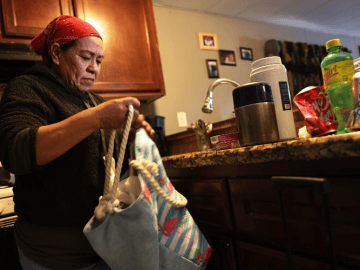
Claudia lost her job. She is undocumented, and the homes she cleaned in Beverly Hills became dangerous because of ICE raids. She hoped her 21 year old son could find work after completing a security guard course, but it proved impossible.
“They call him one day, then nothing the next. Sometimes they call and expect him there in 30 minutes. We do not have a car, and it is hard for him to get around the city,” says the Highland Park resident.
Both remain stuck in limbo, hoping for an opportunity to move forward.
“I am a single mother. My son only finished middle school. We could not afford to continue his education. Many jobs now require specialized skills, and he does not have the education he needs,” she says.
Claudia’s son is not alone. Young people across the country are facing a difficult reality. Rapid changes in technology and the economy have reshaped the job market, and younger workers are among the hardest hit.
The “Disconnection Crisis” refers to young Latinos between the ages of 16 and 24 who are neither in school nor working. These young people are often referred to as “Opportunity Youth” because they represent a major source of untapped potential in the workforce.
As of mid 2026, young Latinos in Los Angeles face unemployment and disconnection rates significantly higher than both older Latinos and the citywide average. While the overall unemployment rate in Los Angeles County is approximately 5.6%, the situation for younger adults is far more severe.
Local data tracks “disconnected youth,” defined as people between 16 and 24 who are neither employed nor enrolled in school.
Approximately 14% of young people in the City of Los Angeles are considered disconnected.
Latino youth experience some of the highest disconnection rates in the region. In Los Angeles County, the disconnection rate for people ages 19 to 24, roughly 13%, is more than double the rate for those ages 16 to 18, which stands at 5%.
Across California and the Los Angeles area, younger generations continue to struggle in a difficult labor market.
Unemployment among workers ages 16 to 30 in California recently climbed above 9%, compared to 6.6% in 2022.
The unemployment rate for California teens ages 16 to 19 reached 21.2% in early 2025, nearly double the national average. When including part-time workers seeking full-time employment, the combined unemployment and underemployment rate for Latino workers in the state is approximately 12.5%.
Factors Influencing the Crisis
Industry concentration plays a major role. Many younger Latinos work in service, retail, and hospitality jobs, sectors that have experienced slower growth and higher turnover compared to higher paying professional industries.
Education gaps also contribute to the problem. Systemic barriers within the public education system are frequently cited as obstacles preventing many Latino youth from entering higher wage careers.
Neighborhood conditions further deepen the crisis. Disconnection rates in communities such as Watts and Van Nuys exceed 20%, areas with large Latino populations.
While older Latinos ages 65 and older face a national unemployment rate of 6.2%, younger Latinos in Los Angeles are navigating disconnection rates that are often twice as high, largely because they are concentrated in unstable service sector jobs.