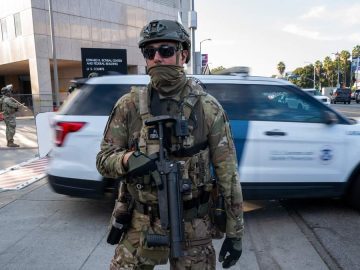
A new USC study found emergency-room visits by foreign-born patients fell more than 20% after immigration enforcement intensified in Los Angeles. The bigger question is what happens when fear changes when people seek care.
A person wakes up sick.
The symptoms are getting worse. The emergency room is an option. But there is another thought that may now enter the decision:
Is it safe for me to go?
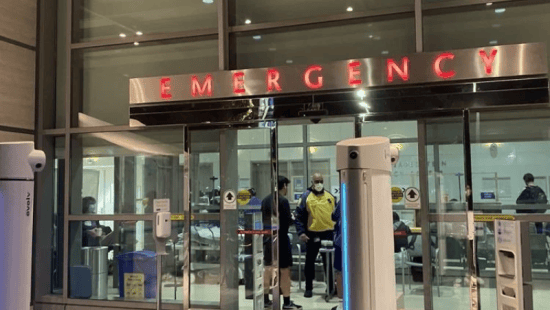
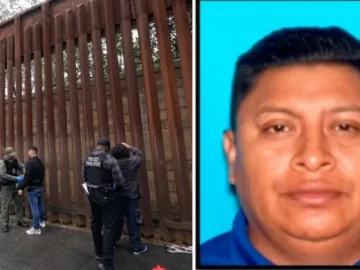
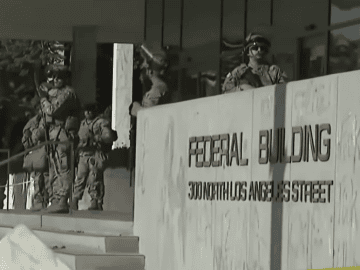
That question relevant because a new USC study found that emergency-room visits by foreign-born patients at three Los Angeles County safety-net hospitals dropped sharply after immigration enforcement intensified in June 2025.
Another question is what happens to Los Angeles when fear changes when people seek medical care.
Researchers from USC and other institutions analyzed emergency-department records from Los Angeles General Medical Center, Harbor-UCLA Medical Center and Olive View-UCLA Medical Center. They found that ER visits among foreign-born patients fell by more than 20% during the first four weeks after enforcement increased. By the end of the study period in October 2025, visits were still about 10% below the pre-enforcement level.
The decline was especially pronounced among patients born in Mexico and Central or South America.
But there was another finding that may be even more important.
Among patients born in Mexico, the share of ER visits that resulted in hospital admission increased by about 4.8 percentage points. For patients born in Central or South America, it increased by about 5.1 percentage points.
That does not prove that people waited until they were sicker to seek care.
The researchers could not measure the severity of each patient’s illness when they arrived, and they could not determine whether a patient was undocumented or had legal immigration status. “Foreign-born” includes naturalized citizens, lawful permanent residents, temporary visa holders and undocumented immigrants. Los Angeles County health system information
Still, the pattern raises an uncomfortable possibility: when people who need care become afraid to seek it, the people who eventually show up may be arriving later in the course of an illness.
The USC study is not happening in isolation.
A separate study published the same day surveyed 345 emergency-room patients in San Francisco and Houston. Among Spanish-speaking Latino patients, 34% said anti-immigrant rhetoric or policies had made them afraid to come to the ER. Of the 39 people across the study who reported that fear, 16 said they had delayed emergency care.
That study does not tell us what happened in Los Angeles.
But it helps put a human dimension around the question raised by the USC data.
For someone already worried about immigration enforcement, a hospital visit may not feel like a simple medical decision.
It can mean thinking about documentation, family members, language, transportation, work, children and what might happen if someone asks questions.
We have covered this broader chilling effect, including how fear of immigration enforcement can influence whether people go to hospitals, schools or call 911. We have also reported on the protections Los Angeles County has put in place to make county hospitals safer and more trusted spaces for patients.
LA County’s public health system is facing a projected loss of more than $700 million a year by 2029 because of changes in federal and state health-care funding. County officials say the system is already making operational changes to protect services and control costs.
That creates a difficult backdrop.
A safety-net hospital depends on patients coming through its doors when they need care. But if a portion of the community becomes less willing to seek care until a problem is more serious, the consequences may not stop with that individual patient.
A condition that might have been treated earlier can become harder to manage.
A routine concern can become an emergency.
And a patient who could have walked into a clinic may eventually need a hospital bed.
The USC researchers say the higher admission rates are consistent with patients arriving with higher acuity, delayed care-seeking or fewer nonurgent ER visits. But the study cannot tell us which explanation applies to any individual patient.
Good journalism should not turn a troubling pattern into a claim the evidence cannot support.
But it also should not ignore what the pattern is telling us.
The question Los Angeles should be asking now
The issue is no longer simply whether immigration enforcement changes people’s sense of safety.
The new evidence suggests it may also change when people enter the health-care system.
And that is a public-health question, an economic question and a community-trust question.
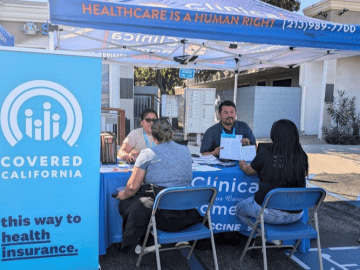
It is also why Parriva’s recent reporting on new Medi-Cal rules in Los Angeles County belongs in the same conversation. Coverage can help people get care, but having coverage does not guarantee that someone will feel safe enough to use it.
Los Angeles County has also taken steps to strengthen protections around immigration enforcement in its hospitals. But policies on paper and trust in the community are not the same thing.
The real test is what happens at the moment someone is sick.
Do they call?
Do they make the trip?
Do they wait another day?
Or do they decide it is safer to stay home?
The USC study cannot answer all of those questions.
It does tell us something important: after immigration enforcement intensified, fewer foreign-born patients were showing up at three Los Angeles safety-net emergency rooms and those who did were more likely to be admitted.
That is enough to demand a closer look.
Because an emergency room can only help the person who walks through the door.
And if fear is changing who walks through it, Los Angeles needs to understand where those patients are going instead.