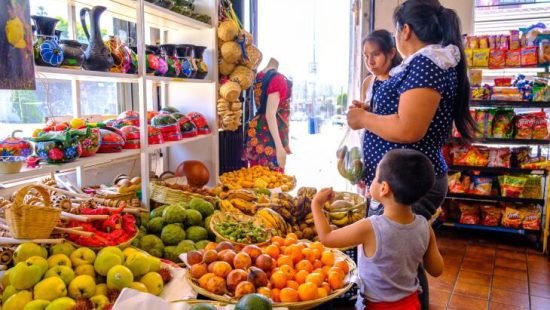
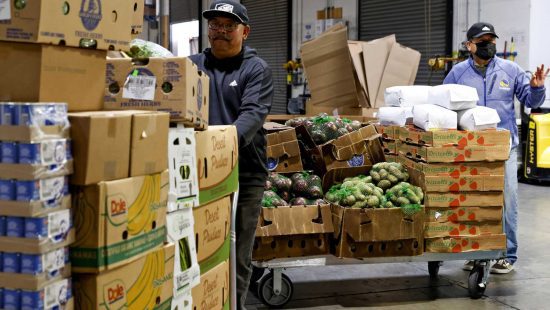
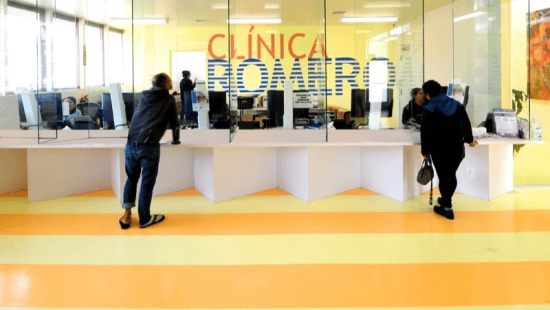
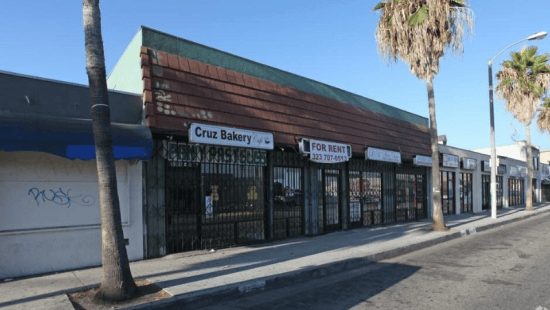
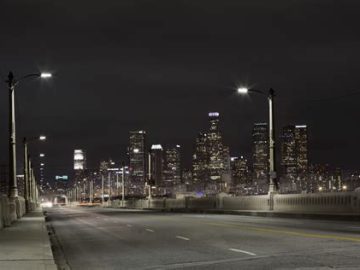
While Orange County residents debate whether the American Dream is still alive, in one Los Angeles zip code, the numbers already answer the question. In 90017, Latino residents make up as much as 62% of the population, and nearly a third of families live below the poverty line, in a neighborhood built almost entirely by immigrants who came looking for exactly that dream.
If the American Dream has an address in Los Angeles where it comes apart most visibly, it’s likely the zip code 90017, a stretch of the Westlake district just west of Downtown, where family poverty runs at nearly triple the citywide rate, in a neighborhood that is overwhelmingly Latino.
A Latino Neighborhood, By the Numbers
Latino residents make up between 55% and 62% of the zip code’s roughly 27,500 residents, depending on the data source, one of the highest concentrations anywhere in the city. Zoom out to the broader Westlake neighborhood, which 90017 anchors, and that share climbs even higher, to over 70%.
The ancestries behind that number tell their own story: Mexican (28.7%), Central American (24.8%), Guatemalan (14.7%) and Salvadoran (8.6%), together accounting for 85.5% of everyone who lives there. Nearly a third of residents are immigrants from Latin America, with Guatemala and Mexico as the two largest points of origin. This is, in other words, one of the most concentrated Latino immigrant communities in Los Angeles.
The Poverty Behind the Numbers
It’s also, by a wide margin, one of the poorest. According to Census-based data, 31.8% of families in 90017 live below the poverty line, compared with 12.0% citywide, and 12.1% statewide. A second independent source puts the figure at 31.3%, essentially confirming the same reality from a different angle: roughly one in three families here is poor by federal standards, in a zip code where Latino residents are the overwhelming majority.
The income figures explain why. Median household income in 90017 sits at $35,605. Per capita income ranges between $27,359 and $33,818, depending on the source, both far short of what it costs to live in one of the country’s most expensive metro areas. Nearly a third of housing stock here, 27.1%, was built in 1939 or earlier, aging infrastructure in a neighborhood where money for upkeep is scarce.
A Young, Working-Class Community
It’s a young neighborhood, median age just 31.7 years, and a working-class one still finding its footing: 64% of residents graduated high school, but only 31.6% hold a bachelor’s degree or higher, while 24.6% didn’t complete education past ninth grade. Single mothers head the largest share of households, 30%, in a neighborhood where the safety net for that kind of family is thin to begin with.
The Dream They Came For
The Latino families who make up the vast majority of 90017 didn’t arrive in Los Angeles by accident. They came, overwhelmingly, the way generations of immigrants have always come to this country: in search of stability, a job, a future for their children, the same version of the American Dream that Orange County residents, according to a recent UCI survey, are now busy redefining because it feels increasingly out of reach even for people born here.
In 90017, the dream was never redefined. It’s simply been unmet. In a zip code where roughly six in ten residents are Latino, nearly a third of families are still, by the government’s own measure, poor.
A Neighborhood, Not a Statistic
What makes 90017 worth understanding isn’t the poverty number alone, it’s who that number belongs to: a community that is 55% to 70% Latino, built by thousands of Guatemalan, Salvadoran and Mexican families who crossed borders for exactly the promise this country makes to immigrants, and who are now raising the next generation in some of the oldest, most crowded housing stock in the city, on some of its lowest wages.
If the question posed by pollsters and pundits is whether the American Dream is still alive in Los Angeles, 90017, a neighborhood defined as much by its overwhelming Latino identity as by its poverty rate, doesn’t answer it with a survey response. It answers it with a community of immigrants still waiting for the dream that brought them here in the first place.