Los Angeles’ Skid Row drug raid raises urgent questions about addiction treatment, mental health care, permanent housing and government accountability.
Los Angeles has shown it can mobilize hundreds of law enforcement officers to disrupt drug trafficking on Skid Row. Now the city and county must demonstrate that they can mobilize the treatment, mental health care and housing people need to escape the crisis.
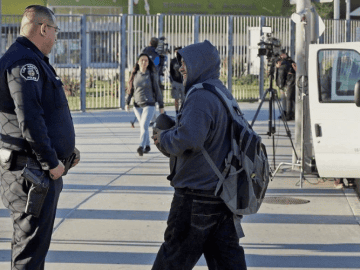
On Thursday, federal and local authorities carried out a major drug enforcement operation in and around Skid Row. Officials said they obtained 28 arrest warrants and 44 search warrants, with 23 defendants in custody by Thursday afternoon. Authorities reported seizing drugs, firearms, cash and vehicles. The defendants face allegations of drug trafficking and are presumed innocent unless proven guilty. (U.S. Attorney’s Office: Operation Save Skid Row)
There is a straightforward reason to welcome efforts to disrupt drug trafficking in a neighborhood where addiction, homelessness and public safety have collided for years.
But the operation also raises a harder question.
Where is the equivalent mobilization for the people looking for help?
Los Angeles is not starting from zero. Los Angeles County’s Skid Row Care Campus, which began providing services in 2025, offers health care, substance use services, case management and connections to other support. The county’s $280 million Skid Row Action Plan calls for expanding housing, health care, harm reduction and other services. Parriva has also examined the people and organizations working to address needs in Skid Row.
Those efforts are important. But the existence of programs does not tell us whether enough help is available, how quickly people can access it or whether they are making lasting progress.
That is where the question becomes one of scale, urgency and accountability.
A major law enforcement operation can put hundreds of officers into the field, execute warrants and announce arrests in a single day. Officials can hold a news conference and report what they seized.
Treatment is different.
A person struggling with addiction may need medical care, medication, mental health treatment, a safe place to sleep, transportation, a case manager and eventually permanent housing. For someone living on the street with a substance use disorder and a serious mental illness, one intervention rarely solves everything.
The question is not whether Los Angeles believes in these services on paper. It is whether government can deliver them when people need them.
There is encouraging news on one important measure. Los Angeles County reported 2,298 accidental drug overdose and poisoning deaths in 2025, down 6% from 2024 and nearly 30% below the 2022 peak. Fentanyl-related deaths fell 10% in 2025, while methamphetamine-related deaths fell 7%. (Los Angeles County Department of Public Health)
Those numbers are encouraging, but they do not mean the drug crisis is over. Countywide figures cannot tell us whether overdose deaths have declined by the same amount on Skid Row, nor can they tell us whether the neighborhood’s drug market has been disrupted.
Thursday’s operation illustrates the complexity. Even as overdose deaths have declined across the county, authorities say they are still confronting an active drug market in one of the country’s most visible concentrations of homelessness. Parriva has previously examined the challenges surrounding Skid Row and Los Angeles homelessness.
Los Angeles must address two related but distinct problems.
One is the supply side: drug trafficking, illegal sales and the violence associated with them.
The other is the human crisis: addiction, mental illness, untreated medical conditions, homelessness and the lack of stable housing.
One does not eliminate the other.
A person accused of selling fentanyl and a person addicted to fentanyl are not the same problem. Disrupting trafficking may be necessary to protect a community. Helping someone struggling with addiction requires a different response.
It requires a door that opens when someone is ready for help.
That is why the next phase of the Skid Row response may matter as much as Thursday’s arrests.
How many treatment beds and treatment appointments are actually available? How long must people wait for care? How quickly can someone experiencing a psychiatric crisis receive appropriate treatment? How many people move from the street into treatment and then into stable housing? How many remain housed months later?
And who is responsible for making sure those pieces work together?
These are not just questions for county health officials. They require coordination among county agencies, city departments, housing providers and nonprofit organizations receiving public funds. Residents deserve to know what the government has promised, what it has spent, what services have been delivered and what results have followed.
The answers also belong in the mayoral campaign. Parriva has examined Los Angeles homelessness policy and the work of the city’s homelessness and housing committees.
Mayor Karen Bass and challenger Nithya Raman should be asked how they would improve the city’s response to homelessness and public safety, coordinate with county agencies and measure whether people are moving into treatment and permanent housing. Their proposals should be judged against their documented records, their plans and the responsibilities of the offices they seek.
The city cannot independently deliver every county health service. But that does not excuse city leaders from explaining what they can do, how they will work with county officials and how the public will know whether the response is working.
Los Angeles does not have to choose between enforcement and services. It can pursue drug traffickers while expanding treatment. It can make streets safer while creating more housing. It can hold people accountable for trafficking dangerous drugs while helping people struggling with addiction find a way out.
But these efforts must be measured by more than announcements and promises.
So, yes, kudos for the raid.
Now, where is the mobilization for the people looking for help?
The ultimate measure of Los Angeles’ response to Skid Row will not only be how many people are arrested. It will also be how many people receive the care they need, move into stable housing and have a real chance to leave the crisis behind.