For families facing high living costs, worker poverty and immigration uncertainty, Labor Day can mean more than a day off.
Labor Day is supposed to be a celebration of work. For families, it is also supposed to be a break: a long weekend to gather around a barbecue, visit relatives, take the children to the beach or simply enjoy a day away from the job.
But for many Latino working families in California, the holiday arrives with a more complicated calculation. There is the cost of putting food on the table, paying rent and keeping up with other household expenses. There is the question of whether a parent can afford to take a day off. And for families touched by immigration enforcement, there can be the added uncertainty of whether going to work or traveling across town carries risks it did not carry before.
California has one of the country’s largest Latino populations and a workforce heavily concentrated in industries that depend on hourly and lower-wage workers, including agriculture, construction, hospitality, food service and personal care.
The economic pressure is visible in the state’s poverty numbers. In 2024, about 1.5 million California workers lived in poverty, while about 4 million working Californians were poor or near poor. Latinos accounted for 56 percent of workers experiencing poverty, even though they represented about 40 percent of all working adults. The median Latino worker earned about $21 an hour.
Even having a full-time job does not guarantee financial security. About half of adults living in worker poverty had worked full time throughout the year in 2024.
That reality gives Labor Day a different meaning.
The holiday celebrates the contribution of workers, but millions of workers are still struggling to turn that work into economic stability. For a family living close to the edge, a holiday weekend can mean deciding whether to spend money on a family outing or save it for rent, groceries and the bills waiting after the weekend.
Immigration enforcement has added another layer of uncertainty for some Latino families.
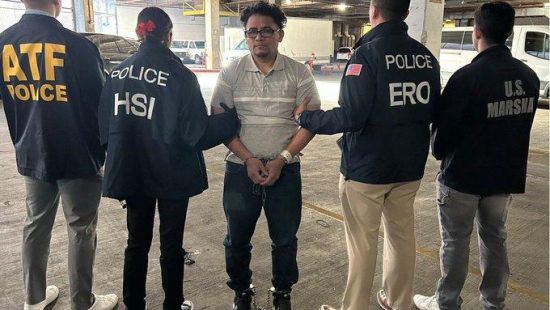
In Los Angeles County, intensified immigration enforcement has affected not only workers but also the businesses that depend on them and on Latino customers. A UCLA analysis published this summer found that businesses near nine enforcement sites experienced 46,000 fewer visits and an estimated $3.16 million in accumulated losses during the first two weeks following the operations.
The effects did not disappear after the raids.
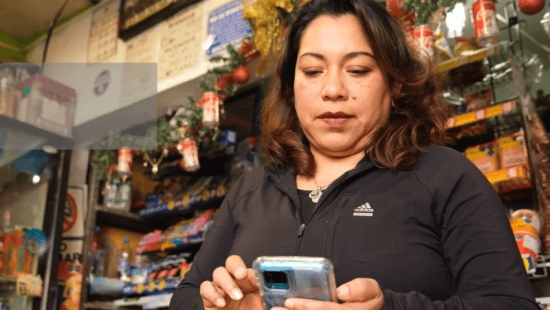
Among 75 Latino entrepreneurs interviewed by UCLA researchers nearly a year later, every respondent reported fewer customers and lower sales after the enforcement surge. Fifty nine percent said sales had fallen by more than half, while 68 percent said they had temporarily closed or reduced their hours. More than half said staff had missed work because of fear.
Nearly a year later, 95 percent of the entrepreneurs surveyed said they were still experiencing financial stress. Some had laid off workers, taken on debt or worked longer hours to keep their businesses open.
Those numbers put a human dimension on the Labor Day holiday.
For a worker, missing a shift can mean losing income. For a small business owner, losing customers can mean cutting hours or letting an employee go. For a family, either situation can affect the same household budget.
And the pressures extend beyond Los Angeles.
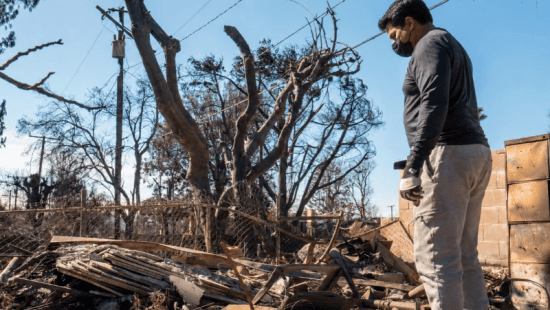
A recent UCLA study of workers involved in the recovery from the Eaton Fire in Altadena found significant gaps in protections for day laborers and other outdoor workers. Among the 11 workers interviewed, 64 percent reported witnessing or experiencing immigration enforcement during the recovery period. The researchers cautioned that the sample was small and was not intended to represent all recovery workers.
California’s Labor Day story, then, is not simply about whether people have jobs. It is about what those jobs provide.
A paycheck can provide food and housing, but it can also determine whether a family can take a holiday, whether a parent can miss a shift and whether a small business can afford to close for a day.
That is particularly important in a state where the cost of living can make even a full time job insufficient for some households.
Labor Day was created to recognize workers and the labor movement’s fight for better wages, safer workplaces and greater security. More than a century later, the holiday still carries that meaning, but the economic reality facing many workers is far removed from the idea that having a job automatically provides a stable life.
For California’s Latino families, this Labor Day may therefore be less about an elaborate celebration and more about making the most of what they have.
A barbecue at home can cost less than a restaurant. A family gathering can replace a more expensive outing. Someone may take an extra shift while others spend the day together.
And for families affected by immigration enforcement, there may be another consideration: the fear that has followed workers from the workplace into the rest of their lives.
The holiday will still be celebrated. Families will gather, workers will work and communities will come together.