Federal prosecutors accuse 28 California permanent residents of election-related offenses. With the November 3 election approaching, the cases raise important questions about voting eligibility, immigration status and the path to U.S. citizenship.
For many immigrants, getting a green card is a major step toward building a future in the United States. It means being able to live and work here legally, and for some families, it is part of a longer journey toward citizenship.
But there is one important difference between having a green card and becoming a U.S. citizen: a green card does not give someone the right to vote in California elections.
That distinction is now at the center of federal charges against 28 lawful permanent residents across California.
On Monday, October 19, the U.S. Department of Justice announced that authorities had arrested 11 people in an investigation involving alleged illegal voter registration, voting and false statements on citizenship applications.
The announcement comes just two weeks before California’s November 3 election, making the issue especially timely for families with relatives who are permanent residents or preparing to become citizens.
The cases also raise a practical question: What happens when someone registers to vote or claims to be a citizen before they legally qualify?
What are the 28 people accused of doing?
According to the Justice Department’s announcement, all 28 defendants are lawful permanent residents, commonly known as green card holders.
Federal prosecutors accuse them of different offenses.
Some allegedly checked a box or signed a voter-registration form stating they were U.S. citizens when they were not.
Others allegedly voted in federal elections despite not being eligible.
Several are accused of making false statements later, when they applied to become U.S. citizens, by denying they had registered to vote, voted or previously claimed citizenship.
The cases include residents of Los Angeles County communities such as Commerce, Long Beach, Pico Rivera, La Puente, Carson and Wilmington, along with defendants elsewhere in California.
Some allegations date back many years. Others involve elections as recently as 2026.
These are criminal allegations, not convictions. Prosecutors must prove the charges in court, and all defendants are presumed innocent.
Can someone with a green card vote in California?
No. Having permission to live and work in the United States does not mean someone is eligible to vote.
California’s voter eligibility rules require U.S. citizenship, along with other qualifications.
That means someone who has a green card but has not yet completed the naturalization process cannot register or vote in California elections.
Someone who became a U.S. citizen through naturalization has the same voting rights as someone born in the United States, provided they meet the other eligibility requirements.
Being born in Mexico, Guatemala, El Salvador or another country does not prevent a naturalized citizen from voting.
The deciding factor is citizenship, not birthplace, language or ethnicity.
What happens if a permanent resident registers or votes?
The consequences can be serious, but they depend on what actually happened.
Knowingly claiming U.S. citizenship on a voter-registration form can lead to criminal charges. Voting when legally ineligible can result in separate penalties.
The Justice Department says some defendants face felony charges carrying maximum penalties of five years in federal prison. Others face misdemeanor charges with a maximum of one year.
Those are possible statutory penalties, not sentences handed down to the defendants.
There can also be immigration consequences.
According to U.S. Citizenship and Immigration Services, unlawful voting or falsely claiming citizenship may affect a person’s ability to become a naturalized citizen. Certain violations can also create grounds for immigration proceedings.
But an error on a form is not automatically the same as intentionally lying, and deportation is not the automatic result of every voting-related problem.
Whether someone knowingly made a false claim, what they understood and which laws apply can make an important difference.
For a family working toward citizenship, those details matter.
What if someone was registered by mistake?
This is a question worth taking seriously.
A person might discover a registration they do not remember completing or realize that information submitted years ago may have been incorrect.
That situation should not automatically be treated as equivalent to the conduct prosecutors allege in these cases.
However, someone who is not a U.S. citizen should not attempt to vote simply because a registration record or ballot exists in their name.
Anyone concerned about an unexpected registration, a past ballot or a citizenship statement on an official form should consider speaking with a qualified immigration attorney or DOJ-accredited legal representative.
The goal is to understand what happened and what legal steps may be appropriate before making decisions that could affect an immigration case.
Do these arrests mean noncitizen voting is widespread?
The charges have also become part of a larger disagreement between federal officials and California election authorities.
The Justice Department says the 28 defendants were identified through a list of more than 20,000 people it considers likely noncitizens on California’s voter rolls.
Federal authorities have asked that ballots associated with that list be withheld from counting until citizenship can be verified.
California officials dispute the federal government’s evidence and have raised concerns that eligible voters could be wrongly identified.
That disagreement is now being fought in court.
The distinction is important: charges against 28 individuals do not prove that all 20,000 people on the larger list are ineligible voters.
Nor do the arrests, by themselves, establish how common unlawful noncitizen voting is statewide.
The cases must be judged on their evidence, while questions about the broader voter list require separate verification.
What should California voters know before November 3?
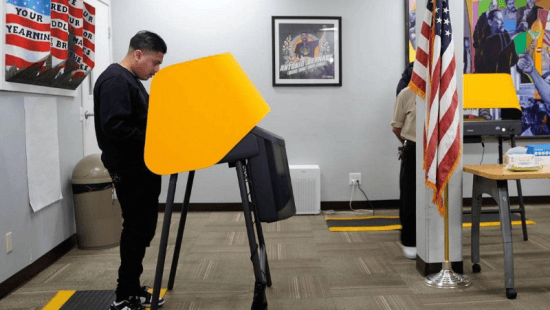
California’s general election takes place Tuesday, November 3.
Monday, October 19, is the regular voter-registration deadline. Eligible U.S. citizens who miss it can still use California’s conditional registration process through Election Day.
The California Secretary of State explains the deadlines and registration options. Eligible voters can also check their information using the state’s My Voter Status service.
For permanent residents who have not yet naturalized, the rule remains straightforward: a green card is not enough to vote.
For naturalized citizens, the message is equally important: you are U.S. citizens, and you have the right to participate in elections when otherwise eligible.
The 28 federal cases will move through the courts, where the allegations must be proven.
In the meantime, understanding the difference between permanent residency and citizenship can help families avoid legal problems, protect their path to naturalization and make informed decisions about their voting rights.