Ground beef is nearing $7 a pound in the United States, and the Trump administration says it has a way to bring the price down: allow more imported lean beef into the country.
Beginning September 1, the administration temporarily expanded access to as much as 300,000 metric tons of lean beef trimmings that can enter under the lower, in-quota tariff rate. The additional volume is divided into three 100,000-metric-ton periods running through November 30. The policy is intended to increase the supply available for ground beef while the U.S. cattle herd remains historically small, according to the White House proclamation on affordable beef.
But there is an important question that Washington cannot answer yet:
Will cheaper imported beef actually mean cheaper ground beef at the supermarket?
The answer depends on what happens between the import dock and the checkout counter.
Why beef became so expensive
The immediate problem is supply.
The U.S. had 94.2 million cattle and calves on farms as of July 1, 2026, according to the U.S. Department of Agriculture’s July cattle inventory report. The number of beef cows was 28.5 million, down 1% from a year earlier, while the 2026 calf crop was estimated at 32.5 million, down 2%.
Years of drought, wildfires and high production costs contributed to a smaller national herd.
That matters because rebuilding cattle supplies takes time. A rancher cannot simply replace a shrinking herd with new animals overnight.
The result has been unusually high beef prices.
For consumers, ground beef is one of the most visible parts of that problem because it is widely used in hamburgers, tacos, burritos, meatballs and other everyday meals.
Parriva has previously examined how higher prices move through the economy in our explanation of how tariffs can eventually reach consumers. The beef situation presents the opposite question: when an import cost falls, how much of that savings makes it back to consumers?
What Trump’s beef plan actually does
The administration is not simply ordering 300,000 metric tons of foreign ground beef to appear in grocery stores.
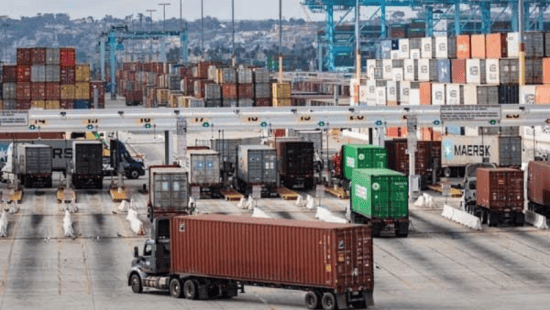
The policy expands the amount of certain lean beef trimmings that can enter the United States at the lower in-quota tariff rate. The additional quota is limited to those products and is being administered in three monthly tranches.
The details matter. The Federal Register proclamation specifies the additional quota and the period during which it will be available.
Lean beef trimmings are particularly important to ground beef because processors can blend lean imported beef with higher-fat domestic beef to produce the ground beef Americans buy.
That means the policy is aimed at a specific part of the beef supply chain rather than at steaks, roasts or the entire cattle market.
The administration says the action is intended to make imported beef available at discounted prices and help consumers while the domestic herd rebuilds. The proclamation also says the president could end the action if it does not result in lower sale prices for imported beef.
The administration has also taken steps intended to support domestic ranchers, including measures involving small meat processors and country-of-origin labeling.
So the administration is attempting to pursue two goals at once:
lower beef prices now while helping American ranchers rebuild supply for the future.
That is where the economic tension begins.
The 300,000-ton number sounds bigger than its likely effect
The headline number is large.
But it needs context.
A Purdue University agricultural-economics analysis estimates that 300,000 metric tons is about 661 million pounds, equivalent to roughly 6.8% of one year’s U.S. ground-beef supply if every pound represents genuinely additional supply.
But the full 300,000-ton amount is a ceiling, not a guarantee that all of it will be imported or that all of it represents new supply.
And even if the full amount enters the country, the effect does not automatically translate into a matching reduction at the grocery store.
There are several steps between an imported shipment and the price on a supermarket shelf.
Importers, processors, distributors, retailers and restaurants all operate between the original product and the consumer.
Each can affect how much of a lower input cost gets passed along.
Purdue’s analysis concludes that the likely effect on average retail ground-beef prices is considerably smaller than either the 300,000-ton headline or the administration’s discussion of a 25% discount might suggest.
That does not mean the policy cannot lower prices.
It means consumers should not assume that a 25% reduction in the cost of imported beef will automatically become a 25% reduction in the price of ground beef.
Why ranchers are worried
The other side of the equation is the American cattle producer.
Ranchers have spent years dealing with a shrinking herd. They now face a policy designed to increase the supply of imported beef at a time when cattle supplies are already tight.
Industry groups have warned that cheaper imports could put pressure on domestic cattle prices and make it less attractive for ranchers to expand their herds.
That concern matters because the United States cannot solve a structural cattle shortage entirely through short-term imports.
Rebuilding the domestic herd takes years.
If imports help lower prices for consumers today but simultaneously weaken the economic incentive to expand domestic production, the country could face another supply problem later.
That outcome is not established. It is a risk raised by ranchers and agricultural economists.
The evidence available now cannot tell us how large that effect will be.
The Mexico connection
Imported beef is only one part of the broader supply picture.
The United States is also gradually reopening some southern ports to live cattle from Mexico following restrictions related to New World screwworm.
USDA reopened the Douglas, Arizona, port to cattle trade on August 24 under a phased approach. The agency says it is evaluating future openings at Santa Teresa and Columbus, New Mexico, depending on disease-control conditions, according to USDA’s announcement on the phased reopening of southern ports.
That matters particularly to the Southwest, where agriculture and cross-border trade are closely connected.
It also means the U.S. beef-supply story is not simply about Brazil, Argentina or American ranchers. Mexico is part of the supply chain as well.
Why this is relevant to Latino communities
For Latino communities, the beef story has at least three dimensions.
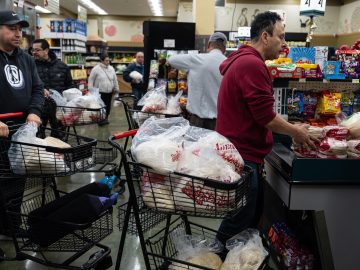
At the grocery store
Food prices are part of the larger affordability squeeze facing many California families.
Parriva recently examined that broader pressure in California Economy Is Growing. Why Are Families Still Struggling?, where rising food and other household costs are part of the gap between economic growth and what families experience in their monthly budgets.
A change in the price of one grocery item will not solve that larger problem. But for households already managing tight budgets, food prices can influence what goes into the shopping cart.
Parriva has also reported on the rise in food insecurity among Latino families in Orange County, another reminder that affordability is not simply an economic statistic. It can affect what families eat and what they have left for other necessities.
At work
Latinos are also deeply connected to the agricultural and food-processing workforce.
According to the USDA Economic Research Service’s farm-labor data, Hispanic workers of Mexican origin accounted for 40% of workers across all agriculture occupations in 2022.
The Bureau of Labor Statistics’ labor-force data separately reported that Hispanics and Latinos represented 30.1% of butchers and other meat, poultry and fish processing workers in 2024.
That means changes in the beef market can affect Latino workers as well as Latino consumers.
If domestic production expands, processing capacity and agricultural employment could benefit. If ranchers and processors face sustained price pressure, some operations could face the opposite problem.
The ultimate employment effect remains uncertain.
Across the border
Mexico’s cattle trade is another piece of the puzzle.
The reopening of the Douglas port creates another potential source of cattle for the U.S. market, although USDA is keeping the process phased because of continuing New World screwworm concerns.
For communities in Arizona, New Mexico and other parts of the Southwest, agricultural trade can affect far more than the price of meat. It can influence transportation, livestock markets, processing activity and other businesses tied to the cross-border economy.
What shoppers should watch
The most important number is no longer the 300,000-ton headline.
It is the price of ground beef.
The policy began September 1. That means there is now an opportunity to watch what happens as additional imported beef moves through the supply chain.
Three things will tell consumers more than political arguments will:
Wholesale prices: Are processors actually paying less for lean beef?
Retail prices: Are supermarkets passing those savings along?
Cattle prices: Are domestic producers facing enough pressure to change their plans for rebuilding herds?
Those indicators will help determine whether the policy is producing meaningful consumer relief or primarily changing who captures the savings within the beef supply chain.
What we know — and what we don’t
We know the U.S. cattle herd is historically tight.
We know beef prices are unusually high.
We know the administration has temporarily expanded access to 300,000 metric tons of lean beef trimmings at the lower in-quota tariff rate.
We know the policy is intended to increase supplies available for ground beef.
We do not yet know how much of the authorized volume will actually enter the country.
We do not yet know how much of the resulting cost savings will reach supermarkets.
And we do not yet know whether the policy will have a meaningful effect on the pace of U.S. herd rebuilding.
Those answers will take time.
The real test is the grocery receipt
The administration has identified a real problem: American consumers are paying unusually high prices for beef.
Its response is to increase access to imported lean beef while trying to protect the domestic cattle industry.
Whether that strategy works is not something a presidential announcement can settle.
For shoppers, the test is simpler.
Does ground beef get cheaper?
For ranchers, the test is different:
Can they still make enough money to rebuild the U.S. cattle herd?
And for workers and communities connected to the food system, there is another question:
Where do the benefits and costs of this policy ultimately land?
The answers will emerge not from the size of the announcement, but from what happens next in the supply chain.
Washington has changed the rules for bringing more beef into the country. Now consumers can watch the one number that matters most to them: the price on the receipt.