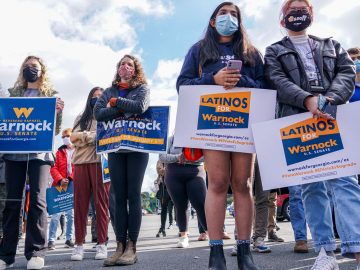
From Boyle Heights to South Central, community campaigns are converging around demands for housing protection, community control and a greater say over development.
As displacement pressure spreads from Boyle Heights into South Central and other historically Latino and Black neighborhoods, there is no single citywide platform representing what these communities want. Instead, years of scattered, project-by-project battles add up to a clear pattern of demands.
For nearly a decade, Boyle Heights has been the neighborhood Los Angeles points to when it talks about gentrification. Now the same pressure is reaching South Central and other historically Black and Latino neighborhoods across the Eastside and beyond. If the current trajectory holds, organizers and researchers say the years leading up to 2028 will determine whether these neighborhoods keep their character and their people, or become the next case study in a decades-old pattern of displacement.
But ask what these communities actually want, and no single answer waits in a policy binder. There is no unified 2028 platform, no single coalition speaking for Boyle Heights and South Central together. What exists instead is a set of separate, hard-fought campaigns: against a university, against a developer, against a neighborhood board that looked the other way. Read together, though, they form something close to a shared demand, even if no one has written it down as one document yet.
Demand one: real veto power, not just a seat at the table
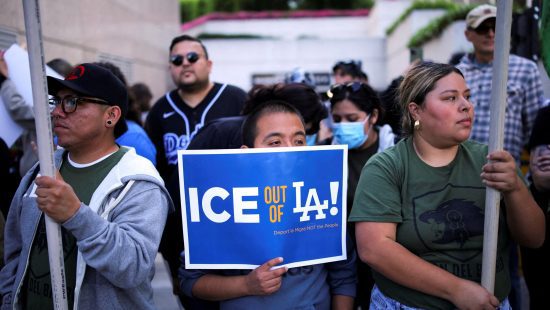
When USC proposed a 202,000-square-foot research facility on its Boyle Heights health sciences campus, about 50 demonstrators marched in protest, worried the project would price out residents of Boyle Heights, Lincoln Heights, Ramona Gardens and El Sereno by drawing in more affluent researchers and expanding the university’s footprint further into the neighborhood.
Cinthia Gonzalez, an organizer with the anti-gentrification group Eastside LEADS, framed the demand in stark terms: “For more than 100 years, USC has come into our communities of South Central and Boyle Heights expanding their campuses without any accountability to our laborers, workers or community needs. We say, no more.”
That is not a request for a better community benefits package. It is a demand for the power to say no, exercised before a shovel goes into the ground, not after.
Demand two: land taken permanently off the speculative market
Coverage of the USC fight pointed to a specific structural alternative that keeps surfacing in these campaigns: the community land trust. Under this model, land is held collectively or by a nonprofit trust rather than sold to a private developer, which means it can never be flipped for profit or resold to the highest bidder. It is a direct answer to the core mechanism of gentrification: rising land value pricing out the people who built a neighborhood’s character in the first place.
The stakes of getting this wrong show up even in projects meant to help. When a nonprofit developer proposed demolishing rent-controlled units in Boyle Heights to build new affordable housing, Leonardo Vilchis, co-director of the tenant advocacy group Union de Vecinos, told LAist the trade-off was not as simple as it looked: “Every time you demolish rent-controlled housing, you’re displacing people and sending them into a worse situation than they used to be.”
Demand three: neighborhood councils with teeth
In one specific fight, the Boyle Heights Neighborhood Council voted unanimously to draft an official letter of opposition against Tiao LLC, a developer that purchased a historic block in 2020 for $2.1 million and applied for permits two years later. Dozens of community speakers spoke against the project at a public meeting; the company’s representative offered no substantive response to their concerns.
The vote matters less for what it accomplished procedurally, since the project still had to move through city planning and city council regardless, and more for what it revealed: residents want their neighborhood councils to function as a real check on development, not simply a forum where opposition is heard and then ignored.
BHNC president Jonathan Echavarria described the moment to the Los Angeles Public Press as a turning point: “I think this was one of those kind of boiling points where the community said ‘no,’ and they wanted to make their voices heard.” A longtime resident, Sammy Carrera, put the underlying grievance more bluntly at that same meeting, telling the Public Press that “market rate means not for” the people who already live there.
The line between acceptable development and gentrification isn’t always about a project’s intentions, either. Crystal Orozco, who owns a community space next to a separate disputed development in Boyle Heights, told Boyle Heights Beat that the difference comes down to whether residents are actually consulted: “When somebody just steps in and just chooses what they want and imposes their will upon an entire community, that’s gentrification. I believe there can be evolution to this, but we have to have those conversations. And we demand those conversations.”
Demand four: protection from harassment, not just from eviction
The same fight against Tiao LLC surfaced a demand that current tenant law often does not fully address. According to organizers, the company began pressuring tenants by misinforming them that they needed to close their businesses by a certain date, using fear rather than a formal legal eviction process to push them out early.
This is the demand that may be hardest to legislate: protection against landlords and developers who exit tenants through pressure and misinformation, sidestepping the formal eviction protections that exist on paper.
Demand five: accountability from institutions treated as untouchable
Universities, hospitals and other large institutional anchors have expanded into these neighborhoods for generations, often framed as an unambiguous public good; more jobs, more research, more investment. Organizers are increasingly rejecting that framing outright. The demand is not for USC, or any institution like it, to expand more carefully. It is for that expansion to be conditioned on accountability to the “laborers, workers and community” already there, in Gonzalez’s words, treating that accountability as a requirement rather than a courtesy.
What’s missing, and why that gap matters
Here is the honest complication in telling this story as one movement with one platform: it isn’t, not yet. What exists is a series of parallel, project-specific fights, Eastside LEADS against USC, the Boyle Heights Neighborhood Council against Tiao LLC, older art-gallery boycotts from a previous wave of gentrification organizing in the mid-2010s, each fighting its own battle without a single shared document tying them together into one demand set for South Central, Boyle Heights and the other neighborhoods now facing the same pressure.
That fragmentation may be the real story here. Gentrification itself moves as a single, well-capitalized force, backed by developers, universities and investors who coordinate easily because they are pursuing the same financial logic in each neighborhood. The resistance, so far, has not coordinated at the same scale. Whether that changes before 2028, whether these separate fights become one unified platform with the leverage that comes from acting together, may matter as much to the outcome as any individual policy fight.
Or, as one Boyle Heights protester, Melissa Castro, put it to LA Weekly during an earlier wave of anti-gentrification organizing: “Gentrification is a process, it’s not a single person.” Five separate demands, born from five separate fights, may simply be what confronting a process, rather than a villain, looks like.