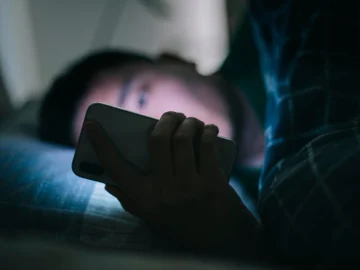
Valentina Vapaux’s new book explores the paradox of a generation that can reach almost anyone online yet still struggle with loneliness, comparison and the search for genuine connection.
Generation Z has grown up in a world where being connected is almost automatic. Friends are only a message away, entertainment is available instantly and social media can turn a private interest into a global community.
But constant connection has not eliminated loneliness.
Instead, for many young people, the digital world has created a paradox: they can be surrounded by people online while still feeling isolated, overwhelmed or uncertain about where they belong.
That contradiction is at the center of German-Mexican writer Valentina Vapaux’s new book, Generación Z: Entre la autorrealización, la instasoledad y la esperanza de un mundo mejor (Generation Z: Between Self-Actualization, “Instaloneness,” and Hope for a Better World), published by Taurus in 2026.
Vapaux, 25, examines her generation through essays, chronicles and poetry, looking at the way the internet has changed relationships, sexuality, identity, work and ideas about the future. In an interview, she argues that Generation Z is too often reduced to stereotypes about fragility or excessive dependence on technology.
Connected—but overwhelmed
The tension is visible in the way teenagers describe their relationship with social media.
A 2025 Pew Research Center survey of 1,391 U.S. teenagers ages 13 to 17 found that 45% said they spend too much time on social media, up from 36% in 2022. About three-quarters, 74%, said social media makes them feel more connected to their friends. At the same time, 39% said they feel overwhelmed by the drama they encounter online.
The same research found that 45% of teens said social media hurts the amount of sleep they get, while 40% said it hurts their productivity. About one in five said it hurts their mental health.
The contradiction is important: social media is not simply making young people miserable. For friendships, the balance is more positive. Thirty percent of teens said social media helps their friendships, compared with 7% who said it hurts them.
More recent Pew research published in 2026 also shows that teenagers continue to use platforms such as TikTok, Instagram and Snapchat primarily for entertainment and connection, while experiences with excessive screen time, sleep and cyberbullying vary by platform.
In other words, the problem may not be connection itself. It may be the way digital connection works.
The loneliness of the feed
For Gen Z, being alone does not necessarily mean being disconnected.
A person can wake up and immediately see messages, videos, notifications and updates from hundreds of people. Yet the endless stream can also encourage comparison: someone else always appears more attractive, successful, adventurous, happy or socially active.
Vapaux describes this condition as “Instaloneness”—a form of loneliness that exists inside an environment of constant digital connection.
She argues that algorithms intensify the problem by continually selecting content designed to hold users’ attention. The result can be a cycle of scrolling, comparison and emotional stimulation that is difficult to interrupt.
Vapaux does not argue that young people should simply abandon social media. In fact, she acknowledges that the internet has given her opportunities that might not otherwise have existed.
She discovered creators online and realized that she could build an audience and a career through writing. For her, the internet is therefore both a source of opportunity and a source of pressure.
That contradiction is central to her understanding of Gen Z.
Dating in the age of endless choice
The same dynamic appears in relationships.
Dating apps can make potential partners feel like a catalog, Vapaux told MILENIO. With a swipe, users can move from one possibility to another, creating the impression that someone better may always be one profile away.
But Vapaux says her research challenged another stereotype about Gen Z: that young people are necessarily less interested in commitment.
She found evidence suggesting that many members of her generation still want romantic relationships and intimacy. The problem is that they are trying to find those things in a world where technology constantly presents alternatives.
Social media has also changed expectations about beauty and sex. Young people encounter idealized bodies, lifestyles and relationships from an early age. Pornography can provide information about sexuality, but it can also create unrealistic expectations that later have to be questioned and reconstructed.
Not a “glass generation”
Vapaux strongly rejects the idea that Gen Z is simply a fragile or “snowflake” generation.
Young people may be more willing to talk openly about anxiety, therapy, mental health and emotional difficulties. But she sees that openness as evidence of courage rather than weakness.
The generation also experienced the disruption of the COVID-19 pandemic during formative years. Vapaux argues that the interruption of education, social life and personal development affected young people at a particularly important stage of their lives.
At the same time, she sees Gen Z as politically aware and interested in issues including mental health, social change and breaking longstanding taboos.
What Gen Z is really looking for
Ultimately, Vapaux’s argument is less about technology than about what technology cannot provide.
The internet can create communities, careers and relationships. It can make information accessible and allow people to find others who share their interests.
But digital access does not automatically produce belonging.
When asked what her generation is searching for, Vapaux’s answer is simple: connection.
Her answer is echoed by the broader tension revealed in the research. Most teenagers say social media helps them feel connected to friends, yet many also say they spend too much time on it and experience pressure, drama and negative effects on sleep and productivity.
That may be the defining paradox of Generation Z: it is a generation that has grown up with unprecedented access to other people, but is still trying to figure out what it means to feel genuinely close to them.
The challenge, Vapaux suggests, is not to disconnect from the digital world entirely, but to find a healthier balance between being connected and actually belonging.