Half of California’s new zero-emission infrastructure funding must benefit low-income and disadvantaged communities. The bigger question is whether the investment can finally make EV ownership practical for renters and neighborhoods that have historically had fewer reliable chargers.
Buying an electric vehicle may be getting easier in California.
Charging one is another story—especially if you rent your home.
For Californians living in apartments, multi-unit housing or neighborhoods with limited charging infrastructure, the question is not simply whether they can afford an electric vehicle. It is whether they have a practical place to charge it after they buy it.
That is why the California Energy Commission’s new $95.2 million investment in zero-emission vehicle infrastructure could matter far beyond the number of chargers it eventually helps build.
The CEC approved the investment plan Aug. 18 as part of its Clean Transportation Program. At least 50% of program funds must benefit or serve low-income Californians and residents of low-income and disadvantaged communities. The state says more than 62% of Clean Transportation Program and supplemental funds had already gone to disadvantaged or low-income communities as of March 2026.
For Latino communities, particularly those in dense neighborhoods, the most important question may be simple:
Will this money finally put reliable EV charging close enough to home to make electric-vehicle ownership realistic for renters?
The EV problem California cannot solve with rebates alone
California is simultaneously trying to make electric vehicles more affordable.
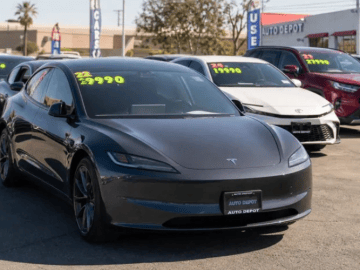
The state’s MyFirstEV program provides $3,500 toward a new zero-emission vehicle and $1,750 toward a used one at participating dealerships. The California Air Resources Board administers the program.
That can help address the biggest barrier many consumers see when shopping for an EV: the upfront price.
But there is another barrier that is harder to solve.
Where do you charge it?
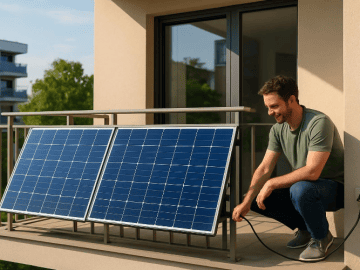
A homeowner with a private garage may be able to install a home charger and plug in overnight. An apartment renter may not have that option.
That creates what could be called California’s renter gap: the people who could benefit from lower operating costs and cleaner transportation may be the least able to control where their vehicle gets charged.
Research from UCLA helps explain the problem. Researchers found that disadvantaged communities had 64% fewer public electric-vehicle charging stations per capita within a three-mile radius than more affluent communities. For renters in multifamily housing, the disparity was even larger: they had access to 73% fewer chargers per capita relative to renters in wealthier neighborhoods.
That matters because an EV is only as convenient as the charging network around it.
The $48 million piece may be the most important for renters
Of the new $95.2 million investment, $48 million is dedicated to light-duty EV charging infrastructure.
The CEC says that money will focus on DC fast charging and at-home or near-home charging.
That phrase—near-home charging—deserves attention.
California has spent years expanding its statewide charging network. The CEC says the state now has 216,445 publicly available and shared EV charging ports, including more than 20,000 DC fast chargers. It also estimates that more than 800,000 additional chargers are installed at residential homes.
But statewide numbers do not necessarily tell a renter whether there is a dependable charger near their apartment.
For a worker who leaves home before sunrise, returns after a long shift and does not have a private garage, a charger 10 miles away is not equivalent to one at the apartment complex, on the curb outside the building or at a nearby neighborhood destination.
That is why the state’s new emphasis on at-home and near-home infrastructure could be more consequential for lower-income communities than another headline number about how many chargers California has statewide.
Why the Latino connection matters—but needs to be measured
The CEC’s 50% requirement is not a Latino-specific funding mandate.
It applies to low-income Californians and residents of low-income and disadvantaged communities.
That distinction matters.
But it also makes the geographic implementation of this program especially important for California’s Latino population.
Many Latino families live in the kinds of dense, lower-income communities that have historically faced transportation, housing and environmental challenges. Those communities include parts of Los Angeles and Southern California, the Inland Empire and the Central Valley.
The question for Parriva, and for residents, is therefore not whether the state can say the program is equitable on paper.
It is whether the chargers actually arrive in the neighborhoods that need them most.
UCLA’s research suggests there is a measurable infrastructure gap to close.
That gives California an opportunity to test whether an equity requirement can change the geography of the EV transition.
This is also an environmental-justice story
The charging investment is only one part of the plan.
The CEC is putting $30.2 million toward medium- and heavy-duty zero-emission infrastructure, with a focus on freight, ports, public fleets and school buses. Another $15 million is allocated for hydrogen refueling.
That matters because the transportation transition is not only about what individual drivers put in their driveways.
It is also about the communities living near major transportation corridors, freight routes and other areas affected by vehicle emissions.
The CEC says transportation-sector tailpipe and other emissions account for roughly half of the pollution affecting California’s air and climate.
For communities that have lived with heavy traffic and diesel pollution for decades, replacing diesel-powered trucks, buses and other heavy-duty vehicles could provide a different kind of benefit: cleaner air where people live, work and go to school.
The jobs question is part of the equity question, too
The investment also includes $2 million for ZEV workforce training and development. The CEC says its Clean Transportation Program has already funded more than 30 workforce-training projects designed to prepare workers for clean-transportation careers.
That creates another question California should be expected to answer:
Who gets the jobs created by the clean-transportation transition?
The equity conversation should not stop with who gets a charging station.
It should also include who gets trained to install, maintain and operate the infrastructure—and who gets opportunities in the growing clean-energy economy.
For Latino workers and small businesses, that could become an important economic-development story as California’s charging network expands.
As Parriva has explored in its coverage of economic pressures facing California’s Latino community, transportation is already a significant part of household financial planning. The state’s EV transition should therefore be understood not only as an environmental policy, but also as a household-cost and economic-mobility issue.
California has made the promise. Now comes the test.
The state’s new investment is substantial.
But $95.2 million does not automatically equal equitable access.
The real test will happen after the announcement.
Residents should be watching for several things:
- Where are new chargers being built?
- How many projects serve multifamily housing?
- How close are “near-home” chargers to the communities they are intended to serve?
- How much will drivers pay to use them?
- How reliable will those chargers be?
- Will landlords and property owners participate?
- Which disadvantaged communities actually receive funding?
- Who receives the workforce-training opportunities?
The CEC says it will also release a new statewide EV charging infrastructure assessment later this year, along with California’s first EV charging reliability report.
Those reports could become important tools for measuring whether the state’s investment is reaching the communities it was designed to serve.
What this means if you live in a California apartment
For renters considering an EV, the takeaway is not that a new charger is suddenly coming to every apartment complex.
It is that California is putting more public money behind a model that recognizes home charging cannot mean only charging in a private garage.
The state is trying to build a system in which charging can happen closer to where people actually live.
That distinction could determine whether California’s electric-vehicle transition becomes something primarily accessible to homeowners—or something that works for renters, too.
And for Latino communities, where charging access has historically lagged in many disadvantaged neighborhoods, that may be the most important part of the state’s $95 million investment.
California has already spent billions building the foundation of its zero-emission transportation system. The CEC says its Clean Transportation Program has invested more than $2.7 billion since 2008 and has installed or planned more than 52,000 charging ports.
Now the next phase is less about proving that California can build chargers.
It is about proving that the people who have historically had the least access to them can finally use them.
That is the equity promise worth watching.
Related reading from Parriva
For California families weighing transportation costs alongside rent, food and other household expenses, Parriva’s guide on preparing for economic uncertainty in California’s Latino community offers additional guidance on managing household finances and transportation costs.
This story focuses on the policy and infrastructure implications of the CEC’s Aug. 18, 2026 investment-plan approval. Funding allocations to individual communities and projects will depend on subsequent program implementation and grant awards.