After 26 years, measles is again spreading continuously in the United States. Here’s how California families can find their MMR vaccination records and determine whether they need additional protection.
The United States has officially lost its measles elimination status, ending a public health achievement maintained since 2000.
The Pan American Health Organization announced November 17 that measles transmission had continued in the country for at least 12 months. Mexico and Bolivia also lost their elimination status.
The designation means measles is once again spreading continuously within the United States. It does not mean every community is experiencing an outbreak or that the vaccine has stopped working.
For California families, the announcement raises a practical question: Do you know whether you and your children are protected against measles?
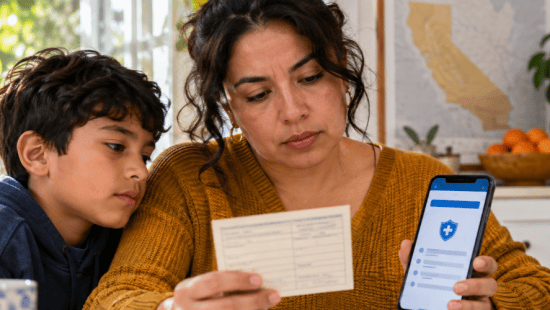
You may remember getting vaccinated as a child but have no paperwork to prove it. Parents may also need to confirm whether their children received the recommended measles, mumps and rubella (MMR) doses.
Parriva previously examined how a measles outbreak in Texas raised concerns about California’s preparedness. Now, the loss of national elimination status gives families another reason to review their records.
California offers an online tool to retrieve available vaccination records. But there’s an important limitation: Not every dose appears in the state’s database.
Here’s how to check.
How to Find Your Vaccination Records in California
The California Department of Public Health operates a Digital Vaccine Record portal connected to the California Immunization Registry, commonly called CAIR.
To request your record:
- Visit myvaccinerecord.cdph.ca.gov.
- Select “I want my California Immunization Record.”
- Enter your name, date of birth and the requested phone number or email address.
- Create a four-digit PIN.
- Follow the link sent to you and enter your PIN to access the record.
Parents and legal guardians can request records for their children. Submit a separate request for each child.
The record can show vaccination dates and vaccine names. California says the printable record can serve as official vaccination documentation for school, child care or employment.
Look for entries labeled MMR or another measles-containing vaccine.
What if Your MMR Vaccination Isn’t Listed?
Don’t assume you were never vaccinated.
California’s registry may be incomplete, particularly for older vaccinations, shots received outside California or records that providers have not submitted.
If your record is missing information, the California Department of Public Health recommends checking with the doctor’s office, clinic or pharmacy where you received the vaccine.
Previous schools may have copies of children’s immunization records. Older vaccination cards can also help.
If you find documentation of a missing dose, ask your healthcare provider to submit or correct the information in California’s registry.
The state offers a Digital Vaccine Record Assistant for problems accessing or correcting records.
People vaccinated outside the United States may have records that never entered California’s system. A clinician can review documentation from another country and determine whether it meets U.S. recommendations.
How Many Measles Shots Do You Need?
Finding a record is the first step. Understanding what it means is the next.
According to the Centers for Disease Control and Prevention, children routinely receive two MMR doses: the first at 12 to 15 months and the second at 4 to 6 years.
For adults, recommendations depend on age and exposure risk.
Most adults born in 1957 or later need evidence of at least one dose or another accepted form of immunity. Some groups, including international travelers, healthcare personnel and postsecondary students, generally need two documented doses.
Adults born before 1957 are generally presumed immune, although healthcare workers may need additional assessment.
Two appropriately administered doses usually provide long-lasting protection. Routine third doses are not recommended for measles protection.
If you cannot find documentation, ask a clinician whether vaccination or an immunity blood test makes sense. Receiving an additional MMR dose is generally not harmful if someone is already immune.
Important exception: Pregnant people and people with severe immune suppression should not receive the live MMR vaccine. They should consult a healthcare professional about their options.
What California Families Should Do Next
If you’re checking records for school enrollment, request the digital record early enough to resolve missing information before the deadline.
If you’re uncertain about your protection, bring available records to a healthcare provider.
Los Angeles County residents can consult the county measles information page for vaccination guidance. The county’s Public Health InfoLine is 1-833-540-0473.
If you may have been exposed to measles, don’t wait to finish searching for records.
Call your healthcare provider immediately. Do not walk into a clinic without calling first, because measles spreads easily through the air.
For eligible people without immunity, MMR vaccination within 72 hours of exposure or immune globulin within six days may reduce the risk of illness. A healthcare professional or public health official must determine which option is appropriate.
Measles can begin with fever, cough, runny nose and red eyes before a rash appears. Parriva has also published a guide to understanding measles for readers seeking additional background.
If you develop symptoms after possible exposure, stay away from others and call for medical guidance. Seek emergency care for serious symptoms, notifying the facility before arriving.
The national designation has changed, but the practical steps for families remain clear: find your vaccination records, review them with a healthcare provider if necessary, and address any gaps in protection.