More than 742,000 naturalization applications were pending at the end of June 2026. New federal data reveal a sharp slowdown in decisions, longer processing times and growing uncertainty for immigrants seeking citizenship.
For immigrants who have spent years building their lives in the United States, qualifying for citizenship is a major milestone. But meeting the requirements doesn’t mean the government will make a decision quickly.
Between April and June 2026, U.S. Citizenship and Immigration Services (USCIS) approved 57,697 naturalization applications, down from 241,326 during the same period in 2025. That’s a 76% decline.
At the end of June, more than 742,000 applications were still pending, roughly 213,000 more than a year earlier.
For permanent residents in California and across the country, the delays can affect plans to vote, reunite with family members and obtain the additional protections that come with American citizenship.
The numbers raise two important questions: Why is the government completing so many fewer applications, and what can immigrants do while they wait?
Fewer decisions, longer waits
The slowdown becomes clearer when looking beyond approvals.
According to USCIS naturalization data, the agency received 145,872 applications between April and June 2026, compared with 251,467 during the same quarter in 2025. That’s a 42% decline in new applications.
But approvals fell much faster. Denials also dropped, from 23,288 to 12,842.
Taken together, those figures show that USCIS was deciding substantially fewer cases, not simply rejecting more applicants.
There was another change. Among applications decided during the quarter, approximately 82% were approved, compared with 91% a year earlier. That suggests the outcomes of completed cases also shifted, although the data do not explain why.
Meanwhile, the number of pending applications grew by about 40%.
Applicants are also waiting longer. The median processing time for completed nonmilitary naturalization cases reached 9.5 months during the April-to-June quarter, compared with 5.5 months a year earlier.
That doesn’t mean everyone will wait nine and a half months. Some applications move faster, while others take considerably longer.
The American Immigration Council has also documented a growing backlog across the immigration system, indicating that the naturalization slowdown is part of a broader processing problem.
What changed in the citizenship process?
The Trump administration has introduced additional scrutiny for people applying to become U.S. citizens, emphasizing background checks, character evaluations and stronger eligibility reviews.
In August 2025, USCIS directed immigration officers to conduct a broader assessment of applicants’ good moral character, a legal requirement for naturalization.
Under the revised guidance, officers are instructed to consider applicants’ conduct, responsibilities and positive contributions, rather than focusing only on whether they have committed disqualifying offenses.
USCIS also introduced a revised citizenship civics test. Applicants who filed Form N-400 on or after October 20, 2025, generally must take the newer examination, which draws from 128 questions and requires 12 correct answers out of 20.
The administration describes these measures as necessary to strengthen the integrity of the naturalization process.
Immigration advocates and attorneys have raised concerns that expanded reviews and additional requirements can make the process more difficult and time-consuming.
But there is an important distinction: The federal figures establish that processing has slowed. They do not show precisely how much of that slowdown resulted from screening policies, staffing, scheduling or other administrative decisions.
What the delays mean for immigrant families
For someone waiting to become a citizen, the consequences can go well beyond receiving another government notice.
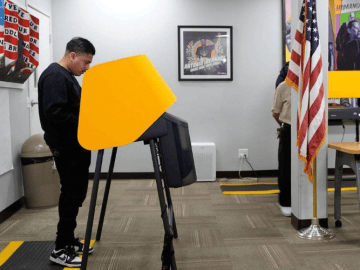
A green card holder cannot vote in federal elections. Someone whose naturalization remains unfinished by Election Day cannot vote simply because an application is pending.
That makes the timing particularly important ahead of the November 3 midterm elections.
Citizenship can also expand opportunities to petition for family members, qualify for certain government jobs and obtain stronger protection against deportation.
A delayed application does not automatically affect a person’s lawful permanent-resident status. Green card holders generally retain their existing rights and responsibilities while USCIS reviews their cases.
Still, the uncertainty can complicate decisions about family, employment and travel.
For some immigrants, that uncertainty comes after years of meeting residency requirements, studying for the citizenship examination and preparing to take the oath.
The distinction between permanent residence and citizenship has become especially important amid wider debates about immigration and nationality. Parriva has also reported on growing interest in Mexican dual citizenship among Los Angeles residents, a separate process that reflects another dimension of how families are navigating questions of citizenship and belonging.
What to do if your citizenship application is delayed
Applicants do not have to rely solely on waiting for a letter. USCIS provides several ways to monitor an application and request information.
Check your case status. Visit the USCIS case-status website and enter the receipt number from your application notice.
Review processing times. The USCIS processing-times tool allows applicants to check Form N-400 estimates for the appropriate office. Waiting periods vary by location.
Request an update when eligible. Applicants whose cases exceed the agency’s normal processing period may qualify to submit an inquiry through the USCIS online request system.
Keep your address current. Missing an interview notice or appointment can create additional delays.
Applicants facing prolonged delays or unusual legal complications can also consult a qualified immigration attorney or a Department of Justice-accredited representative.
For people hoping to vote, it is important to understand that citizenship is completed only after the naturalization oath. The timing also matters because federal courts have been considering disputes over proof-of-citizenship voting requirements, although those disputes are legally separate from naturalization processing.
Are fewer immigrants interested in citizenship?
The decline in new applications raises that possibility, but the numbers alone cannot establish it.
Applications received measure how many people submitted paperwork. Approvals and denials measure decisions by the government. Pending cases show how many applications remain unresolved.
Those figures describe different parts of the process.
Fewer people applied during the quarter, but USCIS completed far fewer applications than it had a year earlier. That combination left a much larger number of immigrants waiting.
Whether the decline in applications reflects reduced interest, higher costs, uncertainty about immigration policies or other circumstances requires additional evidence.
For now, the clearest finding is that the path from applying for citizenship to receiving a decision has slowed substantially.
The next USCIS reports will help determine whether the agency is beginning to reduce the backlog or whether the number of people waiting continues to grow.
For hundreds of thousands of permanent residents, that is not merely an administrative question. It determines how much longer they must wait to complete their journey to American citizenship.