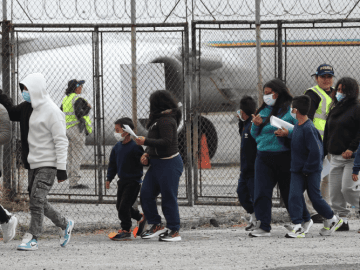
A man’s disputed citizenship claim highlights how serious mental illness can complicate immigration proceedings and leave vulnerable people facing prolonged detention and deportation.
For nearly a year, a man diagnosed with paranoid schizophrenia has remained in immigration detention while authorities seek to deport him to Jamaica, despite evidence presented by his mother and lawyers that he was born in Florida and is a U.S. citizen.
The case, reported by The Associated Press on Oct. 27, raises questions about how immigration authorities assess claims of citizenship when a person’s mental illness affects their ability to describe their own history. The Department of Homeland Security disputes the man’s citizenship, alleging that his birth certificate is fraudulent, but the AP reported that the agency provided no evidence to support that allegation.
His case is not the first to expose the consequences that immigration proceedings can have for people with serious mental illness or intellectual disabilities. Other cases across the country illustrate how vulnerable people can remain in detention for months or years, sometimes despite evidence that challenges the government’s position.
In 2008, Mark Daniel Lyttle, a U.S. citizen with intellectual disabilities and bipolar disorder, was detained by immigration authorities and deported to Mexico. According to a lawsuit filed on his behalf by the American Civil Liberties Union, officials had evidence of his citizenship but failed to adequately investigate his claims. Lyttle did not understand the documents he was asked to sign, which incorrectly identified him as a Mexican citizen and recorded his agreement to deportation.
After his removal, Lyttle spent four months in Central America before he was able to return to the United States. His case became a prominent example of how a person’s cognitive disabilities can undermine their ability to navigate immigration procedures, particularly without appropriate assistance.
The circumstances were different, but the underlying concern was similar. Officials relied on information that supported removal while failing to adequately account for evidence and personal circumstances that challenged it.
A more recent case in California involved Movses K., an Armenian man with severe schizophrenia who came to the United States at age 6 and lived in the country for decades as a lawful permanent resident.
After a criminal conviction, he was ordered removed in 2010. But Armenia and Russia did not recognize him as a citizen, and immigration authorities released him under supervision in 2011. He subsequently lived with his mother for 14 years without new arrests or violations, according to the Human Impact Project.
In December 2025, immigration authorities detained him again during a routine check in, citing his old removal order and a review of travel documents. His advocates argued that his worsening mental illness and the lack of appropriate psychiatric care available to him in Armenia made his situation particularly concerning.
A federal magistrate judge granted his petition challenging the detention and ordered his release, finding that the government had not demonstrated that his removal was likely in the foreseeable future. The case highlights a fundamental question in immigration detention: how long can someone remain confined when deportation may not be possible?
Mental illness can also intersect with immigration enforcement before a person ever reaches an immigration detention center.
In Houston, Reyna González Ortega, a Mexican woman diagnosed with schizophrenia, bipolar disorder and anxiety, was detained after a mental health episode in July 2025. Her family said they had called Houston police seeking medical assistance and asked officers to take her to a hospital rather than jail.
Instead, she was arrested following an alleged assault incident and later transferred to Immigration and Customs Enforcement custody because she lacked legal status. Her family said she needed medication and psychiatric treatment. ICE maintained that detainees have access to medical and mental health services and cited her arrest and immigration status in explaining its actions.
Prosecutors eventually dropped the criminal charges, but González Ortega remained in immigration custody. She was deported to Mexico in October 2025, according to the Houston Chronicle. Her husband followed her there and said the family was still trying to find a doctor to treat her.
Unlike Lyttle, González Ortega was not a U.S. citizen. And unlike the man in the AP investigation, her case did not center on a disputed claim of American birth. But her experience illustrates another consequence of the intersection between mental health crises and immigration enforcement: a request for medical help can lead to criminal custody, immigration detention and ultimately removal from the country.
Together, these cases reveal different vulnerabilities within a system that can place people with serious psychiatric or cognitive disabilities in proceedings they may struggle to understand. Some face questions about their citizenship. Others have lawful residency but remain subject to removal orders. Still others face deportation after encounters with local police during a mental health crisis.
The cases do not establish that every detention involving mental illness is unlawful, nor do they involve identical legal circumstances. They do, however, raise questions about the safeguards available to people whose conditions affect their ability to communicate, understand legal documents or challenge official decisions.
For people with severe mental illness, the consequences can extend far beyond detention itself. Separation from family members, interruptions in medication and the loss of established medical support can complicate treatment. When deportation follows, people may also find themselves in countries where they have limited support networks or difficulty accessing care.
The AP case brings these concerns into sharp focus. If a person’s statements about their origins are shaped by delusions, how should authorities weigh those statements against birth records, family testimony and other documentary evidence?