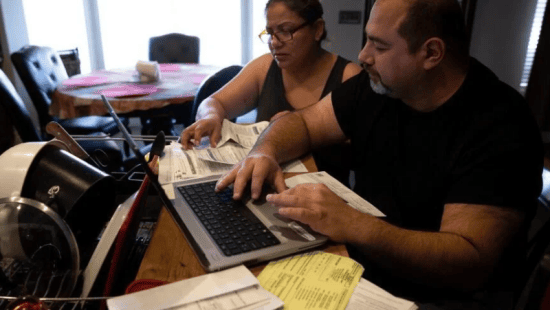
The October 13 vote gives the county responsibility for the regional homeless count and federal grant applications. Who will manage the homelessness database and housing-matching system remains unsettled as court proceedings continue.
Los Angeles County has been selected to oversee two key functions in the region’s homelessness response, but a dispute remains over who will manage the systems that track people experiencing homelessness and connect them with housing.
On October 13, the Los Angeles Continuum of Care’s general membership selected the county as the region’s collaborative applicant for federal homelessness funding and administrator of the annual Point-in-Time Count, which estimates the number of people experiencing homelessness. The LA Continuum of Care oversees the regional process.
The October 13 vote did not decide who will lead the Homeless Management Information System (HMIS), which stores information about people receiving homelessness services, or the Coordinated Entry System (CES), which coordinates referrals and matches people with housing. The City of Los Angeles has submitted competing applications for both roles, according to the City Council’s October 14 special-meeting agenda. The LA Continuum of Care’s official materials outline the four administrative roles, while LAHSA’s explanation of CES describes how the database and referral system work together.
What the vote decided
The county had applied to perform all four functions previously associated with the Los Angeles Homeless Services Authority, or LAHSA. An October 5 evaluation memorandum gave the county the highest score in each role-specific evaluation. However, the October 13 membership vote approved only the collaborative applicant and Point-in-Time Count roles.
The reported vote totals differ. One account recorded 331 votes in favor and nine opposed; another recorded 310 in favor, nine opposed and 12 abstentions. Parriva has not located an official certified tally or final roll-call record to resolve the discrepancy.
The remaining Homeless Management Information System (HMIS) and Coordinated Entry System (CES) roles are important because they involve the data and coordination systems used across the regional homelessness response. The October 13 vote did not determine which entity will manage either one.
What this means for the city and the mayor
The dispute is also about how much influence Los Angeles retains over a regional system that includes city-funded housing.
In an October 10 statement, the county said the city currently decides who is placed in beds funded by Los Angeles city government, and that this authority would remain with the city if the county were selected for the relevant administrative responsibilities. The county also said the CES Policy Council, which includes city and county representatives, sets housing-matching policies and provides oversight.
These statements describe the county’s account of existing arrangements. The final division of responsibility for the two unresolved regional functions has not yet been established.
The October 13 vote did not remove the mayor’s authority over city government or transfer all city-funded homelessness programs to the county. But it also did not resolve how much practical influence city officials will have over regional data and housing coordination once the transition is complete.
Before the vote, we examined the broader dispute over who makes homelessness policy decisions and who is accountable when the system falls short. The unresolved data and referral roles remain central to that question.
Read our earlier report: Who Gets to Decide How Los Angeles Fights Homelessness?
The court case and federal funding timeline
The transition remains tied to Los Angeles Homeless Services Authority v. Trump, a federal case concerning HUD’s suspension of LAHSA.
On August 13, U.S. District Judge David O. Carter issued a preliminary injunction halting the suspension and required the LA CoC to evaluate applicants for the four roles and report to the court by October 13. A subsequent Ninth Circuit ruling kept key protections in place, including provisions preventing HUD from withholding previously approved fiscal year 2025 grants.
The next scheduled milestones are Ninth Circuit oral argument on October 19 and a district court status conference on October 27. These proceedings will continue to shape the legal context for the transition; they do not, by themselves, establish when every administrative role will change hands.
Meanwhile, LAHSA’s fiscal year 2026 funding timeline identified October 14 as the regional application deadline and said the approved consolidated application was available for review that day. That confirms progress in the application process, not a new federal award or completion of the county’s transition.
The county’s earlier takeover of administration for county-funded homelessness contracts on July 1 was a separate change, described in its transition announcement.
The unanswered continuity questions
The public records reviewed do not establish that the October 13 vote caused a specific interruption in shelter, housing placements or referrals. They also do not provide a comprehensive public timetable for the transition, including effective dates, system and data transfers, contingency procedures, or safeguards for provider access and payment continuity.
That is a gap in the public documentation reviewed, not proof that no internal plan exists.
The court proceedings have highlighted the potential consequences of disruption. In August, Judge Carter warned that HUD’s suspension threatened to displace more than 11,000 people. That figure concerned potential harm from the suspension; it does not show that 11,000 people have been affected by the October 13 vote.
For residents and providers, the remaining questions are practical: When will the HMIS and CES roles be decided? Who will be responsible for each system during the handoff? How will the city and county coordinate housing decisions, and what safeguards will keep referrals and services functioning?
Los Angeles County has been selected to handle the regional federal grant application and annual homelessness count. Who will control the regional data and housing-matching systems remains unresolved. The next stage of the transition will require clear answers about responsibility, timing and continuity, not simply a decision about which agency holds each title.