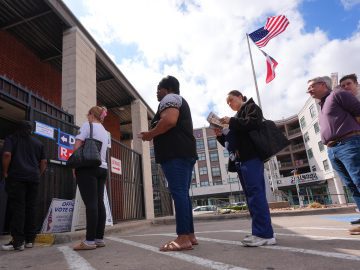
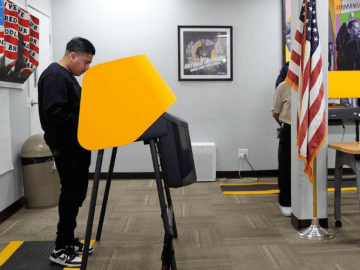
As Latino voter participation rises across California, experts say the challenge is no longer finding information. It’s knowing which sources deserve your trust.
California’s primary election revealed something that political strategists, campaigns, and community organizations have been watching closely for years: Latino voters are becoming an increasingly powerful force in American politics.
But as participation grows, so does the flood of information competing for voters’ attention.
Social media feeds are packed with endorsements. Influencers are posting political content. Family group chats are sharing videos and articles. Campaign ads appear on nearly every platform. For many voters, especially first-time voters and younger Californians, the challenge is no longer finding information. It is determining what information deserves trust.
That challenge will likely become even more intense as the November election approaches.
For Latino voters across California and Los Angeles County, the question is increasingly practical: If you do not have hours to research every candidate and ballot measure, how do you make informed decisions without being swept up by political noise?
The Trust Problem Facing Modern Voters
One of the biggest misconceptions in American politics is that voters rely on a single trusted voter guide.
In reality, trust is fragmented.
Some voters prioritize neutrality and factual information. Others seek organizations that reflect their values. Many rely on a combination of official government resources, civic organizations, community groups, journalists, and personal networks.
The key is understanding what each source is designed to provide.
A voter guide that helps explain a ballot proposition may not be the same source that helps a voter decide which candidate aligns with their priorities.
Understanding that distinction can help voters avoid misinformation and make more confident decisions.
The Most Trusted Source for Facts: Official Election Guides
When voters need accurate information about voting rules, registration deadlines, polling locations, or the actual text of ballot measures, election experts consistently point to official government sources.
California’s statewide voter information guide remains one of the most important resources available to voters.
These guides provide:
- Candidate statements
- Arguments supporting ballot measures
- Arguments opposing ballot measures
- Fiscal analyses
- Voting instructions
- Election deadlines
Unlike campaign advertisements or political commentary, official election materials operate under strict legal requirements designed to maintain neutrality.
For voters trying to understand what a proposition actually says rather than what supporters or opponents claim it says, government voter guides remain the starting point.
Where Voters Go for Side-by-Side Comparisons
Many voters want something different from government materials.
They want comparisons.
Organizations such as the League of Women Voters’ VOTE411, Ballotpedia, and other civic information platforms have become popular because they allow voters to compare candidates and issues in one place.
Why These Resources Matter
These organizations typically:
- Use standardized questionnaires
- Publish candidate responses directly
- Cover local races that receive little media attention
- Explain ballot measures in plain language
- Provide nonpartisan educational materials
This is especially important in local elections where voters may encounter school board races, judicial contests, city council elections, and special districts that receive limited coverage from major media outlets.
For many Californians, these resources fill information gaps that traditional news organizations cannot always cover.
Why Social Media Has Become So Influential Among Latino Voters
Latino voters are helping reshape how political information spreads.
Research consistently shows Hispanic Americans are among the nation’s most digitally connected voting groups, particularly younger voters.
Platforms such as TikTok, YouTube, Instagram, Facebook, and WhatsApp have become major sources of political information.
That trend brings both opportunities and risks.
The Benefits
Social media can:
- Increase civic engagement
- Reach younger voters
- Explain complex issues through video
- Connect communities to local campaigns
- Encourage voter participation
The Risks
Social media can also:
- Amplify misinformation
- Reward emotional content over accuracy
- Blur the line between journalism and advocacy
- Make paid political messaging appear organic
- Spread unverified claims quickly
One of the most important questions voters should ask when consuming political content online is simple:
Who benefits if I believe this information?
That question does not automatically invalidate the content. It simply encourages critical thinking.
How Latino Voters Can Evaluate Political Content
As November approaches, media literacy may become just as important as voter registration.
Before trusting a political recommendation, consider:
Who Created It?
Is it:
- A government agency?
- A newsroom?
- A civic organization?
- An advocacy group?
- A campaign?
- An influencer?
Each serves a different purpose.
Is There Financial Incentive?
Some political content creators receive advertising revenue, sponsorships, consulting contracts, or campaign-related payments.
Transparency matters.
Voters should pay attention to disclosures and ask whether financial interests may influence recommendations.
Does the Source Link to Evidence?
Reliable sources typically provide:
- Public records
- Voting histories
- Official documents
- Research studies
- Government data
Sources that rely only on opinion deserve additional scrutiny.
Why This Matters for California’s Latino Community
California is home to the nation’s largest Latino electorate.
Many households include first-generation voters, naturalized citizens, young voters, and multilingual families navigating a complicated political environment.
In many homes, one family member becomes the information translator for parents, grandparents, siblings, or relatives.
That role carries significant responsibility.
Organizations such as UnidosUS, NALEO Educational Fund, Voto Latino, Poder Latinx, and Spanish-language fact-checking initiatives have expanded voter education efforts because they recognize that misinformation often spreads differently across language and cultural networks.
The goal is not to tell voters what to think.
The goal is to help voters make informed decisions based on accurate information.