California’s notoriously slow vote-counting process is once again under intense scrutiny following the June 2 election, as political pressure, a razor-close gubernatorial race, and criticism from President Donald Trump fuel public concern.
“And yes, for the record: we wish the votes were counted faster, too,” Governor Gavin Newsom said, acknowledging widespread frustration over the pace of the count.
While delayed election results are nothing new in California, many observers were surprised by expectations that final outcomes could be projected quickly. Election officials have repeatedly warned that counting millions of ballots across the state takes time, particularly given California’s extensive vote-by-mail system and rigorous verification procedures.
In Los Angeles, incumbent Mayor Karen Bass advanced to a November runoff but became the city’s first sitting mayor since 2005 to fail to secure the 50 percent of votes needed to avoid a second round. As of Thursday, Bass held 35 percent of the vote.
The race for the second runoff spot remains too close to call. Reality television personality Spencer Pratt has received 29.9 percent of the vote, while Los Angeles City Council member Nithya Raman stands at 22.8 percent.
Los Angeles County alone is home to nearly six million registered voters, more than the total voting population of 41 U.S. states. As the nation’s most populous county, its vote-counting process plays a critical role in determining statewide results.
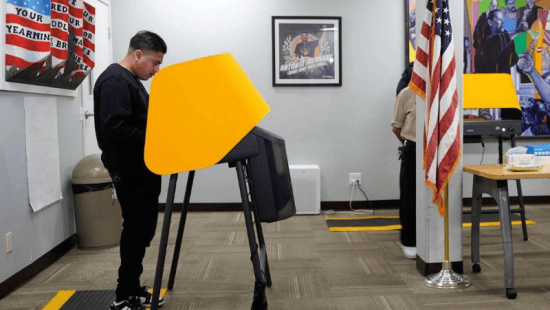
California law allows mail-in ballots postmarked on or before Election Day to arrive up to seven days later and still be counted. Provisional ballots must also be processed and verified. Election officials must review signatures on every mail ballot envelope and compare them with voter records. If signatures are missing or do not match, voters are given an opportunity to correct the issue before results are certified.
County election officials expect most ballots to be counted by June 15, nearly two weeks after Election Day.
“California election officials prioritize the right to vote and election security over rushing the vote count,” Secretary of State Shirley Weber said on election night. “We have a process that, by law, ensures both voting rights and election integrity, and I would call on all Californians to be patient.”
Early results in the governor’s race show Republican candidate and former television host Steve Hilton leading the field. President Trump congratulated Hilton on social media for placing first in the crowded contest.
However, the race remains highly competitive, with only about 56 percent of ballots counted as of Thursday. According to the Associated Press, Hilton holds 27.6 percent of the vote, while Democratic contenders Xavier Becerra and Tom Steyer have received 25.6 percent and 19.8 percent, respectively.
Under California’s nonpartisan “jungle primary” system, the two candidates receiving the most votes advance to the general election regardless of party affiliation.
The election has also become a flashpoint for broader debates over election administration. Trump has repeatedly accused California of creating conditions that could undermine confidence in election results, although state officials have rejected those claims and insisted the counting process is functioning as intended.
Tensions rose further after election authorities revealed that approximately 700,000 ballots in Los Angeles County still remained uncounted.
Nico Ruderman, a member of the Venice Neighborhood Council and former California State Senate candidate, warned that lengthy vote counts risk damaging public trust.
“The system that has been put in place with mail-in ballots and the amount of time it takes to count them gives people room to question our elections,” Ruderman said.
“With such a close race, all eyes are on California. The process is taking far too long because of a poorly designed system. This is not a delay caused by necessity. It is a delay created by the way the system was built.”